


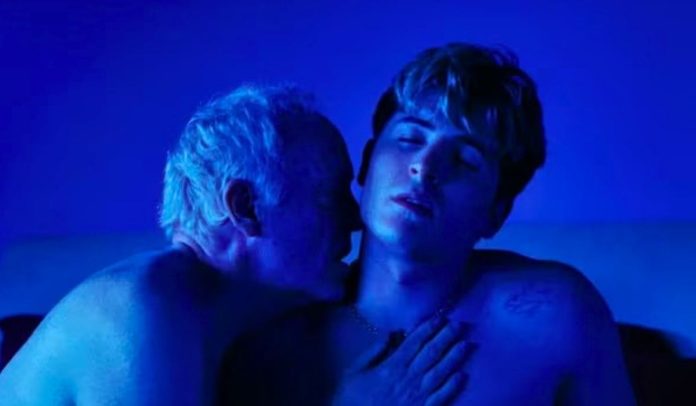

Not every queer film arrives wrapped in uplift, romance, or easy applause.
Some arrive carrying discomfort from the very first scene.
Blue Film, the new indie drama starring Kieron Moore and Reed Birney, clearly belongs in that second category.

Before many people have even had a chance to see it, the film has already built a reputation as one of the most provocative and divisive queer releases on the horizon, EW writes.
That reaction starts with the premise.
Moore plays Aaron Eagle, a gay camboy who agrees to spend the night with an older client.
When he arrives, he realizes the man is Hank Grant, played by Birney, a former teacher from his past who had been fired years earlier after an attempted sexual assault involving another student.
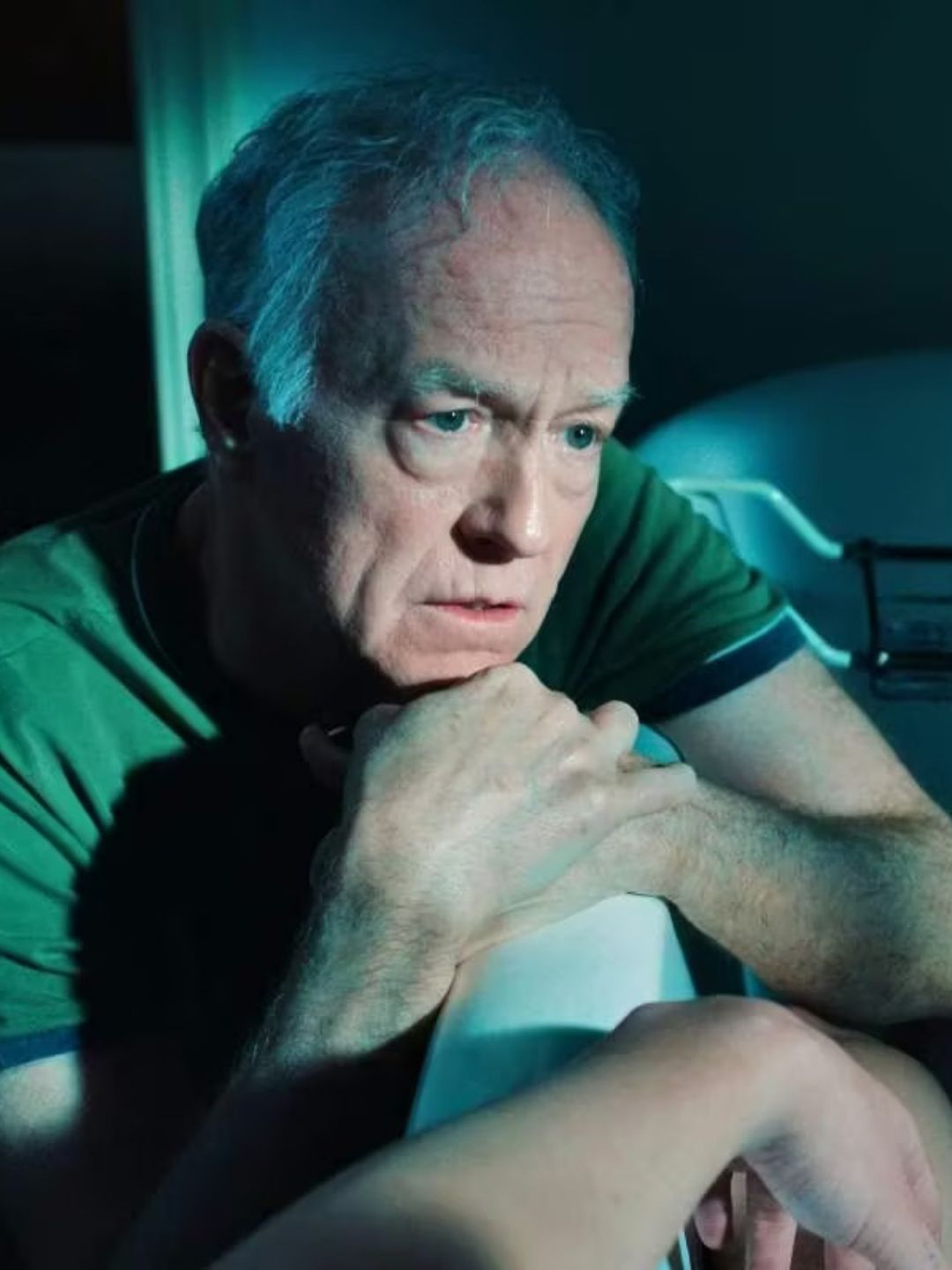
That setup alone is enough to explain why Blue Film has struggled to find an easy path into the world.
According to recent coverage, the film was turned away by several major festivals and had difficulty securing distribution, with concerns repeatedly circling back to how audiences might respond to its taboo subject matter.
Even after it began screening, the response remained intense.
Some viewers reportedly walked out of early showings, while others praised the film for going somewhere most queer cinema, and most cinema generally, would rather avoid.
That tension is what makes the film interesting.
It is not simply controversial because it wants to shock.
Its makers seem to be aiming for something more difficult than that.
Rather than presenting itself as a sensational thriller or an exploitation piece, Blue Film has been described by the people behind it as a character study.
It is interested in memory, shame, power, desire, and the uneasy fact that human beings do not always fit into clean moral or emotional categories when they are forced to confront the past.

That does not make the material easier.
It may actually make it harder.
Films are often easier to process when they clearly tell audiences how to feel.
Blue Film appears more interested in leaving viewers inside ambiguity.
Reed Birney has acknowledged that it was probably unrealistic to think a film like this would not provoke backlash.
That admission feels refreshingly honest.
This is not a project pretending to be misunderstood because audiences are too simple for it.
It knows exactly which nerves it is touching.
It simply seems to believe those nerves are worth touching anyway.
There is also something notable about the way the film has survived resistance.
At one point, director Elliot Tuttle reportedly thought it might never be released at all.
Instead, after festival rejections and uncertainty around distribution, the film eventually secured a release through Obscured Releasing.
It is now set to open in New York on May 8, followed by Los Angeles on May 15.
That trajectory gives the film an almost second narrative running beside the one on screen.
It has become a story about what kinds of queer films are considered acceptable, marketable, or safe enough for institutions to stand behind.
That question is worth asking.
Queer representation is often discussed as if more visibility automatically means more freedom, but that is not always true.
There are still clear boundaries around which stories get embraced and which ones get treated as too risky.
Blue Film seems to be pushing directly against those boundaries.
That does not mean everyone will admire it.
It does not even mean everyone should.
Some viewers will almost certainly find the premise too disturbing to engage with, and that reaction is understandable.
But films like this can still be culturally important because they test the edges of what queer cinema is allowed to be.
Not every queer story needs to comfort.
Not every queer film needs to be framed as healthy, healing, or affirming in a way that makes straight audiences feel at ease.
Sometimes the point is to unsettle.
Sometimes the point is to force a conversation that people would rather avoid.
And sometimes the most revealing thing about a film is not what happens inside it, but how nervous the industry becomes when it appears.
That may end up being part of Blue Film’s legacy.
Not just as a provocative drama starring Kieron Moore and Reed Birney, but as a reminder that queer cinema is still capable of making people squirm.
And for a medium that too often gets flattened into easy categories, that may be reason enough to pay attention.