


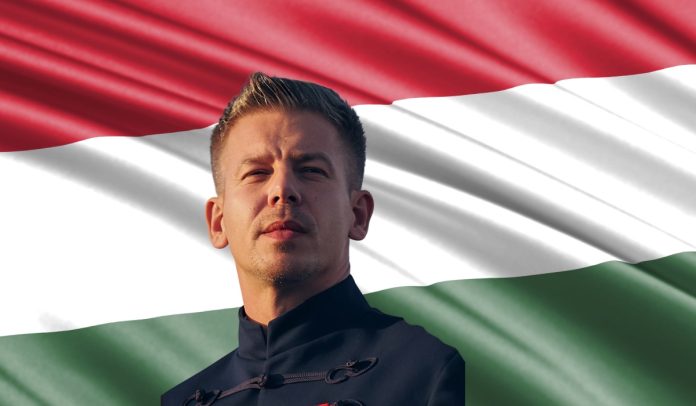

Hungary has entered a new political era after Péter Magyar defeated Viktor Orbán and ended his 16-year rule.
For many outside the country, that immediately raises another question.
What does this mean for LGBTQ rights in Hungary.
The short answer is that it could mean some improvement in political atmosphere, but there is not yet strong evidence that it will bring a major shift in policy.
That distinction matters.
Orbán’s government spent years making LGBTQ people part of its broader culture-war strategy.
His administration passed measures banning legal gender recognition, limiting adoption by same-sex couples, restricting what schools can show or teach about homosexuality and gender transition, and eventually creating the legal basis to ban Pride marches.
In 2025, Hungary’s parliament went even further by approving constitutional changes that elevated so-called child protection above other rights and formally recognized only two sexes.
That political environment made Hungary one of the most hostile places in the European Union for LGBTQ visibility.
Magyar is clearly different from Orbán in some important ways.
He has campaigned on corruption, democratic repair, public services, and rebuilding ties with the European Union.
European leaders welcomed his victory precisely because they see him as a break from Orbán’s confrontational style.
That alone could matter for queer Hungarians.
A less openly antagonistic government can change public atmosphere, civic space, and the willingness of institutions to keep escalating anti-LGBTQ politics.
But there is also a reason for caution.
Magyar did not campaign as a progressive social reformer.
He kept his platform deliberately focused on governance and economics, while remaining vague on divisive social questions, including LGBTQ rights.
That vagueness was especially visible around Budapest Pride.
When the march became a defining clash between Orbán’s government and both domestic and European critics, Magyar did not join it.
He called for peaceful protest, but avoided taking a strong symbolic stand.
That tells us something important.
Magyar may want to lower the temperature of Hungary’s culture wars without fully confronting the conservative attitudes that helped shape them.
In that sense, the label “Orbán-light” captures part of the concern, even if it simplifies the picture.
He appears more democratic and more European than Orbán, but not obviously committed to making LGBTQ equality a central priority.
For Hungary’s LGBTQ community, that means hope should probably be measured rather than euphoric.
Orbán’s defeat is undeniably significant.
It may create more room to breathe.
It may ease pressure from the state.
It may improve Hungary’s relationship with European legal norms.
But at least for now, the evidence suggests a leader who is more likely to soften hostility than to lead a full-throated push for queer rights.
That is still a change.
It is just not yet the sweeping one many might want to imagine.