


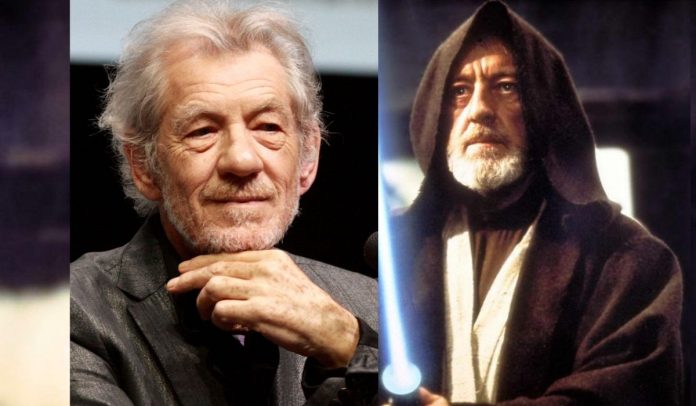

Ian McKellen is once again reminding audiences how dramatically LGBTQ+ life has changed within a relatively short period of time.
In a recent interview (Guardian), the actor revealed that fellow British screen legend Alec Guinness once privately urged him to stop publicly supporting gay rights activism.
According to McKellen, the conversation took place during the late 1980s after he became involved in establishing Stonewall UK, the influential LGBTQ+ rights organization founded to challenge discriminatory British laws including Section 28.
McKellen recalled that Guinness considered public political activism “unseemly” for actors and encouraged him to withdraw from the movement.
The actor ultimately ignored the advice.
Only a short time later, McKellen publicly came out as gay in a BBC interview in 1988, becoming one of the most prominent openly gay actors in the world.
That decision transformed both his public identity and his long-term role within LGBTQ+ activism.
Over the decades, McKellen became deeply associated with campaigns for queer visibility, equality, and anti-discrimination protections in the United Kingdom and internationally.
The story about Guinness resonated strongly online because it reflects a generational divide familiar to many LGBTQ+ people.
For older generations, remaining private about sexuality was often closely tied to personal survival, professional stability, and social acceptance.
Open activism could carry serious consequences for careers and public reputations.
McKellen himself has spoken repeatedly about the emotional damage caused by living closeted during periods when homosexuality remained criminalized or heavily stigmatized.
His comments about Guinness therefore feel less like a simple disagreement and more like a reflection of two different historical realities.
The story also gained additional attention because McKellen connected it to a recent stage production exploring possible hidden aspects of Guinness’ own sexuality.
Biographers and historians have occasionally discussed speculation surrounding Guinness over the years, although the actor himself remained intensely private throughout his life.
McKellen suggested that the older actor likely would have felt deeply uncomfortable with such public discussion.
For many LGBTQ+ audiences, the exchange highlights how quickly attitudes toward queer visibility have evolved.
Within a single lifetime, openly gay actors moved from fearing professional destruction to becoming major public advocates and cultural icons.
McKellen’s career itself reflects much of that transformation.
Today, he remains not only one of Britain’s most respected actors, but also one of the most visible elder statesmen of LGBTQ+ activism in entertainment.
The anecdote about Guinness therefore lands as both historical reflection and personal reminder.
Progress often feels inevitable in retrospect.
But stories like this reveal how much courage visibility once required — and why figures like McKellen refusing to stay silent mattered so profoundly.