


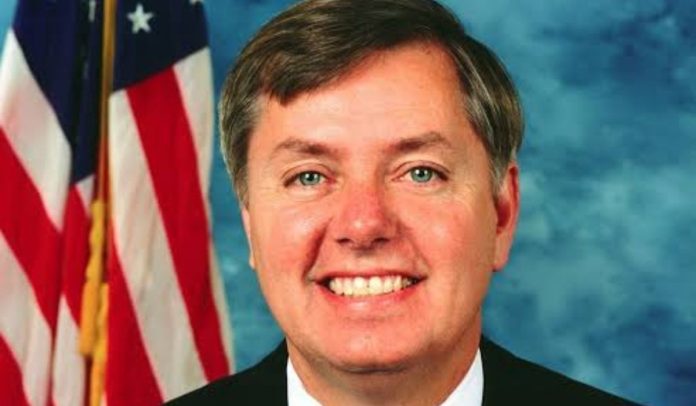

U.S. Senator Lindsey Graham has died at the age of 71 following what his office described as a brief and sudden illness.
His death has prompted tributes focusing on his long career in Congress, his influence on American foreign policy and his transformation from one of Donald Trump’s fiercest Republican critics into one of the president’s most dependable allies.
For LGBTQ+ Americans, however, Graham leaves behind another significant part of his political record.
He spent decades opposing some of the community’s most important civil-rights advances (Advocate).
That record matters far more than the persistent speculation about his private life.
Rumors that Graham was secretly gay followed him throughout much of his political career.
They were often expressed through homophobic jokes, coded insults and insinuations that his unmarried status must reveal something about his sexuality.
Graham repeatedly said he was not gay.
Allegations involving male escorts were never supported by documentary evidence or independently confirmed by a credible investigation.
His sexuality was therefore never publicly established, and being unmarried was never evidence of it.
More importantly, nobody needed to know the details of Graham’s private life to evaluate his impact on LGBTQ+ people.
His votes were public.
As a member of the House of Representatives in 1996, Graham voted for the Defense of Marriage Act.
The legislation defined marriage for federal purposes as the union of one man and one woman and permitted states to refuse recognition of same-sex marriages performed elsewhere.
Graham later supported an effort to amend the United States Constitution to define marriage exclusively as between a man and a woman.
In 2010, he voted against repealing “Don’t Ask, Don’t Tell,” the military policy that required lesbian, gay and bisexual service members to conceal their identities.
In 2013, he voted against the Employment Non-Discrimination Act, which would have prohibited workplace discrimination based on sexual orientation or gender identity.
When the Supreme Court established nationwide marriage equality in 2015, Graham said he would respect the ruling while continuing to oppose the right it recognized.
He also said that officials such as Kentucky clerk Kim Davis were required to follow the law rather than refuse marriage licences to same-sex couples.
In 2022, Graham voted against the Respect for Marriage Act, which repealed the Defense of Marriage Act and required federal and interstate recognition of legally performed same-sex and interracial marriages.
His record was consistent, but it did not determine the future.
Same-sex couples married and built families with legal recognition.
LGBTQ+ Americans began serving openly in the armed forces.
Federal employment protections expanded through later legal decisions.
The changes Graham resisted became part of American life despite his opposition.
There is no need to celebrate his death or invent a hidden identity to acknowledge that truth.
Graham was a consequential political figure whose support for Ukraine and NATO earned admiration from leaders around the world.
He was also a politician whose votes repeatedly placed him against the equality sought by LGBTQ+ Americans.
Both facts belong in an honest assessment of his life.
His private life belonged to him.
His public decisions affected millions of other people.
That documented record, rather than rumor, is the legacy worth remembering.
🎬 Prefer video? Subscribe to B-Gay on YouTube: https://youtube.com/@BGaycom