


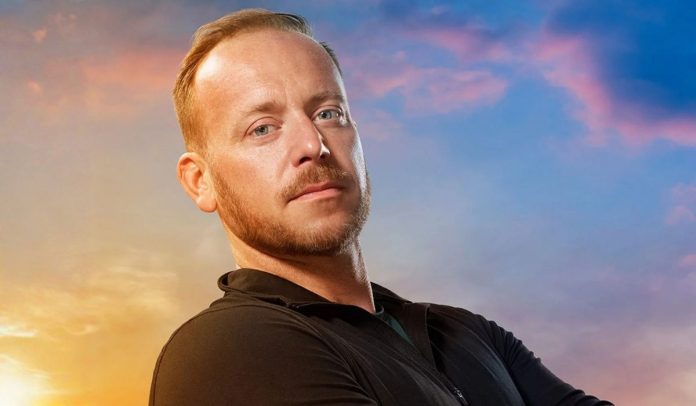

Tyler Duckworth understood that viewers noticed he was gay.
He also wanted them to notice something else.
He was really good at The Challenge.
Tyler, the Real World: Key West alumnus who became a two-time champion of MTV’s The Challenge, died on August 11 at the age of 44.
His mother, Joni Duckworth, publicly announced his death two days later.
She said the cause had not yet been determined.
That is where speculation about the circumstances of his death should end.

The more meaningful story is the life Tyler had already given viewers plenty of reasons to remember.
When MTV Viewers First Met Tyler
Tyler entered the MTV universe in 2006 as one of the cast members of The Real World: Key West.
Reality television was already changing by then, but seeing openly gay men simply existing inside mainstream unscripted shows still carried a different weight than it does today.
Tyler was not shy about who he was.
His sexuality was part of the person viewers met, and the show included conversations about gay life, stereotypes and the attitudes he encountered from people around him.
But Tyler was never content to remain “the gay guy” in the cast.
He could be funny, abrasive, emotional, competitive and occasionally difficult.
In other words, he was allowed to be a reality television personality rather than a carefully polished representation project.
That mattered.
Then He Became A Serious Competitor
After The Real World, Tyler moved into The Challenge, MTV’s physically demanding competition franchise.
He appeared across six seasons of the main franchise and eventually proved that he belonged among its champions.
His breakthrough came with Cutthroat in 2010.
Tyler survived one of the franchise’s notoriously brutal competitive environments and finished the season as part of the winning team.
Then he did it again.
On Rivals in 2011, Tyler was partnered with Johnny “Bananas” Devenanzio.
The pairing was built around past conflict, as the show deliberately teamed contestants with people they had previously clashed with.
Tyler and Johnny nevertheless made the partnership work.
They won the season.
That gave Tyler back-to-back Challenge championships.
For a gay man competing in one of reality television’s most physically aggressive franchises, that distinction meant something to him.
“Not Only Am I Gay, But I Can Win”
Years later, Tyler spoke openly about the pressure he had felt representing gay viewers on the show.
When he returned to the franchise for The Challenge: All Stars 2 in 2021, he reflected on what it meant to compete as one of relatively few openly gay men in that environment.
“I take it very seriously that I’m going to represent the gay community,” Tyler said in an interview with Entertainment Weekly.
Then he added the sentence that may now best summarize his television legacy.
“Not only am I gay, but I can win these things and I’ve proven that I can.”
He had.
Twice.
Tyler also tried to explain how isolating that responsibility could sometimes feel.
He once asked straight castmate Cohutta Grindstaff to imagine entering a season where every other contestant was gay and he was the only heterosexual man.
That reversal captured something many LGBTQ+ viewers recognize immediately.
Visibility can feel empowering.
It can also feel like carrying an entire community into a room with you.
If you fail, you worry that people will see more than your individual failure.
If you succeed, you understand that people who rarely see themselves represented may be celebrating with you.
Tyler knew that pressure existed.
But he also refused to let representation become the only interesting thing about him.
Then He Walked Away
After Rivals, Tyler disappeared from The Challenge for roughly a decade.
Reality television has a habit of making those absences look like blank spaces.
They were not.
Tyler built a life away from MTV.
He worked in education and became a teacher at the middle- and high-school levels.
That detail makes his story feel larger than the competition statistics.
The man viewers knew for eliminations, alliances and final challenges went home and spent his working life in classrooms.
Then, in 2021, MTV called again.
The Mighty Duckworth Returns
The Challenge: All Stars was created partly for viewers who remembered the franchise’s earlier generations.
It brought familiar competitors back after years away and asked a very simple question.
Do they still have it?
Tyler returned for All Stars 2 in 2021.
He later competed on All Stars 3 in 2022, which became his final appearance in the franchise.
His return mattered because the audience remembered him.
He was no longer simply the openly gay contestant from The Real World.
He was Tyler Duckworth, the man who had already won two championships.
He arrived with history.
And he clearly appreciated discovering that viewers still cared.
Eleven Days Before His Death
On July 31, Tyler attended Challenge Mania in Minneapolis, an event that brings former competitors together with fans of the franchise.
It was his hometown.
Afterward, he posted about how meaningful the experience had been.
He described hearing fans share stories of courage, inspiration and joy connected to the show.
He said their continued support humbled him.
That post now carries a weight nobody could have understood when he wrote it.
Eleven days later, Tyler was gone.
There is something particularly painful about that timing.
Not because it offers any clue about why he died.
It does not.
But because it means Tyler spent one of his final weeks surrounded by people reminding him that his work had mattered to them.
He got to hear that he was remembered.
Why Tyler Meant Something To Gay Viewers
It would be easy now to retroactively promote Tyler into some grand LGBTQ+ television pioneer.
That would exaggerate his story.
There were openly gay reality contestants before him, and many LGBTQ+ performers had already pushed television forward in more obvious ways.
Tyler’s significance was quieter.
He belonged to a transitional era.
Gay men were becoming increasingly visible on mainstream reality television, but they were still often presented primarily through sexuality.
Tyler complicated that by succeeding in a franchise where performance mattered.
He did not merely arrive.
He competed.
He survived eliminations.
He made alliances.
He annoyed people.
He fought with rivals.
And he won.
For gay viewers watching MTV in the 2000s and early 2010s, there was something satisfying about seeing an openly gay man exist in that space without needing to be fragile, inspirational or perfectly behaved.
Tyler could simply be Tyler.
Representation Gets More Interesting When It Stops Being Perfect
LGBTQ+ representation is sometimes discussed as though every visible queer person must become a role model.
Reality television has never worked that way.
Its stars are supposed to be messy.
They make bad decisions.
They fight.
They say the wrong thing.
They lose.
Sometimes they become villains.
Sometimes they become champions.
Tyler’s presence helped demonstrate that gay men could occupy that same messy territory.
He did not need to represent gay men by being endlessly admirable.
He represented them partly by being allowed to be fully human.
And when the competition started, he could back that confidence up.
More Than MTV
The fact that Tyler became a teacher also deserves to remain part of how he is remembered.
Reality television freezes people in time.
Viewers may remember someone as the 20-something personality they watched drinking, arguing or competing on television years earlier.
The person keeps living after the episode ends.
Tyler grew older.
He left television.
He worked with young people.
He returned when an opportunity felt right.
He reconnected with fans.
That fuller life matters much more than reducing him to a contestant biography.
A Champion Is Gone
Tyler Duckworth was only 44.
That fact is sad enough without embellishment.
His family does not yet have a confirmed cause of death, and there is no reason for anyone else to fill that uncertainty with theories.
What we do know is what Tyler left behind.
A television career that began during a very different era of gay visibility.
Two Challenge championships.
A return that proved audiences had not forgotten him.
A life in education away from the cameras.
And a final reunion with fans who had the chance to tell him what watching him had meant.
Tyler once said he took representing the gay community seriously.
But he immediately followed that responsibility with confidence.
He could win.
He had proved it.
That feels like exactly the way to remember him.
Not simply because he was the gay guy on The Challenge.
Because he was Tyler Duckworth.
And Tyler Duckworth was a champion.
Rest well, Mighty Duckworth.
🎬 Prefer video? Subscribe to B-Gay on YouTube: https://youtube.com/@BGaycom