


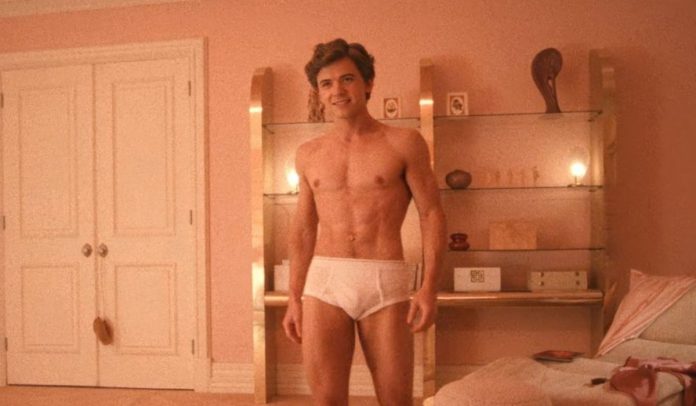

Four episodes into The Shards, Igby Rigney’s performance is becoming one of the most interesting parts of Ryan Murphy’s new psychological thriller.
Rigney plays a fictionalized 17-year-old version of author Bret Easton Ellis in Los Angeles in 1981.

Bret has a girlfriend, secretly has sex with boys and spends much of his life performing a version of heterosexuality for the people around him.
That tension between public and private identity is central to both Bret Easton Ellis’ original novel and the FX adaptation.
It also became central to the way Rigney physically plays the character.
The Guardian observed that Bret appears almost like two different people depending on whether he is interacting romantically with women or men.
With his girlfriend Debbie, Bret often appears stiff and guarded.
During his encounters with boys, his posture and physical energy shift noticeably.
Rigney joked that the difference did not require much explicit direction.
“That was all natural, baby,” he said.
The result is a surprisingly effective portrayal of closeting without requiring Bret to constantly explain what he is feeling.
The audience can see the effort involved in maintaining the straight version of himself.

Then it can see what happens when that effort temporarily disappears.
The show is set during Bret’s senior year at an elite Los Angeles private school.
His comfortable but increasingly unstable world is disrupted by the arrival of Robert Mallory, a mysterious new student played by Homer Gere.
Bret becomes intensely suspicious of Robert at the same time that a serial killer known as the Trawler is targeting young people across the city.
Whether Bret’s obsession with Robert is driven by fear, attraction, jealousy or some combination of all three remains deliberately ambiguous.
Sexuality is therefore not simply an additional storyline attached to the thriller.
It shapes how Bret interprets almost everything happening around him.
His secret encounters with men coexist with his relationship with Debbie and with the carefully maintained social identity expected of a wealthy teenage boy in 1981.
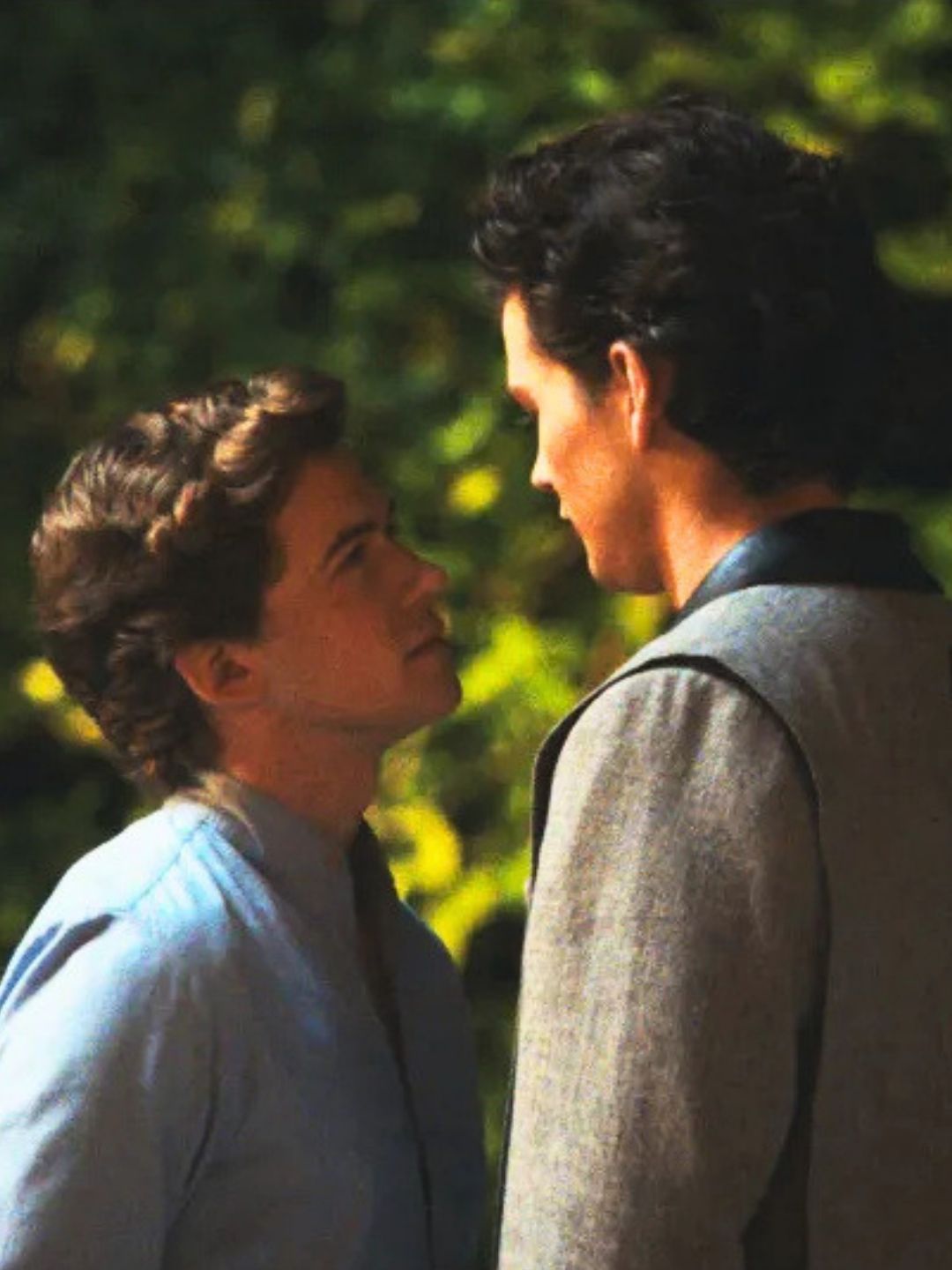
Ryan Murphy has said the period carries particular emotional significance for him personally.
Murphy was a teenager in 1981 and has described it as a moment when sexual freedom suddenly became connected with fear as the first reports of AIDS began appearing.
He has even wondered publicly whether the Trawler can be interpreted partly as a metaphor for the threat that would soon transform gay life.
Ellis, characteristically, has declined to give a definitive answer.
Rigney faced another unusual challenge: playing a living and extremely recognizable writer without actually meeting him.
The actor has said he never met Bret Easton Ellis during production.
Instead, Ryan Murphy became one of his primary guides in developing the character.
Rigney also spent considerable time working on Bret’s voiceover.
Ellis originally narrated the audiobook version of The Shards himself, making his distinctive delivery particularly familiar to readers.
Rigney and Murphy worked extensively in post-production to find something that respected that voice without simply turning the performance into an imitation.
The intimate scenes presented a different kind of challenge.
Rigney has said the sex scenes were not the part of the role that worried him most.
He compared filming intimacy to performing a dance.
Once boundaries, movement and choreography have been established, the actors know what they are doing and can concentrate on the emotional purpose of the scene.
The more disturbing psychological material was harder.
That includes Bret’s increasingly paranoid state and scenes involving powerful adults who exploit the vulnerabilities of the teenagers around them.
The series has already begun diverging from Ellis’ novel in significant ways.
Murphy has expanded characters and events that existed only briefly in the book and has shown parts of the serial-killer storyline that the novel kept outside Bret’s immediate perspective.
Some sexual relationships have also been altered or expanded.
Yet the basic emotional engine remains recognizably queer.
Bret is simultaneously trying to solve the mystery surrounding Robert and trying to understand his own desire.
He is watching other people for evidence of secrets while concealing one of the biggest secrets in his own life.
That contradiction makes his status as an unreliable narrator particularly compelling.
If Bret cannot comfortably acknowledge the truth about himself, viewers have reason to question how accurately he understands anyone else.
Rigney brings that uncertainty into the performance through surprisingly small choices.
A change in posture can reveal more than dialogue.
A flirtation can suddenly expose a version of Bret that his friends rarely see.
A moment of attraction can collide immediately with fear.
For queer viewers, that physical code-switching may be one of the most recognizable elements of the entire show.
Many gay men who grew up closeted remember consciously or unconsciously changing the way they spoke, moved or reacted depending on who was around them.
The Shards places that experience inside a much larger world of wealth, violence, drugs and paranoia.
But beneath all the Ryan Murphy gloss and Bret Easton Ellis darkness is something comparatively simple.
A teenage boy is trying to understand who he is while making sure everyone around him sees something else.
Igby Rigney makes both versions visible.
📷 FX / @igby\.rigney
🎬 Prefer video? Subscribe to B-Gay on YouTube: https://youtube.com/@BGaycom