


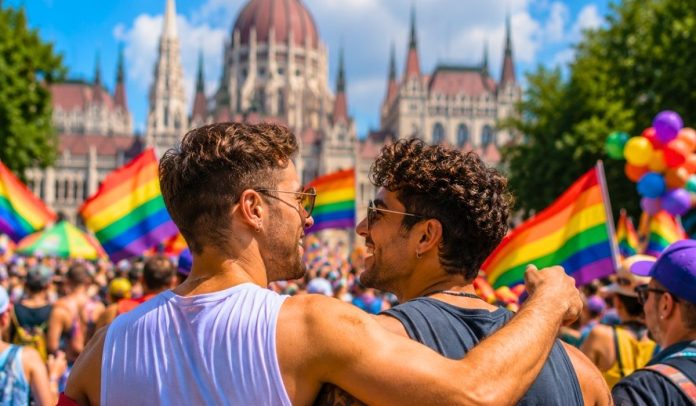

Budapest Pride is preparing for a new chapter following the election defeat of longtime Hungarian Prime Minister Viktor Orbán.
For many LGBTQ+ people both inside Hungary and across Europe, the moment feels highly symbolic.
Orbán spent sixteen years in power and became one of the most internationally visible political figures associated with anti-LGBTQ+ policies inside the European Union (LGBTQ Nation).
His government passed legislation restricting LGBTQ+ visibility, limiting representation in schools and media, and creating legal mechanisms that activists argued could effectively ban Pride events.
Those policies attracted criticism from human rights organizations, European institutions, and LGBTQ+ advocacy groups around the world.
As tensions increased, Budapest Pride evolved into something larger than an annual celebration.
It became a public test of visibility and resistance.
Last year’s Pride march gained international attention after authorities attempted to block the event using newly adopted legal restrictions.
Instead of discouraging participation, the controversy appeared to energize it.
Organizers estimated that roughly 200,000 people attended, making it one of the largest Pride demonstrations in Hungarian history.
The massive turnout transformed the event into a visible rejection of anti-LGBTQ+ political pressure.
Now Hungary is entering a different political era.
Following Orbán’s defeat, Prime Minister Péter Magyar has taken office amid growing expectations from voters seeking democratic reforms and stronger protections for civil rights.
Recent polling suggests many of Magyar’s supporters favor greater protections for LGBTQ+ people, even though LGBTQ+ issues were not a major focus of his campaign.
Pride organizers have received approval for this year’s march on June 27, creating a noticeably different atmosphere compared with the uncertainty surrounding previous events.
“During the notification process for the 2026 Pride parade and the subsequent in-person consultation with the organizers, no grounds for prohibiting the assembly arose,” Budapest police said in a statement to AFP.
That does not mean every problem has disappeared.
Many activists continue pushing for legal reforms, and several controversial laws remain in place.
Some LGBTQ+ advocates also remain cautious about how aggressively the new government will move on equality issues.
Still, the emotional significance of this year’s Pride is difficult to ignore.
For many people, the event represents more than politics.
It represents survival.
Community.
Visibility.
And the possibility that public spaces can once again feel welcoming rather than hostile.
After years of conflict surrounding LGBTQ+ rights in Hungary, many attendees are expected to arrive carrying both relief and hope.