


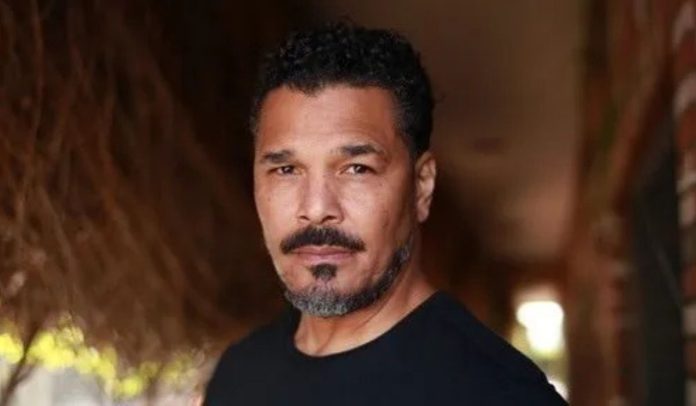

Geno Segers was announced as Broadway’s next Hades on Wednesday, but by Sunday he was gone from the production.
The extraordinarily fast sequence began on July 29, when the producers of Hadestown unveiled a new group of principal performers who would join the Broadway musical on September 1.
The cast included Jasmin Savoy Brown as Eurydice, Kayko as Orpheus, Norbert Leo Butz as Hermes and Amber Iman as Persephone.
Segers, an actor known for television roles in Yellowstone, Banshee and Disney XD’s Pair of Kings, was set to play Hades.
It would have been his Broadway debut.
Within hours of the announcement, however, theatre fans began circulating old videos and social media posts in which Segers discussed transgender people.
By August 2, the production had announced that he would no longer be joining the show.
His Broadway debut had ended before he ever reached the stage.
What Segers Said
The controversy centred on videos Segers had published on YouTube with titles including “TRANS FAIRNESS?”, “NO MORE TRANS?” and “HE… I MEAN SHE BROKE THE RECORD.”
In the clips, Segers criticised transgender women participating in women’s sports and questioned the practice of asking people to state their preferred pronouns.
He also said that he did not believe transgender people were being oppressed.
“I’m not against anyone living out their lives the way they want, but I am against their rights superseding the rights of other people,” Segers said in one of the videos.
He then described that as “a little bit foul.”
In another video reportedly published in 2024, Segers compared demands for transgender rights with people falsely claiming that pets were service animals to receive special treatment while travelling by air.
The clips were highlighted by the theatre publication OnStage Blog and quickly spread across social media.
Segers subsequently removed the videos and made some of his social media accounts private.
Hadestown Responded Within Days
The producers did not describe Segers as having been fired and did not publicly identify the videos as the reason for his departure.
Instead, they issued a brief and carefully worded statement.
“The producers of Hadestown and Geno Segers have mutually agreed that Mr. Segers will no longer join the Broadway production,” they said.
The statement added that further casting would be announced shortly.
The timing nevertheless made the connection difficult to miss, because the announcement came after several days of mounting criticism from fans and members of the theatre community.
The distinction remains important.
It is reasonable to conclude that the controversy played a central role in what happened, but the production has not publicly said that Segers was formally dismissed because of his comments.
Why This Casting Felt Different
Any Broadway performer discovered to have made such remarks might have faced criticism, but the reaction was especially intense because of the show Segers had been hired to join.
Hadestown has developed a strong following among LGBTQ+ audiences and a reputation for gender-expansive casting.
The musical retells the Greek myths of Orpheus and Eurydice and Hades and Persephone, but its characters have never been tied rigidly to one gender presentation.
Transgender and nonbinary performers have appeared in the show’s Broadway and West End companies.
J. Harrison Ghee, who became one of the first openly nonbinary actors to win a Tony Award, was playing Hermes when the new cast was announced.
Nonbinary performer Alex Lugo has worked as a swing in the Broadway company, while transgender actress Allie Daniel appeared as a Fate and covered the role of Hermes in the original West End production.
The show’s audience also includes many queer and transgender people who see its themes of freedom, power, chosen community and resistance reflected in their own lives.
For those fans, the issue was not simply that an actor held opinions they disliked.
It was that a production associated with inclusion had hired someone whose public comments appeared to dismiss the experiences of transgender people already represented within its company and audience.
His Intended Co-Star Spoke Up
Amber Iman, who had been cast as Persephone opposite Segers’ Hades, indicated that she had raised concerns away from social media.
After his departure was announced, she shared a news story about the decision on Instagram.
“I wasn’t posting, but I was not quiet,” she wrote.
“Sometimes you gotta get off social media and demand answers.”
She added that she would not accept her onstage “husband” being a clown unless they were at the circus.
Her response suggested that the public backlash was not the only pressure facing the production.
People expected to work directly with Segers were also asking questions behind the scenes.
Segers Apologised After His Departure
On August 3, one day after the production announced that he would no longer appear in the show, Segers issued a public apology.
“I wish to extend my most sincere apologies to everyone impacted by my words,” he wrote.
He said that although he had never intended to cause harm, he recognised that the impact of his statements mattered more than his intentions.
Segers said he was committed to listening, educating himself and raising his standards.
He also apologised to the cast, creative team and producers of Hadestown for the stress his actions had brought to the production.
The apology arrived after the role had already been lost, which will inevitably leave some readers questioning whether it reflected genuine reconsideration or the consequences of a professional crisis.
There is no way for outsiders to know what Segers now believes.
The meaningful test will be what he does after the immediate controversy has passed.
Was This “Cancel Culture”?
The familiar language of cancellation will undoubtedly be applied to the story.
Segers expressed his views publicly, people criticised those views publicly, and an employer then decided that the working relationship could not continue.
That does not mean nobody should debate whether the response was proportionate.
People can believe that his comments were harmful while still asking whether performers should be removed from jobs because of opinions expressed outside their work.
But freedom of expression does not require an audience, cast or production company to ignore what someone has chosen to say.
A theatre production is also a workplace.
Its producers have responsibilities not only to ticket buyers, but to performers and crew members who must feel able to work together safely and professionally.
When a show has built part of its identity around welcoming transgender and nonbinary artists, those responsibilities become difficult to separate from its public values.
The Question Hadestown Had to Answer
The central question was therefore larger than whether Geno Segers deserved a Broadway role.
What responsibility does an inclusive production have when a newly hired performer’s public statements appear to conflict with the community represented onstage, backstage and in the audience?
The producers could have defended the casting, waited for the controversy to fade or asked audiences to separate the performer from his views.
Instead, they acted before rehearsals led to a Broadway performance.
That decision protected the production’s relationship with its audience, but it also sent a message to the people working inside it.
Inclusion cannot function only as a casting aesthetic or a marketing promise.
It also has to influence what happens when those values become inconvenient.
Hadestown has not explained everything that happened during those four remarkable days.
But by the time its new cast takes the stage in September, there will be a different actor playing the god of the underworld.
Geno Segers will not be there.
And a Broadway debut that was announced with considerable excitement will be remembered instead for ending before it began.
📷 @hadestown
🎬 Prefer video? Subscribe to B-Gay on YouTube: https://youtube.com/@BGaycom