


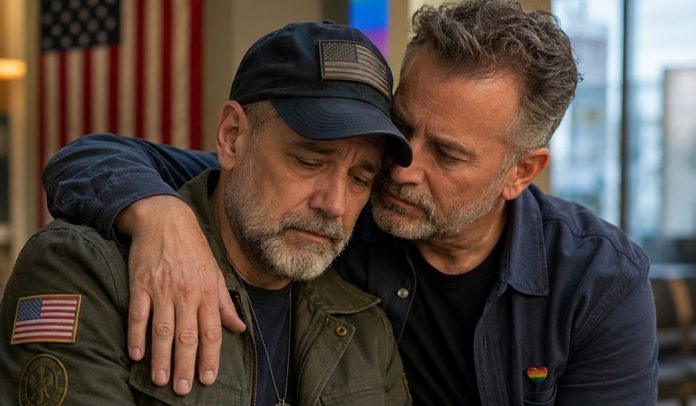

The Department of Veterans Affairs has begun dismantling the national infrastructure created to help LGBTQ+ veterans navigate the country’s largest integrated healthcare system.
An internal email obtained by The Advocate says LGBTQ+ Veteran Care Coordinators will be redesignated as general Care Coordinators with responsibility for supporting all veterans.
The change does not formally remove LGBTQ+ veterans from the VA healthcare system.
Nor does the email state that lesbian, gay, bisexual, transgender and queer veterans will be denied ordinary medical treatment.
It does, however, eliminate much of the specialised structure that allowed staff members to address the particular barriers those veterans may experience.
The July 22 communication instructed employees that national processes, communications and procedures specific to the LGBTQ+ coordinator programme would be discontinued.
Monthly coordinator meetings and regional leadership calls will end.
New-coordinator orientations and the programme’s professional community of practice will also be discontinued.
Dedicated Microsoft Teams channels and materials stored through the programme’s LGBTQ+ SharePoint site will be archived.
Employees were told to save any resources they wished to retain before those materials became unavailable.
The latest instructions follow a broader June directive ordering Veterans Health Administration facilities to eliminate initiatives described by the Trump administration as promoting gender identity or gender ideology.
That earlier memo also stripped the LGBTQ+ designation from the care-coordinator positions.
VA officials presented the move as an effort to ensure that all veterans receive treatment based upon clinical need and without discrimination.
Initially, some employees were reportedly assured that the change would largely involve job titles rather than the substance of their work.
The new email shows that the consequences extend considerably further.
The coordinators’ national support network, training structure and LGBTQ+-specific communications are now being removed.
One VA healthcare provider involved with the programme told The Advocate that staff members felt shock, anger and betrayal.
The provider said employees had reassured veterans that their services would continue after being told that little would change.
They must now return to those patients and explain that those assurances were inaccurate.
For more than a decade, LGBTQ+ Veteran Care Coordinators have served as identifiable points of contact within VA medical centres.
The VA previously employed at least one coordinator within each of its 142 healthcare systems.
Their responsibilities included connecting patients with clinicians familiar with LGBTQ+ health needs.
They helped veterans resolve difficulties involving treatment and access.
They educated medical staff about policies affecting lesbian, gay, bisexual, transgender and queer patients.
They also worked with community organisations, identified gaps in care and encouraged veterans who feared discrimination to engage with the health system.
The positions were not created merely to provide symbolic representation.
They developed in response to documented barriers affecting LGBTQ+ veterans.
The VA has previously acknowledged that some queer veterans expect discrimination inside medical facilities and may therefore delay or avoid seeking care.
Former programme leaders have also pointed to higher reported levels of depression, anxiety, post-traumatic stress, suicidal thoughts, homelessness and substance use among parts of the LGBTQ+ veteran population.
Specialised programmes were developed to respond to those disparities.
One was PRIDE in All Who Served, a ten-week health-education and support programme for LGBTQ+ veterans.
The VA had described it as a best practice and reported improvements including reduced depression, anxiety, suicide risk and identity-related stigma among participants.
Another programme, CBT-PRISM, adapted cognitive behavioural therapy to address minority stress, stigma and discrimination affecting LGBTQ+ patients.
The long-term future of such programmes became uncertain after the June directive prohibited the use of VA funding, facilities and staff time for initiatives involving gender identity.
The current dismantling also follows earlier restrictions directed particularly at transgender veterans.
In 2025, the VA began phasing out certain gender-dysphoria treatments for new patients while allowing some veterans already receiving hormone care to continue.
The administration also removed a directive governing care for transgender and intersex veterans and restricted some referrals for gender-affirming procedures outside the VA system.
The latest decision is broader because it affects infrastructure serving lesbian, gay and bisexual veterans as well as transgender patients.
The VA’s argument is that general care coordinators can support everyone without organising services around particular identities.
Critics argue that this approach confuses identical treatment with equitable treatment.
A veteran who already trusts the medical system may need only an appointment and a referral.
A veteran who has experienced harassment, discrimination or rejection may require a knowledgeable contact who understands those experiences and can help rebuild trust.
Removing the LGBTQ+ title does not remove the veteran’s sexuality or gender identity.
Archiving the training material does not erase the medical and psychological effects of stigma.
Ending the national network does not eliminate the need for clinicians who understand queer patients.
The immediate question is what individual coordinators will still be permitted to do after becoming general Care Coordinators.
Some may continue using their experience to help LGBTQ+ veterans informally.
Without national meetings, shared procedures, specialised orientation and dedicated resources, that support may become inconsistent and dependent upon individual employees or facilities.
The policy therefore risks creating a system in which an LGBTQ+ veteran’s experience varies significantly according to location.
The administration has not described the change as the termination of healthcare for LGBTQ+ veterans.
That would overstate what the internal communication says.
It is nevertheless accurate to describe the specialised support system as being dismantled.
Veterans were promised that their service entitled them to healthcare through the VA.
LGBTQ+ veterans earned that promise under the same conditions as everyone else.
The question now is whether the department can genuinely provide equal care while deliberately removing the expertise created to address the inequalities those veterans face.
📷 AI
🎬 Prefer video? Subscribe to B-Gay on YouTube: https://youtube.com/@BGaycom