


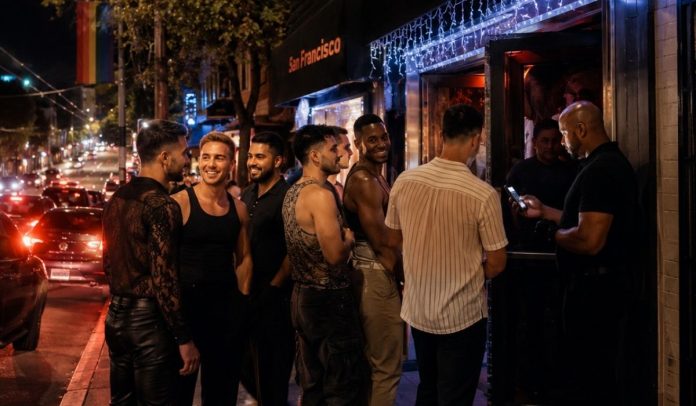

Imagine walking into a gay bar, handing over your driver’s license, having it scanned and then looking into a camera for a photograph before you’re allowed inside.
For customers at several bars in San Francisco’s Castro district, that was not hypothetical.
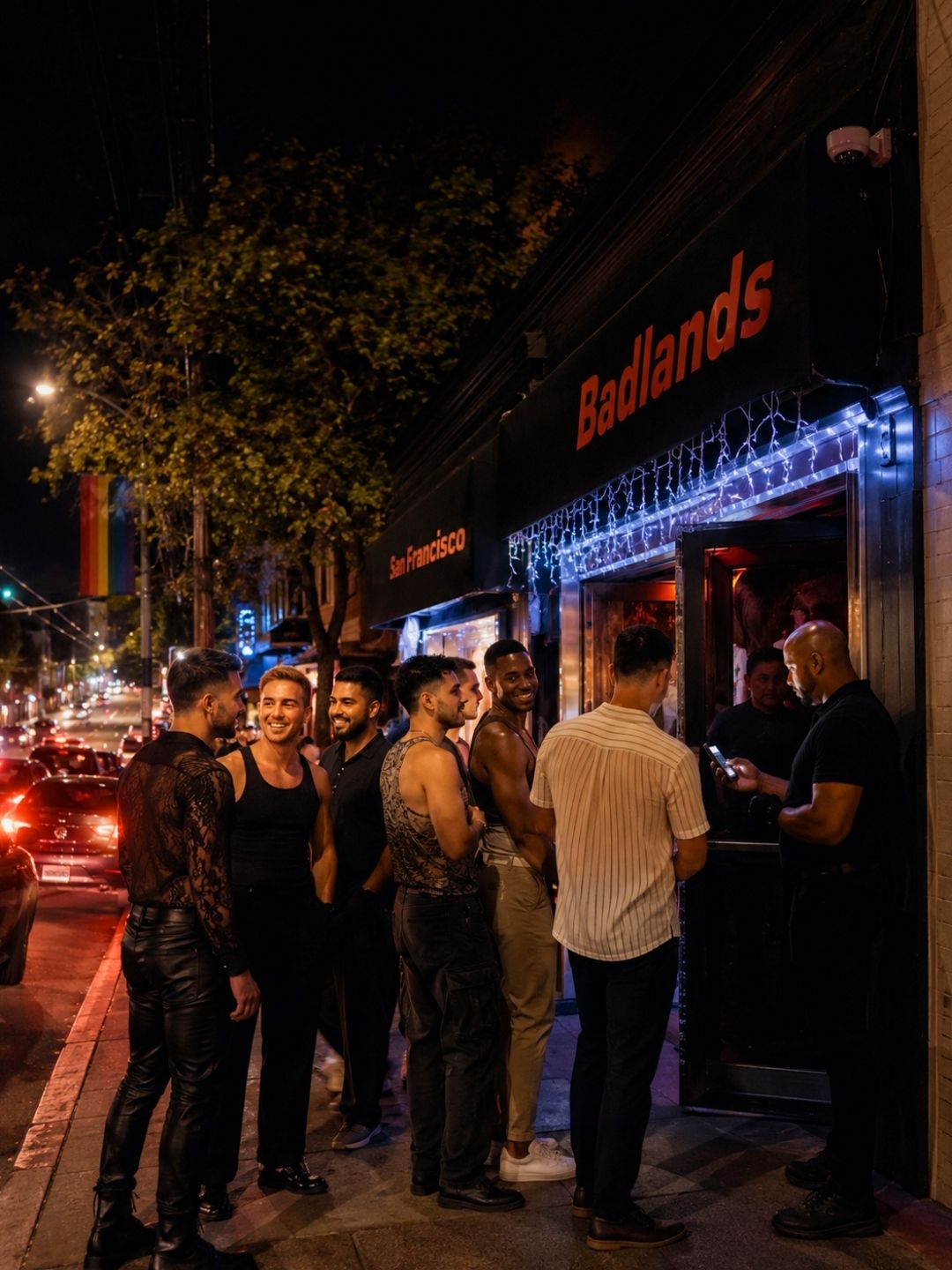
Badlands and Toad Hall had been using PatronScan Guard+, an ID-verification system designed for bars, nightclubs and other venues.
The system scans government-issued identification and takes a current photograph of the person presenting it.
PatronScan says the technology helps businesses verify age, identify fake IDs and prevent people responsible for serious incidents from simply moving from one participating venue to another.
After privacy advocates began questioning its use in the Castro, however, Badlands and Toad Hall announced that they were pausing the system while reviewing their security practices.
They have returned to manual ID checks during that review.
Another Castro gay bar, The Mix, has reportedly continued using PatronScan.
So the question is not whether gay bars should care about security.
Of course they should.
The harder question is how much information a gay bar should collect about the people walking through its door.
What PatronScan Actually Does
The distinction between a photograph and facial recognition is important here.
PatronScan says its North American system does not use facial-recognition technology and does not collect biometric information.
The photograph is taken alongside the ID scan so staff can compare the person entering with the identification being presented.
According to the company, information collected at bars and clubs can include a customer’s name, date of birth, ZIP code, gender if it appears on the ID, ID expiration date and the photograph taken at entry.
For ordinary unflagged customers in California, PatronScan says that information is retained for 21 days before being deleted.
The company also operates what it calls a Flag Network.
Participating venues can flag people following serious incidents, allowing another participating venue to receive an alert if that person’s ID is later scanned there.
PatronScan argues that this can help keep repeat offenders away from nightlife venues and make customers and employees safer.
That is not an unreasonable goal.
Why a Gay Bar May Be Different
The privacy argument becomes more complicated when the business collecting the information is an LGBTQ+ venue.
Gay bars have never been merely places to buy drinks.
For generations, they have also been places where people explored their sexuality, found community and spent time among other LGBTQ+ people before necessarily being comfortable living openly elsewhere.
A person entering a gay bar might be completely out.
Another might not have told their family.
Someone else might simply believe that where they spend an evening is nobody else’s business.
That does not prove that PatronScan information is being misused.
There is no evidence that walking into Badlands or Toad Hall created some government database of gay people, and claims like that would go far beyond what the reporting supports.
But privacy advocates argue that the sensitivity lies in the existence of the record itself.
Entering the venue meant giving a private company identifying information and a current photograph, and customers who wanted to enter reportedly had no practical way to opt out of that process.
Safety Is Not a Fake Concern Either
It would be easy to tell this story with surveillance technology as the villain.
That would ignore why bars buy systems like PatronScan in the first place.
Nightlife venues deal with fake IDs, theft, harassment, fights and occasionally serious violence.
If someone assaults another customer and is removed from one venue, a system capable of warning another venue about that person can sound reassuring.
Badlands and Toad Hall have not suggested that customer safety suddenly matters less because of the criticism.
Their decision to pause PatronScan reflects an attempt to reconsider how that safety is achieved.
Brian Aranda, director of operations for the two bars, has acknowledged that LGBTQ+ customers have legitimate reasons to be particularly sensitive about privacy.
At the same time, he has defended the security value the system provided.
That tension may be the most important part of this story.
Both concerns can be real at once.
Gay Bars Have a Long Memory Around Privacy
There is also a historical reason the question feels different in queer nightlife.
For much of modern LGBTQ+ history, simply being identified as someone who visited a gay establishment could have consequences.
Police raids, employment discrimination, outing and social stigma made anonymity valuable.
The Castro today is not the Castro of the 1970s, and an ID scanner in 2026 should not automatically be equated with those historical threats.
But that history helps explain why asking LGBTQ+ customers to create a digital record at the door can produce a reaction that goes beyond ordinary consumer privacy.
For some people, the gay bar was precisely the place where they did not have to explain themselves to the outside world.
Not Just a Gay-Bar Technology
Another important point is that PatronScan was not created specifically for LGBTQ+ venues.
The company markets its products across nightlife, entertainment and hospitality businesses, including mainstream bars and clubs.
The Castro controversy therefore is not evidence that gay bars have uniquely embraced intrusive technology.
Instead, it raises a more interesting question about whether technology commonly accepted elsewhere deserves additional scrutiny when used in spaces that can reveal something deeply personal about the customer.
A scanned ID at an ordinary nightclub says you went to a nightclub.
A record associated with an LGBTQ+ venue may feel more sensitive to some customers, even when the technology itself operates in exactly the same way.
Where Would You Draw the Line?
Badlands and Toad Hall have paused PatronScan rather than permanently abandoning it, so the story is not over.
The Mix has reportedly chosen a different path and continues using the system.
That leaves San Francisco’s gay community confronting a question that does not have an entirely comfortable answer.
A person who has experienced violence or harassment in nightlife might gladly accept an ID system if it helps prevent repeat offenders from getting inside.
A closeted customer, a privacy-conscious visitor or someone who simply dislikes unnecessary databases might decide the same system asks for too much.
Neither reaction is inherently irrational.
The challenge for gay venues is finding security measures that protect the people inside without making everyone entering feel unnecessarily exposed.
So imagine yourself standing at that door again.
Your ID is in your hand.
The camera is waiting.
Would feeling safer inside be worth giving up some privacy before you entered?
📷 AI
🎬 Prefer video? Subscribe to B-Gay on YouTube: https://youtube.com/@BGaycom