


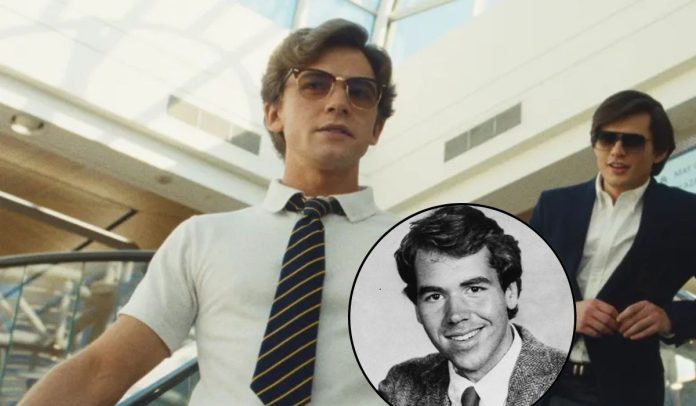

At first glance, Ryan Murphy’s The Shards appears to be a glossy thriller about beautiful teenagers, buried secrets and a serial killer stalking Los Angeles.
But the most haunting danger in the story is one its characters cannot yet see.

The series takes place in 1981, as a closeted teenage Bret Easton Ellis tries to navigate desire, deception and his final year at an elite Los Angeles school.
It is also the year the first cases of what would eventually become known as AIDS were officially reported.
The young men in The Shards believe the danger is hiding in passing cars, dark bedrooms and the mysterious new student who has entered their privileged world.
History knows that something far more devastating is already beginning around them.

A Thriller Built From Memory
The Shards is based on Ellis’s vast 2023 novel of the same name.
The book introduces a fictionalised version of the author as a 17-year-old student at the prestigious Buckley School in Los Angeles.
Bret has a girlfriend, belongs to a wealthy group of friends and is beginning to imagine himself as a writer.
He is also secretly having sex with men and trying to keep that part of his life separated from everything else.
His carefully divided world begins to unravel when an attractive and mysterious new student named Robert Mallory arrives at school.
At the same time, Los Angeles is being terrorised by a serial killer known as the Trawler.
Bret becomes convinced that Robert is connected to the murders, but his attraction, jealousy and increasingly unreliable perception make it difficult to know what is real.
Ryan Murphy and Ellis created the television adaptation together, with Igby Rigney playing the teenage Bret and Homer Gere playing Robert.
The official FX marketing sells the series through its most immediately seductive ingredients: rich teenagers, sexual danger and a frightening new boy who may not be what he appears.
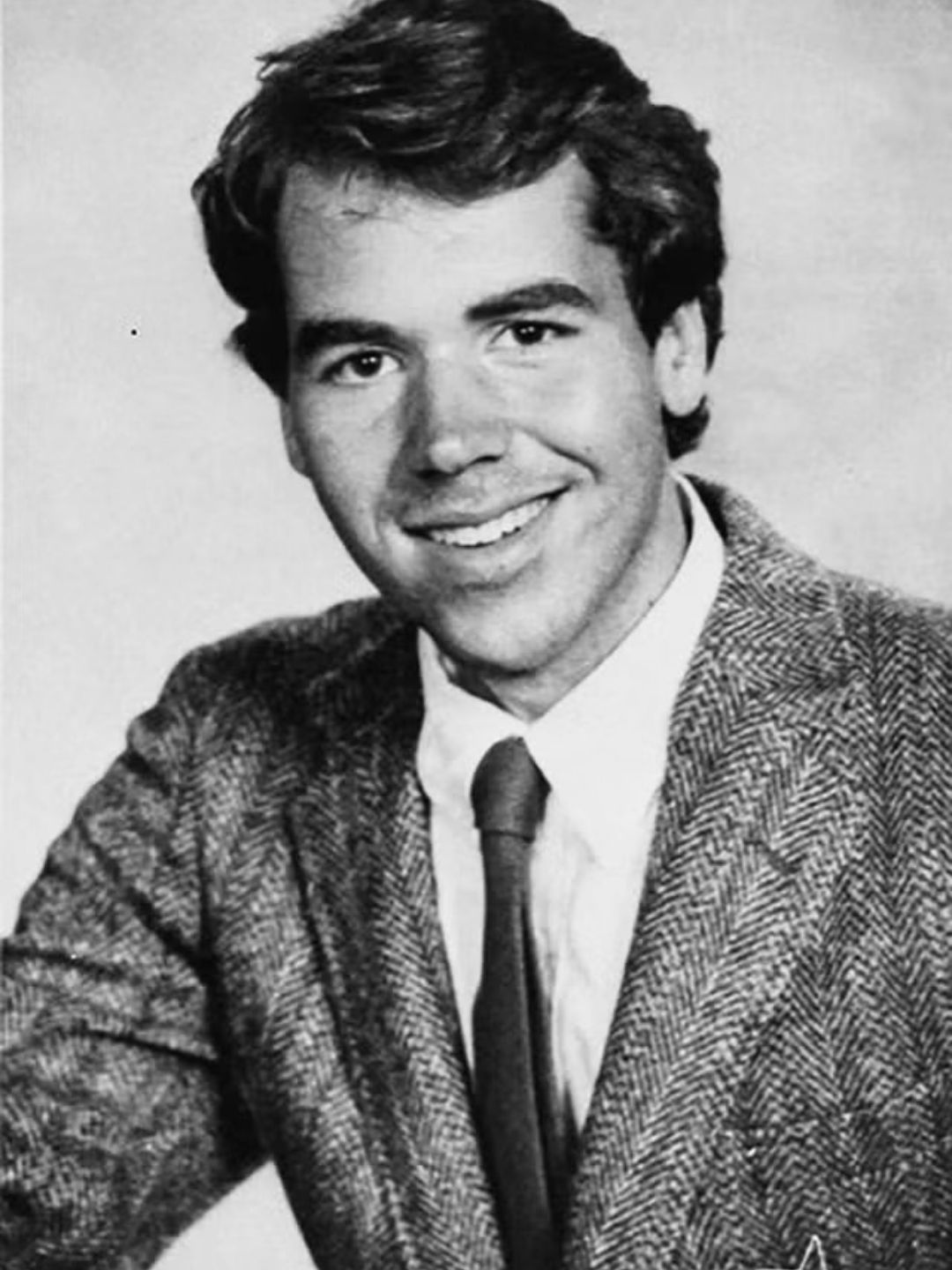
Yet Ellis has always described the material as deeply personal.
He originally narrated the story in instalments on his podcast before transforming it into a novel.
In interviews, he has called the work semi-autobiographical, while also making deliberately provocative claims about how much of it really happened.
The result is not a conventional memoir.
It is autofiction, where genuine memories, invented violence and the distortions of time are allowed to exist together.
Readers should therefore resist treating every sexual encounter, murder or betrayal in the story as a literal event from Ellis’s adolescence.
What feels unmistakably real is the emotional world beneath them.
It is the world of a gay teenager watching himself perform one life while privately living another.
The Girlfriend and the Secret Life
Teenage Bret’s girlfriend is not merely a disguise imposed on him by other people.
He cares about her, enjoys her company and recognises the social stability their relationship gives him.
But his desire is repeatedly pulling him towards men.
He meets them in secret, invents explanations for his absences and tries to prevent one part of his life from contaminating the other.
This was a familiar arrangement for many gay men who came of age before acceptance, representation and legal equality became imaginable.
A girlfriend could provide affection, companionship and protection.
She could also make a young man’s heterosexuality appear settled before anyone thought to question it.
The deception was not always calculated cruelty.
It could be an attempt to become the person everyone expected him to be.
It could also be a way to postpone recognising a truth that seemed capable of destroying everything.
For Bret, the closet is not simply a locked door.
It is an entire architecture of half-truths, compartments and constantly revised stories.
He is learning to become a novelist while already turning his own life into fiction.
Why 1981 Changes the Story
Ellis could have placed his fictionalised adolescence in almost any year surrounding his graduation.
He chose 1981.
On June 5 of that year, the United States Centers for Disease Control published a short report describing five previously healthy gay men in Los Angeles who had developed an unusual form of pneumonia.
Two of them had died.
The report, preserved in the CDC archive, is now recognised as the first official account of the epidemic that would later be named AIDS.
The patients were in the same city where Bret and his friends drive through warm nights, arrange secret encounters and behave as though youth might protect them from consequence.
The term AIDS did not yet exist.
HIV had not been identified.
There were no tests, effective treatments or prevention campaigns explaining what was happening.
Even doctors did not initially understand whether the emerging cases were connected.
That means The Shards does not take place before AIDS in the strictest sense.
It takes place at the moment AIDS history is beginning, almost invisibly, around people who have no language for it.
The distinction makes the series more unsettling.
We are not watching the final carefree summer before the first infection occurred.
We are watching ordinary life continue while the first signs of catastrophe are already appearing.
The Characters Fear the Wrong Monster
The Trawler gives the novel and series an obvious source of terror.
He targets young people, mutilates bodies and turns Los Angeles into a place where danger might be following any car through the night.
Robert creates another form of unease.
Bret is attracted to him, threatened by him and increasingly convinced that the new student is hiding something monstrous.
Those fears dominate his attention.
Meanwhile, an actual historical disaster is entering the city without a recognisable face.
It does not arrive as a masked killer or mysterious classmate.
It first appears as scattered medical cases that few people outside hospitals have heard about.
The dramatic irony is almost unbearable for viewers who know what followed.
Bret believes secrecy can keep his desires from damaging his public life.
Within a few years, secrecy surrounding homosexuality would become entangled with illness, death and a political refusal to acknowledge the lives being lost.
He fears being exposed as gay.
Soon, gay men would be forced to decide whether remaining invisible might also prevent them from demanding the attention, research and compassion their community desperately needed.
Before Desire Acquired a New Fear
There was danger in gay life before AIDS.
Men could lose jobs, families, homes and friendships if their sexuality became known.
Consensual sex between men remained criminalised in many parts of the United States.
Police harassment, violence and blackmail were real possibilities.
Ellis’s teenage character therefore has reasons to be afraid even before the epidemic enters public awareness.
But his fear is primarily social and psychological.
He worries about discovery, rejection and losing control over the image he presents to others.
He does not yet approach another man’s body as a possible source of an unnamed and fatal infection.
That would soon change for an entire generation.
Sex, which had become a form of liberation for many gay men during the 1970s, was increasingly accompanied by confusion and terror as the epidemic spread.
Friends began disappearing.
Lovers became caregivers.
Young men who had only recently found a community watched it organise memorials, hospital visits and political protests at the same time.
Murphy does not need to insert an AIDS storyline into The Shards for that history to affect how gay viewers experience it.
The date does the work.
A Lost World That Was Never Entirely Innocent
It is tempting to describe 1981 as an innocent moment before everything changed.
That description is emotionally powerful but incomplete.
The wealthy teenagers in The Shards are not innocent.
They lie, betray one another, use drugs and move through a city structured by privilege.
Bret’s ability to hide relies partly on money, cars and private spaces unavailable to many other young gay men.
The world beyond his school is also far from safe.
Gay people were already living under laws and social attitudes that treated them as inferior.
Some were estranged from their families, while others survived through carefully maintained double lives.
AIDS did not create homophobia.
It entered a culture already prepared to treat gay suffering as shameful, deserved or unimportant.
That existing prejudice helps explain why the epidemic became so devastating.
The disease was biological.
The abandonment was political.
What Older Gay Viewers Bring to the Series
For gay men who remember the early 1980s, The Shards may provoke emotions that have little to do with its mystery.
A song, car or Los Angeles street can summon memories of people who did not survive the decade.
The young bodies presented so beautifully by Murphy’s camera may remind viewers of photographs preserved long after their subjects died.
Even moments of pleasure can carry a shadow the characters themselves cannot perceive.
Younger LGBTQ+ viewers may experience the story differently.
They grew up in a world where HIV can be prevented with PrEP and effectively treated with modern medication.
For many, AIDS is history rather than memory.
The Shards offers them a glimpse of gay adolescence at a historical threshold.
It shows a young man frightened of being known before visibility became associated not only with personal freedom, but with collective survival.
Ryan Murphy’s Connection to This History
Ryan Murphy has returned repeatedly to the AIDS era throughout his career.
The Normal Heart dramatised the anger and grief of activists fighting institutional indifference in New York.
Pose portrayed the epidemic through the lives of Black and Latino queer and transgender people who created family inside ballroom culture.
The Shards approaches the history from an earlier and more indirect position.
There are no hospital wards, activist meetings or memorial services in its central premise.
Instead, Murphy recreates the atmosphere of a world that does not yet understand it is standing at the edge of profound loss.
That makes the series a kind of prehistory to the stories he has told before.
The danger is still outside the frame.
The audience supplies the knowledge.
The Closet as a Horror Story
The serial-killer plot allows Ellis to exaggerate the fears surrounding teenage Bret until they become almost supernatural.
But the closet already contains many of the elements of horror.
There is the fear of discovery.
There is the sense of being watched.
There is the constant need to decide which version of reality another person can be allowed to see.
There is also the possibility that desire itself might expose the secret.
Bret’s obsession with Robert blurs attraction and suspicion until he can no longer separate what he wants from what he fears.
That confusion will feel recognisable to many gay men who grew up when the people they desired could also become the people most capable of revealing them.
Ellis turns those emotions into a thriller, but their source is painfully human.
A closeted life can require so much invention that the person living it begins to lose confidence in his own story.
They Do Not Know What Is Coming
The gay story inside The Shards is not hidden because the series avoids sexuality.
Bret’s desire is central to its plot.
What remains hidden is the historical meaning surrounding it.
The series gives us a fictional gay teenager in Los Angeles during the same year doctors in that city first reported the disease that would transform queer life across the world.
He is already afraid.
He simply does not know what fear will soon mean.
That knowledge belongs to the audience.
We know about the hospital rooms, newspaper obituaries and unanswered phone calls that followed.
We know about the lovers who became nurses and the friends who became activists.
We know about the silence of political leaders and the extraordinary communities that organised when institutions failed them.
We also know that gay life did not end.
People continued loving, creating, protesting and finding joy even during the epidemic’s darkest years.
That survival prevents the story from becoming only an elegy.
The Shards captures one gay teenager before all of that history has reached him.
He believes the greatest threat is the secret he is carrying.
Forty-five years later, we can see both how much he had to fear and how much he could never have imagined.
The serial killer may provide the suspense, but history gives The Shards its most haunting presence.
📷 FX / Hulu / Bret Easton Ellis yearbook
🎬 Prefer video? Subscribe to B-Gay on YouTube: https://youtube.com/@BGaycom