


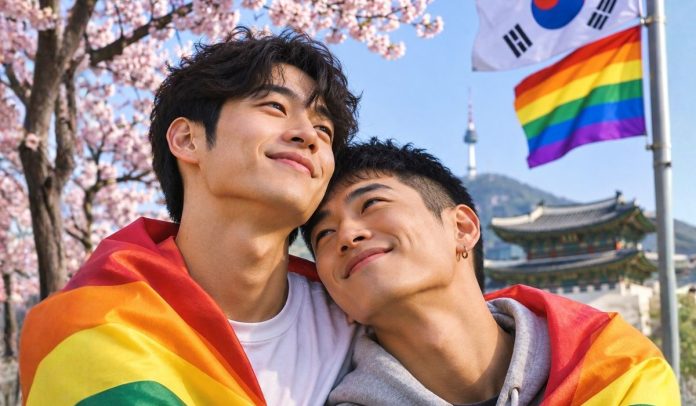

For a young gay person gathering the courage to ask for help, the way a counsellor responds can matter enormously.
That is why a classification buried in a South Korean youth counselling manual has drawn criticism: it placed homosexuality among delinquency-related problems, alongside theft, sexual violence and drug-related issues.
South Korea’s Ministry of Gender Equality and Family has now expressed regret and promised to correct the passage. The commitment is welcome. What matters next is how it changes the support young people receive.
Guidance meant to help young people
As PinkNews reported, the manual was published by the Korea Youth Counseling & Welfare Institute, an organisation affiliated with the ministry.
It guides professionals who support young people facing difficulties and connect them with counselling, welfare, healthcare and education services.
According to the Korea JoongAng Daily, the classification appeared in the December 2019 edition and remained in the December 2025 revision. The institute attributed it to older reference material carried over by the writing team.
After local reporting brought the passage to public attention, human rights organisations demanded a change. The ministry responded on November 4, pledging an immediate correction, a broader review involving counselling experts and stronger human rights training.
Calling it an editorial error does not make its implications disappear. A manual helps shape professional responses, including whether a young person feels understood or judged.
Support also means having somewhere safe to go
The Korea Herald reports that separate guidance for youth-shelter staff was revised in August after consultation with LGBTQ support organisations and others.
That guidance explicitly prohibits refusing admission or otherwise disadvantaging young people because of their sexual orientation or gender identity. Staff must also record the reasons for decisions to restrict admission or require someone to leave.
Meanwhile, community organisations continue offering practical care. South Korea’s LGBTIQ Youth Support Center DDing Dong provides counselling, opportunities to share meals with other LGBTQ young people, and food and essential supplies for those living away from their families.
For older gay readers, the fear of being treated as a problem may bring back memories. It also makes the responsibility clear: the next generation deserves adults and institutions it can trust.
The announced correction is a necessary step. Its value will be measured in young people receiving respectful, informed care when they ask for it.
📷 AI / Canva stock