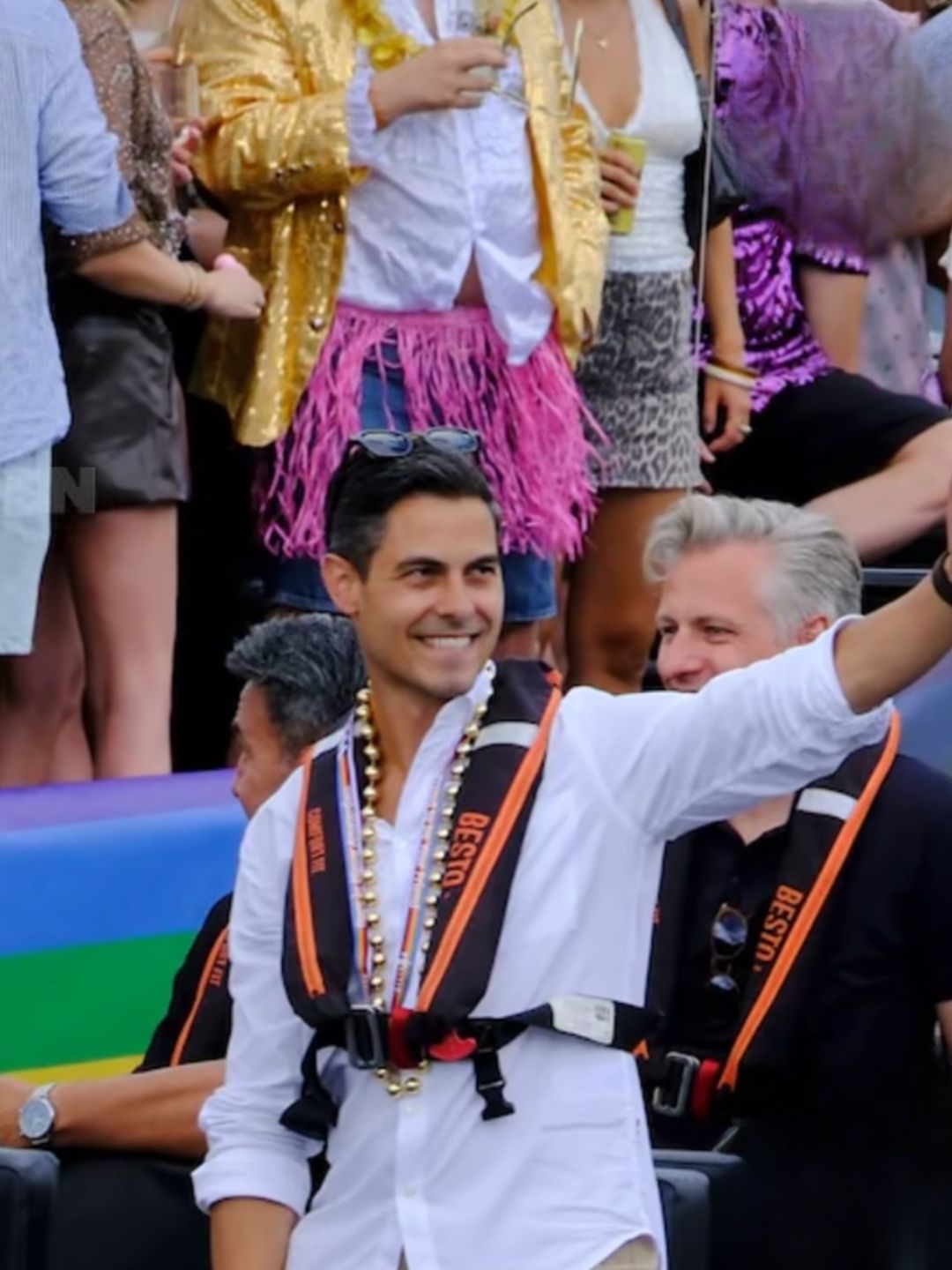


Rob Jetten helps mark 25 years of same-sex marriage in the city where history was made

Amsterdam is celebrating one of the most important milestones in modern LGBTQ history, and this year’s anniversary came with a powerful layer of symbolism.

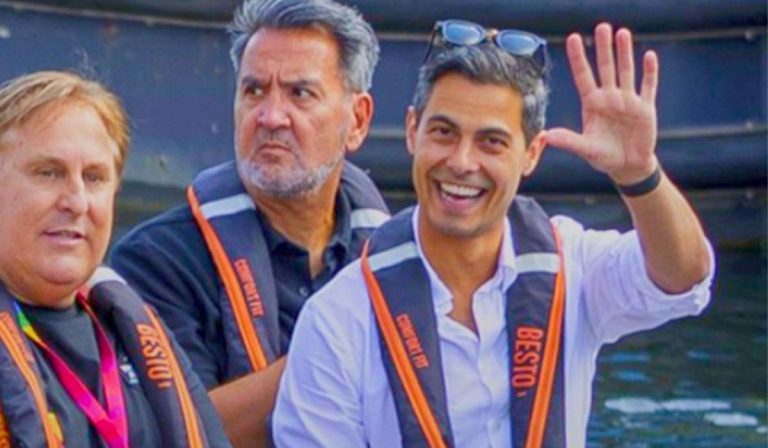
Twenty-five years after the Netherlands became the first country in the world to legalise same-sex marriage, Dutch prime minister Rob Jetten joined the commemorations in the city where those first landmark weddings took place.

The moment is historic on its own.

On 1 April 2001, the Netherlands changed the legal landscape for queer couples everywhere by becoming the first country to open marriage to same-sex partners.

Since then, more than 36,000 same-sex couples have married in the country, turning what once felt radical into something woven into everyday life.

But this anniversary is not only about numbers or legal firsts.

It is also about what those early moments of visibility made possible for the generation that came after.

Jetten has spoken movingly about that connection, recalling that he was just 14 years old when he watched those first Amsterdam weddings on television.

He said the images were both inspiring and emancipating, and it is easy to understand why.

For queer teenagers, especially in the early 2000s, seeing couples like themselves publicly celebrated by the state did more than make headlines.

It quietly expanded the boundaries of what a future could look like.

That is part of what makes Jetten’s presence at the anniversary so resonant.

He is not simply a politician attending a civic celebration.

He is the Netherlands’ first openly gay prime minister, and someone whose own life was shaped by the visibility that earlier generation fought for.

Now he is standing on the other side of that history, helping honour it as a national leader.

There is something beautifully full-circle about that.

The ceremony itself took place at Amsterdam City Hall in the early hours of the morning, echoing the famous midnight weddings that helped define the start of marriage equality in 2001.

This time, three same-sex couples were married as part of the anniversary event, with Amsterdam mayor Femke Halsema officiating.

The city was not just revisiting an old victory.

It was showing that the meaning of that moment still lives in the present.

Jetten’s personal story adds another warm dimension to it all.

He is soon to marry his partner, Argentine field hockey player Nicolás Keenan, which gives his reflections on marriage equality an even more intimate edge.

This is not abstract politics for him.

It is part of the life he is building.

That is often the quiet power of LGBTQ progress.

Big legal changes eventually become ordinary human details.

A wedding to plan.

A partner to come home to.

A future you can picture without having to translate it into someone else’s terms.

At the same time, the anniversary was not framed as pure triumphalism.

Mayor Halsema also used the occasion to note that progress cannot be taken for granted, especially after periods when LGBTQ rights have felt politically vulnerable.

That gave the celebration a welcome note of realism.

Because anniversaries like this are not only about remembering what was won.

They are also about recognising that visibility, dignity, and equality still need defending.

Even so, there is no denying the emotional charge of this one.

For many queer people, Amsterdam’s first weddings were not just symbolic.

They were proof that love between two men or two women could be recognised publicly, legally, and joyfully.

And now, a generation later, one of the young people who saw that possibility on a TV screen is leading the country that made it real.

That feels like more than good optics.

It feels like the long echo of change.

📸 IG: @ jettenrob

A gay hockey referee and a drag performer just gave us the sweetest love story

Sometimes the best queer love stories begin not with instant chemistry, but with the kind of first date that seems almost destined to become a funny disaster story later.

That is part of what makes the relationship between Stephen Finkel and Ryan Prindle so charming.

According to a new Outsports profile, the two met on Tinder and headed out on a first date last fall that immediately highlighted just how different their worlds were.

Finkel arrived straight from refereeing a hockey game and showed up in what was described as full referee gear.

Prindle, meanwhile, came dressed in green leather pants and a turtleneck, bringing a completely different kind of energy to the bar.

On paper, it almost sounds like a setup invented by a screenwriter trying to force two opposite worlds together.

But in real life, that contrast turned out to be exactly what made the connection interesting.

Finkel is a gay hockey referee who had already spoken publicly about being out in a sport that is still not always the easiest environment for queer men.

Prindle performs in drag under the name Ryder Die and moves through a much more visibly queer social world built around performance, nightlife, and self-expression.

Their first meeting was awkward enough that both of them reportedly thought it might just become one of those stories you tell your friends afterward.

Instead, they kept talking.

By the second date, they were in a more private setting and able to open up without worrying so much about how mismatched they may have looked to the outside world.

That seems to have changed everything.

What followed was not just a growing romance, but a kind of mutual cultural exchange between two very different queer experiences.

For Finkel, dating Prindle meant stepping into parts of queer life he had never really explored before.

Even though he had been out for several years, he had apparently never been to a gay bar before meeting Prindle.

Through the relationship, he began accompanying them to bars and drag shows and found himself seeing a side of queer culture that had been largely outside his orbit.

One especially sweet detail from the story is that the first time Finkel watched Prindle perform in drag, he cried.

That reaction says a lot.

Not only about affection, but about what it can mean when someone you care about invites you fully into their world and you finally understand why it matters so much to them.

Prindle, in turn, had their own culture shock when they entered Finkel’s world.

They started going to hockey games, initially arriving in full dramatic style before gradually realizing that hockey arenas demand a little more comfort and a little less fashion commitment.

Still, what struck them was how familiar the energy actually felt.

They described the chants, excitement, and crowd atmosphere as something that was not all that different from drag performance culture.

That comparison is part of what makes this story feel richer than a simple opposites-attract romance.

It is also about recognition.

Two queer people from very different spaces slowly realizing that the worlds they love are not as disconnected as they first appeared.

The story also touches on something more thoughtful.

Prindle admitted that before dating Finkel, they might have been too quick to dismiss someone from the sports world as “straight passing” or not visibly queer enough.

Getting to know him changed that perspective.

That detail gives the relationship a little extra emotional weight, because it shows how love can complicate assumptions inside the community as well as outside it.

And then there is the final detail that will absolutely delight anyone already obsessed with hockey-flavored queer romance.

Prindle apparently jokes that the two of them are “Kip and Scott,” referencing Heated Rivalry.

Honestly, that alone may be enough to win over a certain section of the internet.

But even without the fictional comparisons, Finkel and Prindle’s relationship feels memorable for a very simple reason.

It is tender, a little unexpected, and built on the idea that queer life does not come in just one form.

Sometimes it looks like a hockey ref and a drag performer figuring each other out one date at a time.

And sometimes that turns out to be exactly the right match.

📸 IG: @ ryanfuzz95

Who Scott Mills is, why his BBC exit is making headlines, and what we know so far

For many readers outside the UK, Scott Mills may not be an instantly familiar name, but in Britain he has long been one of the most recognisable voices in mainstream radio.

Mills, 53, built his reputation over decades at the BBC, first becoming a fixture on Radio 1 before later moving to Radio 2, where he eventually landed one of the broadcaster’s biggest jobs as host of the flagship breakfast show.

That matters, because breakfast radio in the UK is still a major cultural platform, and Mills was not some niche presenter quietly working in the background.

He was a mainstream media personality with a loyal audience, a long BBC history, and the kind of familiar public profile that comes from being in people’s ears for years during school runs, commutes, and morning routines.

He was also known beyond radio.

Mills has been part of the BBC’s Eurovision coverage, appeared on television projects, and became more widely visible to some audiences after winning Celebrity Race Across the World with his husband, Sam Vaughan.

That relationship has been one of the more openly joyful parts of his public image in recent years.

Mills and Vaughan had been together for several years before getting engaged in 2021 and marrying in Spain in 2024, with the relationship often presented in the press as warm, stable, and very much part of Mills’s current chapter.

Vaughan, who has his own background in radio and media, became more familiar to the public through their appearances together, especially after the race show win helped introduce them as a couple to viewers who might not normally follow radio personalities.

That is part of why the current story has landed so abruptly.

The BBC has confirmed that Mills is no longer under contract, but it has only publicly referred to allegations connected to “personal conduct” and has not laid out the details in any formal public explanation.

That lack of specificity has created a swirl of reporting, speculation, and tabloid interpretation.

Some outlets have claimed the issue relates to a historic relationship with another man from more than a decade ago, but those claims have not been fully explained or clearly substantiated in public by the BBC itself.

So while that allegation is now part of the media conversation, it should still be treated with caution.

What is clear is that Mills’s exit appears to have been sudden.

Reports say he had recently signed off his show as normal, with no public indication that his run at Radio 2 was about to end, before being replaced on air by another presenter.

That kind of abrupt departure is one reason the story has become so big so quickly in the UK media world.

It is not simply that a presenter left a job.

It is that a broadcaster with a career stretching back to the late 1990s, and who only recently took over the breakfast slot, appears to have been removed with very little public explanation.

For readers outside Britain, it may help to think of him as a long-running national radio star rather than a minor celebrity.

He was a trusted BBC personality, a familiar entertainment host, and a figure closely associated with cheerful, mainstream, accessible broadcasting.

That image now sits in tension with a story the public still does not fully understand.

There is also a human dimension that makes the headlines feel more complicated.

The contrast between Mills’s polished public life, his visible marriage to Vaughan, and the murky language around his dismissal is exactly what is fuelling so much attention.

It leaves an unfinished feeling to the story.

Right now, the most accurate summary is also the least satisfying one.

Mills is a major British radio presenter who has spent decades building a career at the BBC, he is married to Sam Vaughan, and he has now left the broadcaster after allegations described only as relating to personal conduct.

Beyond that, much of the detail being circulated remains either partial, speculative, or attributed to secondary reporting rather than a full official account.

And that is why this story is not just attracting clicks in Britain.

It is attracting scrutiny.

📷 IG: @ realscottmills

“Bury your gays” is back in the conversation after General Hospital kills off Marco

Soap operas are built on exits, returns, shock twists, and dramatic deaths, but when one of the few queer male characters on daytime television is suddenly written out, viewers tend to notice for reasons that go beyond ordinary plot mechanics.

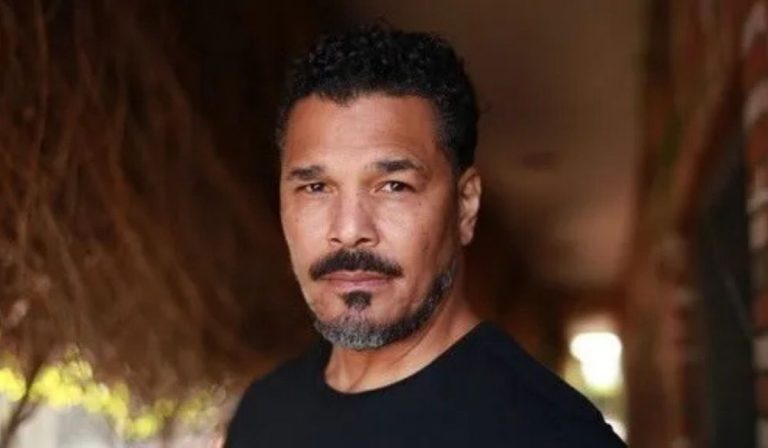
That is exactly what happened this week when General Hospital killed off Marco Rios, the gay character played by out actor Adrian Anchondo, in a violent storyline that ended with the character being stabbed and later dying at the hospital.

The reaction online was immediate, and not just because fans had grown attached to Marco, but because the move landed inside a very familiar cultural frame that LGBTQ viewers have been talking about for years.

That frame is the “bury your gays” trope, the long-running pattern in television and film where queer characters so often seem to be denied the stability, longevity, and future routinely granted to their straight counterparts.

Marco was introduced on the ABC soap almost exactly a year earlier and eventually became the love interest of Lucas Jones, another gay character on the show, which made his death feel especially abrupt to fans who thought the series might actually be investing in a fuller queer storyline.

That is part of why this story resonates beyond one episode of one soap.

Representation is still uneven enough that queer viewers rarely experience these developments as isolated writing decisions.

Instead, they tend to register them as part of a broader pattern about who gets complexity, who gets romance, and who gets to remain in the picture long enough for a future to exist at all.

To his credit, Anchondo is handling the exit with a great deal of grace.

In comments to TV Insider, he spoke warmly about the opportunity to play a queer Latino character on daytime television, saying it felt important to be seen and represented and noting how many messages he received from fans thanking him for showing multiple dimensions in a queer character.

He struck a similar tone on social media, saying he was proud of the work, proud of the representation, and still grieving alongside fans even as he expressed gratitude for the experience.

That response probably says something important about why Marco mattered in the first place.

He was not simply there to check a diversity box or to serve as background texture in a larger straight narrative.

For many viewers, he represented the possibility that queer daytime characters could be charismatic, layered, romantic, and culturally specific without being reduced to a one-note function.

There is also a bittersweet irony in the fact that Anchondo says the show brought something meaningful into his real life as well.

In his exit interview, he revealed that joining the soap ultimately led to a relationship with fellow actor Colton Little from Days of Our Lives, giving the story an off-screen happy ending even as Marco’s on-screen one turned tragic.

That detail has only sharpened the contrast for fans who were hoping Marco and Lucas might be allowed something similar in fictional form.

Of course, this is daytime television, where death is rarely as final as it first appears.

Anchondo himself pointed out that multiple people on the show have returned from the dead before, so viewers should probably not rule anything out just yet.

Still, even if Marco somehow reappears down the line, the reaction to this week’s episode has already made one thing clear.

Audiences are more alert than ever to how queer stories are handled, and they are no longer content to treat representation as meaningful only at the point of arrival.

They are paying attention to what comes next, whether queer characters are allowed emotional continuity, and whether they are written as people with a future instead of symbols with an expiration date.

That is why Marco’s death hit a nerve.

It was not only about losing a character.

It was about seeing an old television pattern reappear in a medium that still has far too few queer love stories to waste.

📷 IG: @ javichondo

Ty Herndon opens up about the years he spent trying to outrun himself

Ty Herndon is telling one of the most personal stories of his career as he prepares to release his first memoir, What Mattered Most.

The country singer, now 63, is reflecting on the ways his gay identity, religious trauma, addiction, and deep emotional pain shaped much of his life before he finally reached a place of peace.

In a new interview with People, Herndon says writing the book forced him to confront just how much of his life had been ruled by the need to feel loved, accepted, and somehow “normal.”

That idea of normal began haunting him early.

One of the memoir’s opening moments takes readers back to a Baptist church service he attended at just 10 years old, where a preacher described homosexuality as “ungodly” long before Herndon even fully understood what being gay meant.

Still, the message landed.

And like it has for so many queer people raised in rigid religious environments, that kind of shame did not simply disappear with time.

Instead, it settled in quietly and shaped the years that followed.

Herndon describes decades of internalized homophobia, including a long period in which he balanced public relationships with women while keeping his relationships with men private.

He eventually came out publicly in 2014, but the memoir makes clear that coming out was only one part of a much longer and more complicated journey.

According to the interview, the book also addresses methamphetamine addiction, sexual assault, multiple suicide attempts, and the emotional wreckage left behind by years of trying to suppress parts of himself.

What gives the story its weight is not just the pain, but the clarity with which Herndon now looks back on it.

He does not frame the memoir as an attempt to expose anyone else.

Instead, he says he is “telling on myself,” which feels like a revealing and grounded way to describe a book built around accountability, memory, and self-understanding.

One especially moving part of the story involves the women he loved in the past, including ex-wife Renee Posey.

Herndon is candid that revisiting those relationships was one of the hardest parts of writing the memoir, not because the feelings were fake, but because the damage was real.

He says he truly cared about the women in his life and still carries sorrow about the pain he caused them.

That detail gives the story more emotional depth than the usual celebrity-confession arc.

This is not a neat reinvention narrative.

It is a story about someone trying to make peace with the full truth of who he was, who he hurt, and who he has become.

Today, that picture looks very different.

Herndon says he has found his own version of normal in his life with husband Alex Schwartz, describing a grounded domestic life filled with the ordinary things that once seemed out of reach.

There is something quietly powerful in that.

For queer people who grew up being told that their future could never look safe, stable, or loved, a life that feels ordinary can be its own kind of triumph.

That is part of what makes Herndon’s story resonate now.

Not because it is dramatic, but because it speaks to the long shadow of shame and the equally long process of stepping out from under it.

And for a country artist whose career began in a world that was not exactly known for embracing queer openness, the fact that he can now say “I can finally breathe” feels significant.

What Mattered Most: A Memoir can be pre-ordered now (we may receive a small commission if you order through the link).

It is set for release on March 31, and it sounds less like a comeback story than a reconciliation story.

Sometimes that is the more meaningful one.