


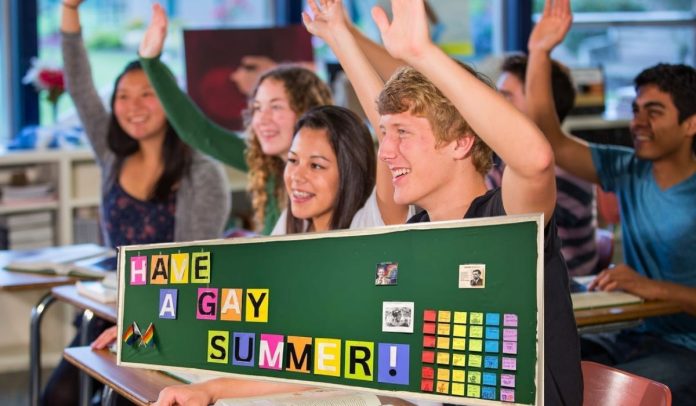

A cheerful Pride Month message created by high school students has unexpectedly become the latest flashpoint in America’s ongoing cultural debates.
The display was created by members of a Gay-Straight Alliance, commonly known as a GSA.
The message was simple.
It wished fellow students to “Have a Gay Summer!”
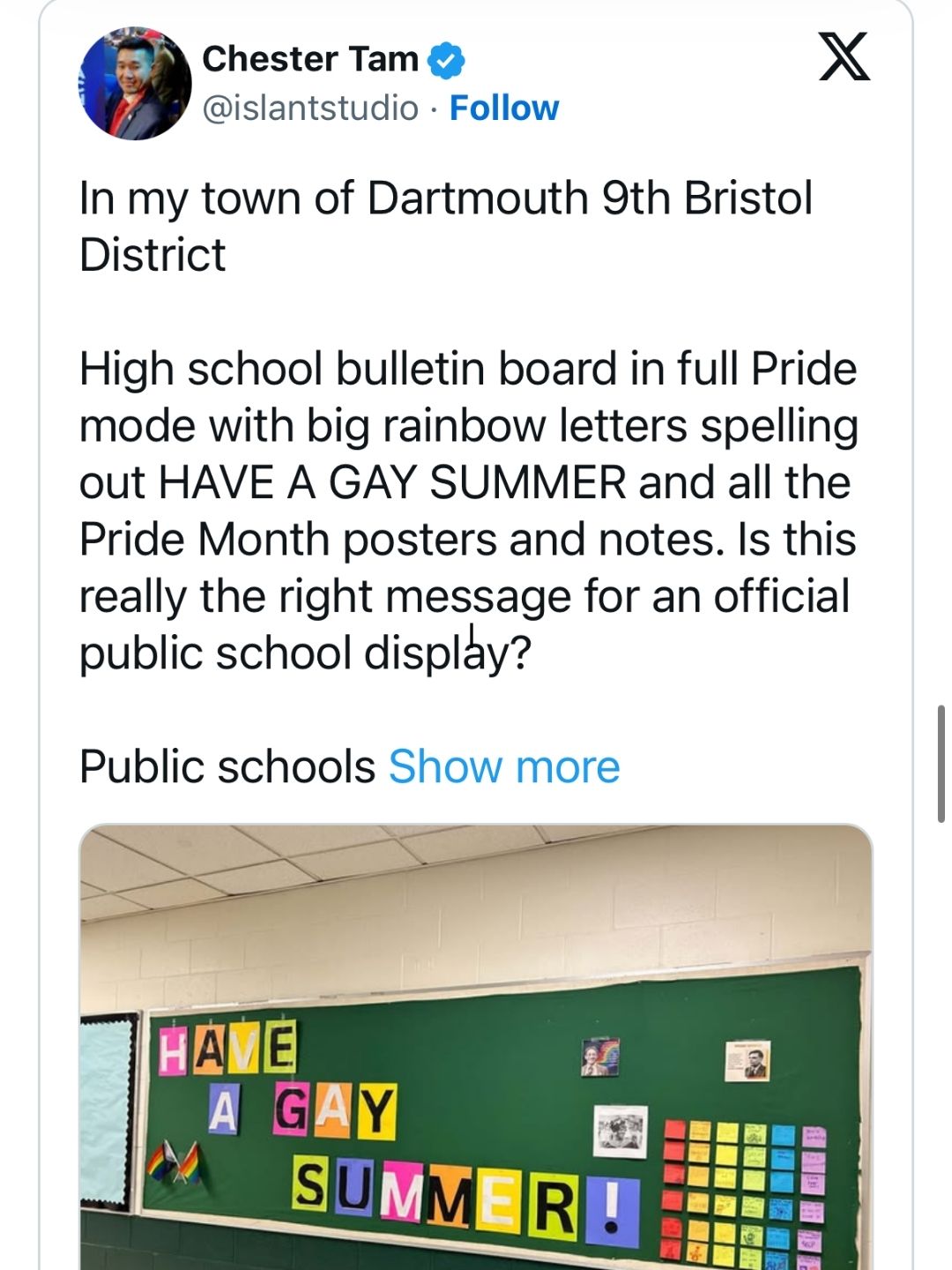
After an unhappy parent shared a photo of the display on social media, the image quickly spread across conservative online communities (LGBTQ Nation).
Critics described the message as inappropriate, while supporters argued that the reaction said more about the critics than the sign itself.
The phrase “have a gay summer” can be interpreted in several ways.
Within LGBTQ+ communities, it can refer to queer identity, Pride celebrations or simply a playful expression of joy and happiness.
The word “gay” itself was commonly used to mean cheerful and carefree long before it became widely associated with sexual orientation.
Supporters of the students argued that the display was clearly intended as a positive and inclusive message.
They noted that GSAs exist in thousands of schools across the United States and are designed to provide support and community for LGBTQ+ students and their allies.
Research has consistently found that GSAs can contribute to safer and more welcoming school environments for LGBTQ+ youth.
The controversy quickly expanded beyond the original school.
Commentators on social media debated whether Pride-related messages belong in educational settings and whether the phrase itself was appropriate.
Others questioned why a lighthearted display generated such a strong reaction.
The disagreement reflects a broader trend in which relatively small moments involving LGBTQ+ visibility can become national political talking points.
Over the past several years, school libraries, classroom displays, Pride flags and student organizations have all become subjects of intense public debate.
For LGBTQ+ students, however, the original intent behind the message appears far less complicated.
The display was created during Pride Month and was intended to send classmates into summer break with a positive message.
Whether people view the phrase as playful, political or both, the reaction demonstrates how discussions around LGBTQ+ visibility continue to generate strong feelings across the country.
What began as a few words on a school display has become another example of how even simple expressions of inclusion can spark a much larger conversation.