


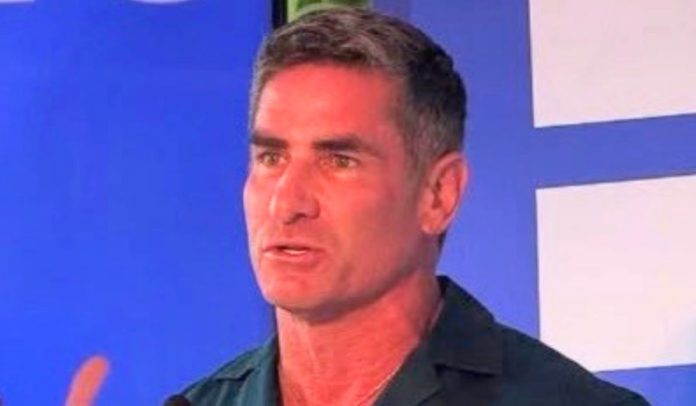

James Dale knows what it feels like to have an organization that shaped your childhood suddenly declare that you do not belong.
Dale joined the Boy Scouts when he was eight years old and eventually earned the rank of Eagle Scout.
In 1990, when he was 19 and serving as an assistant scoutmaster, the organization expelled him after a newspaper article identified him as gay (LGBTQ Nation).
He challenged the decision in a legal battle that eventually reached the United States Supreme Court.
New Jersey’s highest court initially ruled that the Scouts had violated the state’s anti-discrimination law.
The national organization appealed, arguing that forcing it to accept an openly gay leader would interfere with its constitutional freedom of association.
In 2000, the Supreme Court agreed in a narrow 5–4 decision known as Boy Scouts of America v. Dale.
The ruling established that a private expressive organization could exclude someone when that person’s presence significantly affected the message the organization claimed to express.
For Dale, the judgment meant losing the case after nearly a decade of litigation.
The Scouts later reversed their exclusionary policies, allowing openly gay youth in 2013 and openly gay adult leaders in 2015.
The organization, now called Scouting America, has also admitted girls and said that transgender young people may participate.
Those changes have placed the organization in the sights of Defense Secretary Pete Hegseth.
Hegseth threatened to withdraw the Pentagon’s longstanding support unless Scouting America abandoned diversity initiatives and returned to what he described as its traditional mission.
The military has historically provided logistical assistance for major Scout events, including access to bases, transportation and support for the National Jamboree.
Scouting America and the Pentagon reached an agreement in February 2026 that allowed that partnership to continue.
However, the two sides publicly described the agreement in very different terms.
Hegseth claimed that membership would be determined by biological sex at birth and that the organization had agreed to eliminate diversity, equity and inclusion initiatives.
Scouting America disputed the suggestion that transgender members had been banned.
Its chief executive, Roger Krone, said transgender people remained in the program and would continue to be welcome.
The contradiction left families, volunteers and advocates uncertain about what the organization had actually promised.
Dale has now filed a Freedom of Information Act lawsuit demanding that the Department of Defense release the agreement.
He argues that the public has a right to know whether the government pressured a private youth organization into discriminating against transgender children.
The legal irony is impossible to miss.
The Supreme Court ruling that once allowed the Scouts to exclude Dale may now protect Scouting America from government pressure to exclude others.
Dale says the principle of expressive association belongs to the organization itself rather than whichever administration currently controls federal resources.
If Scouting America has chosen inclusion as part of its identity and message, the government should not be permitted to force it in the opposite direction.
The controversy is no longer theoretical.
At the 2026 National Jamboree in West Virginia, Scouting America removed dedicated inclusion spaces previously created for LGBTQ+ scouts, girls and scouts of color.
The organization said it remained committed to serving all young people, but the changes followed months of Pentagon pressure over what Hegseth called “woke” policies.
Some scouts and volunteers decided not to attend after the inclusion programs were eliminated.
Others attended while wearing Pride symbols so vulnerable young people would still know that supportive adults were present.
Dale sees a direct connection between his experience and what transgender scouts are facing now.
He was not expelled because he failed to live by the values of scouting.
He was expelled because leaders decided that being gay made him incompatible with those values.
Transgender young people are now hearing variations of the same argument.
Supporters of exclusion insist they are protecting tradition, while those affected are told that their identities make them unsuitable for full participation.
Dale has also offered support to transgender plaintiffs in other legal battles, arguing that people who have experienced institutional rejection have a responsibility to stand beside those facing it next.
His campaign is therefore larger than a request for one government document.
It asks whether federal power can be used to make private organizations less inclusive while hiding the precise terms of the arrangement from the public.
It also asks whether the painful history of gay exclusion in scouting will become a lesson or simply a template applied to another group.
James Dale spent years trying to prove that gay people belonged in the Scouts.
More than three decades later, he is still defending the same basic principle.
A young person should not lose community, opportunity or dignity simply because someone in power has decided that their identity does not belong.
📷 @jamesrdale
🎬 Prefer video? Subscribe to B-Gay on YouTube: https://youtube.com/@BGaycom