


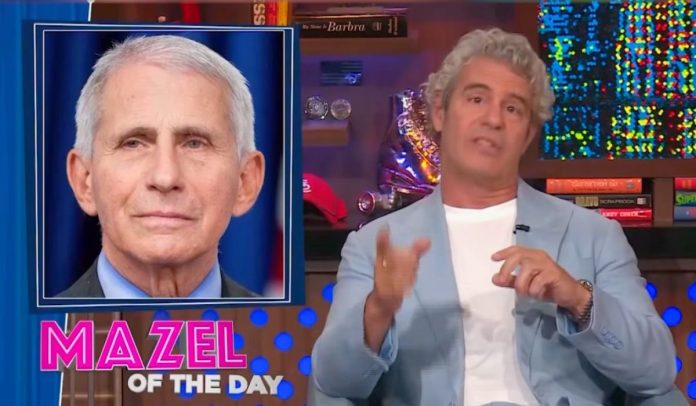

Andy Cohen briefly moved Watch What Happens Live away from celebrity gossip and reality television to deliver an unusually serious defence of Dr. Anthony Fauci.
The openly gay host selected Fauci for his “Mazel of the Day” following a contentious appearance before the Senate Homeland Security and Governmental Affairs Committee.
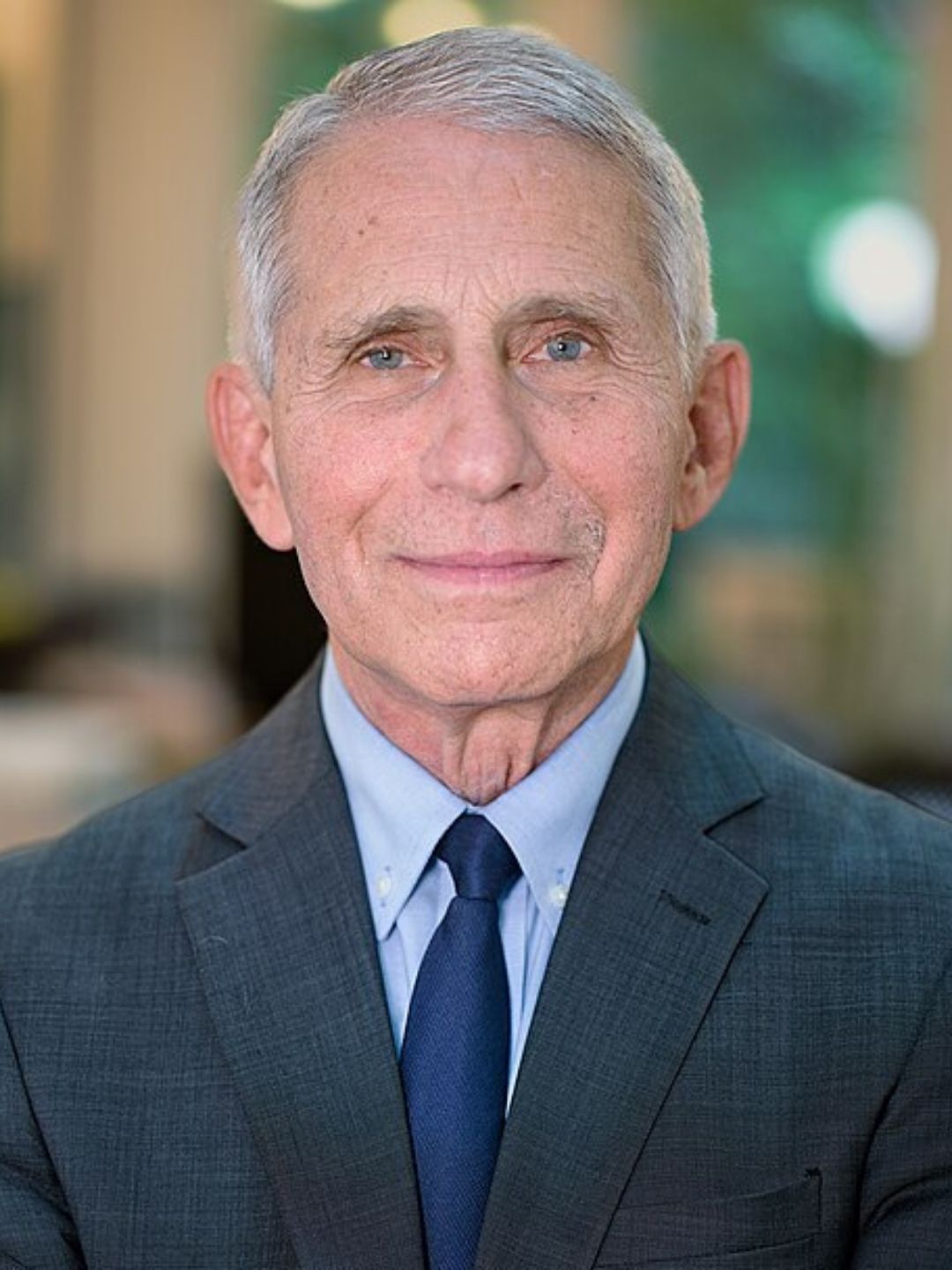
Fauci had been subpoenaed by Republican committee chair Rand Paul to answer questions about his management of the COVID-19 pandemic and previous testimony concerning federally funded coronavirus research.
The former director of the National Institute of Allergy and Infectious Diseases invoked his Fifth Amendment rights more than 100 times during the approximately three-hour hearing.
Fauci said he followed his attorney’s advice because he believed Paul was attempting to create a path toward prosecuting him.
Paul and other Republican senators accuse Fauci of misleading Congress and the public about the origins of COVID-19 and research involving bat coronaviruses in China.
Fauci has consistently denied lying about those subjects.
Democratic senators described the proceeding as a politically motivated attempt to entrap a retired public servant.
More than 150 infectious-disease specialists and other scientists also signed a public letter rejecting the accusations against Fauci as unsupported.
Paul announced that the committee would vote the following week on whether to hold Fauci in contempt for refusing to answer its questions.
A committee referral would not itself amount to a criminal charge or conviction.
It would have to clear additional political and legal stages before the Justice Department could seek a prosecution.
Legal experts have also said that any case would raise unresolved questions about Fauci’s Fifth Amendment rights and the scope of the pardon President Joe Biden issued before leaving office in 2025.
Cohen did not attempt to resolve those complicated legal arguments during his late-night monologue.
Instead, he condemned what he saw as Republican senators using the hearing to humiliate and threaten an 85-year-old scientist.
Cohen said Fauci had spent the day being “grilled, berated and sworn at” over crimes that Republicans wanted the public to believe he had committed.
He then shifted attention away from the partisan conflict surrounding COVID-19 and toward the public-health career that preceded it.
Fauci joined the National Institutes of Health in 1968 and became director of NIAID in 1984.
He remained in that position for 38 years and advised seven American presidents on infectious diseases and public-health emergencies.
His work during the HIV/AIDS epidemic is particularly significant for LGBTQ+ audiences.
Fauci began studying the emerging illness shortly after the first cases among gay men were reported in 1981.
He conducted research that helped expand scientific understanding of HIV and later played a major role in changing how experimental treatments were developed and made available.
That history was not free from conflict or legitimate criticism.
During the epidemic’s devastating early years, activists accused federal health agencies of moving too slowly while gay men and others with AIDS were dying in enormous numbers.
ACT UP protested at the National Institutes of Health, while writer and activist Larry Kramer publicly attacked Fauci in exceptionally harsh terms.
Fauci eventually invited activists into discussions about clinical research and listened as they demanded a greater role for patients in decisions affecting their lives.
That evolving relationship helped change federal treatment research and the broader relationship between medical institutions and patient advocates.
Kramer and Fauci eventually became friends despite their years of confrontation.
Kramer later described Fauci as the only true and great hero among government officials responding to AIDS.
Cohen referenced that remarkable reversal while explaining why he believed Fauci deserved gratitude rather than abuse.
He also highlighted Fauci’s contribution to the President’s Emergency Plan for AIDS Relief.
Fauci was one of the principal architects of PEPFAR, which President George W. Bush launched in 2003 to expand HIV prevention and treatment internationally.
The United States government credits the program with saving approximately 26 million lives and enabling millions of babies to be born without HIV.
That record does not require viewers to believe that Fauci made no mistakes during COVID-19 or that questions about pandemic decisions should never be asked.
It does provide necessary context when politicians describe his entire career as one long exercise in dishonesty and abuse.
Cohen’s intervention was notable because direct political commentary remains relatively unusual on Watch What Happens Live.
The program is built around celebrity interviews, cocktails, games and the elaborate universe of Bravo reality television.
Cohen generally reserves more serious monologues for subjects that intersect strongly with his experiences as a gay man, a father or a New Yorker.
Fauci’s AIDS legacy placed this story directly within that territory.
Cohen argued that the United States faces urgent problems requiring serious leadership and that attacking science has become both dangerous and deeply unserious.
He ended by suggesting that politicians may resent doctors and scientists because those professions sometimes achieve something elected leaders repeatedly fail to accomplish.
They fix things.
For LGBTQ+ viewers who remember AIDS or live with the consequences of that history, Cohen’s message was simpler still: do not erase the people who eventually listened, changed and helped save lives.
📷 @bravowwhl
🎬 Prefer video? Subscribe to B-Gay on YouTube: https://youtube.com/@BGaycom