


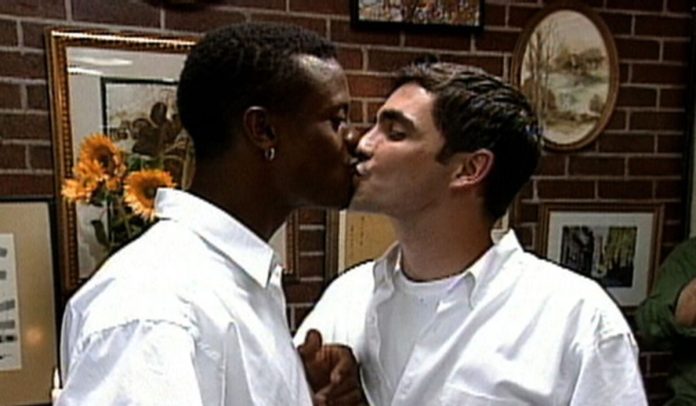

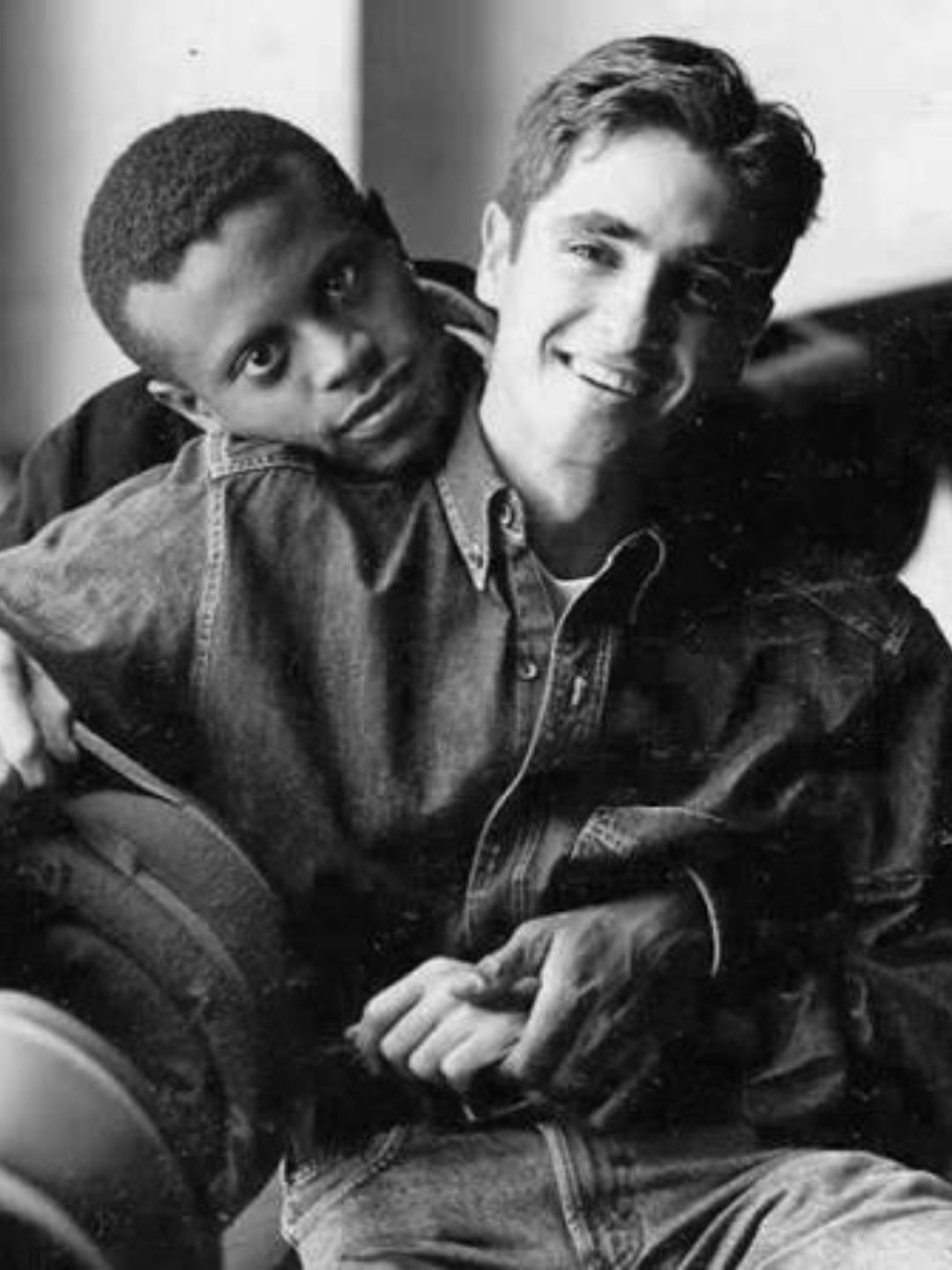
In 1994, millions of Americans watched two men stand inside a San Francisco house, exchange rings and promise themselves to one another.
Their names were Pedro Zamora and Sean Sasser.
Both were living with HIV.
Neither was legally allowed to marry the man he loved.
Yet MTV gave viewers something mainstream American television had almost never shown before.
Two gay men dating, touching, supporting each other and imagining a future together.
It happened years before Will & Grace made gay characters familiar to millions of households.
It happened more than two decades before same-sex marriage became legal across the United States.
And it happened during an AIDS crisis that still shaped how many Americans understood gay men.
Pedro and Sean were not presented only as patients, activists or symbols.
They were allowed to be in love.
The Moment America Saw Them Choose Each Other
The commitment ceremony took place inside the house used for MTV’s third season of The Real World.
Pedro and Sean wore matching light-coloured shirts as friends gathered around them.
They exchanged vows and rings.
Sean, who worked as a pastry chef, made the cake.
Then the two men kissed.
It was simple, affectionate and unmistakably serious.
The ceremony had no legal standing.
Same-sex marriage was not recognised by any American state in 1994.
Even the language available to describe what they were doing felt uncertain.
They generally called it a commitment ceremony rather than a wedding because the law refused to recognise it as one.
Yet television viewers could see what the ceremony meant.
Two men were publicly choosing one another.
The ceremony has since been widely described as the first same-sex commitment ceremony broadcast on American television, including in retrospectives from Entertainment Weekly.
Its power did not come from elaborate production or dramatic speeches.
It came from the ordinary tenderness of the scene.
The men looked happy.
Their friends treated their relationship as something worthy of celebration.
For many viewers, that alone was radical.
Pedro Had Already Changed the House
Pedro Zamora entered The Real World: San Francisco as an openly gay Cuban American man living with HIV.
He had been diagnosed at 17.
By the time MTV cast him, he was already travelling across the United States as an HIV educator.
Pedro spoke to students, challenged misinformation and put a human face on an epidemic still surrounded by fear.
His presence in the house forced the other cast members—and the audience—to confront assumptions about HIV almost immediately.
Some housemates worried about sharing bathrooms, food or living space with him.
Pedro calmly explained how HIV was and was not transmitted.
He showed viewers his medication.
He spoke openly about sex, protection, illness and the possibility that his life might be shorter than theirs.
He also laughed, flirted, argued, became frustrated and formed deep friendships.
That complexity mattered.
People with HIV were frequently portrayed as victims approaching death or as anonymous subjects in public-health warnings.
Pedro appeared as a complete young man.
HIV was part of his life, but it was never all of it.
Then Sean Walked Into the Story
Pedro and Sean had first met at the 1993 March on Washington for Lesbian, Gay and Bi Equal Rights and Liberation.
Sean was an HIV educator and food-industry professional living in San Francisco.
Pedro was based in Miami.
Their first meeting did not immediately become a relationship.
They reconnected months later when Pedro moved to San Francisco to film The Real World.
Sean entered the house, and the connection between them quickly became visible.
They went on dates.
Pedro reportedly asked the producers to allow an early date without cameras so they could get to know each other away from the demands of television.
The request reveals something important about their relationship.
They understood they were becoming part of a television story, but they also wanted something genuine to exist beyond it.
As their relationship grew, viewers saw playful conversations, affectionate touches and the small negotiations that happen when two people begin imagining a life together.
They were not simply discussing HIV.
They were discussing love.
Two Men Living With HIV, Not Dying on Screen
Both Pedro and Sean were HIV-positive.
That fact inevitably shaped the way audiences understood them.
Effective combination treatment had not yet transformed HIV into the manageable chronic condition it can be today.
An HIV diagnosis still carried terrifying uncertainty.
AIDS deaths in the United States were approaching their peak.
Gay communities were attending memorial services, caring for sick friends and fighting political indifference.
But Pedro and Sean’s relationship was not presented solely as a tragic alliance between two dying men.
They teased each other.
They showed physical desire.
They disagreed.
They planned.
They behaved like two young men falling in love.
That distinction made their visibility especially powerful.
HIV did not remove their right to romance, sexuality or hope.
They were not asking viewers to pity them.
They were asking to be recognised.
How Rare Gay Male Affection Still Was
Gay characters had appeared on American television before Pedro and Sean.
Some had been thoughtful and sympathetic.
But loving male couples remained rare, particularly in unscripted programming.
Gay men were often presented as isolated individuals rather than people capable of building relationships.
Television frequently treated them as jokes, tragic figures, dangerous outsiders or temporary social issues introduced for a single episode.
Even sympathetic stories could avoid physical affection.
A gay character might talk about a boyfriend whom viewers never saw.
Two men might be identified as a couple without being allowed the same kissing, touching or domestic intimacy routinely given to heterosexual characters.
Pedro and Sean disrupted that distance.
They were real people rather than actors playing an approved version of gay life.
The audience could watch their comfort with one another develop over time.
There was no fictional script protecting viewers from the reality of their affection.
Sean placed his arms around Pedro.
Pedro looked at Sean with love.
They kissed.
They exchanged rings.
In 1994, those ordinary gestures carried enormous cultural weight.
The Real World Made Intimacy the Argument
Pedro was an exceptional educator.
He could explain HIV transmission, confront prejudice and respond patiently to ignorance.
But his relationship with Sean communicated something facts alone could not.
Viewers were not simply told that gay men deserved dignity.
They were invited to care about two particular men.
They watched Sean worry about Pedro’s health.
They saw Pedro become more vulnerable with someone he trusted.
They witnessed friends accept the relationship without treating it as strange.
The political argument happened through intimacy.
Gay men could love one another.
Men with HIV could be desired.
Their relationships could contain tenderness, humour, frustration and commitment.
None of those ideas should have been revolutionary.
At the time, many viewers had rarely encountered them on television.
A Generation Was Watching
The Real World was aimed largely at younger viewers.
Its audience included teenagers and young adults who may never have knowingly met an openly gay person or someone living with HIV.
Some watched secretly in homes where homosexuality was condemned.
Some were beginning to understand their own sexuality.
Others had absorbed frightening myths about AIDS from adults, schools, churches or news coverage.
Pedro and Sean entered those homes through MTV.
For straight viewers, the relationship made gay love harder to dismiss as an abstraction.
For young gay viewers, it offered something even rarer.
A possible future.
They could see two men wanting one another without shame.
They could see friends gather around those men and celebrate their commitment.
They could imagine that love between men might deserve witnesses, rings and cake.
The future Pedro and Sean imagined was fragile.
But for a generation of viewers, simply seeing it imagined mattered.
They Were Not Perfect Symbols
It is tempting to remember Pedro and Sean only as an ideal couple who appeared at exactly the right historical moment.
That would make them easier to celebrate but less human.
Their relationship developed quickly.
It existed under the pressure of cameras, public attention and Pedro’s declining health.
They were both young men carrying responsibilities far larger than most people their age.
Pedro was becoming a national symbol of AIDS education while trying to manage his own illness.
Sean was entering a relationship that could become public property every time an episode aired.
The commitment ceremony did not guarantee them a long or uncomplicated future.
It expressed their hope for one.
That hope is what makes the footage both beautiful and painful today.
Pedro’s Health Deteriorated Quickly
After filming ended, Pedro’s health worsened.
He developed progressive multifocal leukoencephalopathy, a severe brain infection that can affect people with weakened immune systems.
He was eventually hospitalised in Miami.
President Bill Clinton called Pedro during his final illness and publicly praised his work educating the country about HIV and AIDS.
Pedro died on November 11, 1994.
He was 22 years old.
His death came only hours after MTV broadcast the season finale of The Real World: San Francisco, a timing documented by the National AIDS Memorial.
The television audience had only just finished watching Pedro leave the house.
Then it learned that he was gone.
The loss turned the season into something larger than reality entertainment.
Viewers had not encountered Pedro through a brief obituary or public-service announcement.
They had spent months with him.
They knew his humour, anger, intelligence, friendships and love story.
His death therefore felt personal to people who had never met him.
Sean Had to Continue Without Him
Sean’s life did not end with Pedro’s.
He continued working in HIV education, public health and food service.
He later became a pastry chef and continued speaking about his experience as a gay Black man living with HIV.
He also had to live with the strange burden of having one of the most intimate periods of his life preserved on television.
Millions of people remembered him as Pedro’s partner.
He remained his own person.
Sean eventually built a life in Washington with Michael Kaplan, who later became his husband.
He had lived with HIV for approximately 25 years when he was diagnosed with mesothelioma, a rare cancer.
Sean died at his home on August 7, 2013.
He was 44.
His husband confirmed to The Washington Post that the cause was mesothelioma rather than AIDS.
That fact matters because Sean should not be reduced to the epidemic simply because he lived with HIV.
He survived for decades after Pedro’s death.
He worked, loved, advocated and created a life beyond the television story that made him famous.
Before Will & Grace
Will & Grace premiered in 1998, four years after Pedro and Sean’s commitment ceremony aired.
The sitcom became a major milestone in gay television history.
It brought gay leading characters into American homes every week and helped make gay identity more familiar to mainstream audiences.
But Pedro and Sean had already shown viewers something scripted television still struggled to present.
Two men openly building a romantic relationship.
They were not fictional characters whose affection could be adjusted after audience testing.
They were not sidekicks supporting someone else’s story.
They were not presented as a joke.
They were two real men who allowed cameras to record their love during one of the most hostile periods in modern gay history.
That does not mean they were the first gay couple ever shown on television.
Television history is more complicated than any single “first.”
Their importance comes from the scale, intimacy and context of what viewers saw.
Millions of people watched a relationship develop across an entire season.
They witnessed desire, affection, illness, commitment and loss.
Pedro and Sean were not introduced for one groundbreaking episode and then removed.
Their love became part of the emotional centre of the show.
The Difference Between Visibility and Intimacy
Representation is often discussed as though appearing on screen is enough.
Pedro and Sean showed why intimacy matters too.
A gay character can be visible while remaining emotionally isolated.
A television programme can acknowledge homosexuality while refusing to show gay people living full romantic lives.
Pedro and Sean crossed that boundary.
They allowed viewers to see the quiet physical language of a relationship.
The looks.
The touches.
The comfort of standing close to someone who knows you.
Those details made their story difficult to caricature.
Prejudice depends partly on distance.
It is easier to fear a category than a person whose face has become familiar.
By letting viewers witness their affection, Pedro and Sean shortened that distance.
Love During the AIDS Crisis
Their relationship also challenged one of the cruellest ideas surrounding AIDS.
Gay men living with HIV were often treated as though their capacity for love, desire and a future had already ended.
Illness could make them socially untouchable even before it made them physically sick.
Pedro and Sean rejected that erasure simply by being together.
They understood the medical reality of HIV better than most viewers.
They also refused to accept that the diagnosis made intimacy irresponsible or impossible.
Their love did not sentimentalise HIV.
Pedro’s illness was real, and the consequences were devastating.
But the relationship insisted that people facing death were still living.
They still wanted companionship.
They still deserved pleasure.
They still made promises.
What Television Learned From Them
Television did not transform overnight after Pedro and Sean.
Gay male intimacy remained limited for years.
Many programmes continued to avoid showing kisses between men or treated gay relationships as controversial events.
But something had changed.
A major American network had shown viewers two gay men exchanging vows, and the world had not ended.
The audience responded with compassion rather than rejection.
Pedro became one of the most respected figures in reality-television history.
The San Francisco season is still remembered as one of The Real World’s most important, with later retrospectives repeatedly identifying Pedro’s HIV advocacy and commitment ceremony as defining moments.
The programme demonstrated that LGBTQ+ lives did not need to be softened or translated into heterosexual terms to create emotional connection.
Sometimes the most powerful representation was simply allowing viewers to watch gay people live.
What They Gave Gay Viewers
Older gay men may remember exactly where they were when they watched Pedro and Sean.
Some were already out.
Some were still hiding.
Some were living with HIV or watching friends disappear.
Others were young enough that the relationship became one of their first images of gay love.
The significance may be difficult to communicate to viewers raised with streaming services full of queer characters and same-sex couples.
Today, gay romance can appear in sitcoms, dramas, reality dating programmes, Christmas films and teenage love stories.
That representation remains imperfect, but it is no longer almost unimaginable.
In 1994, Pedro and Sean were helping create the language through which later stories could be understood.
They showed that an audience could care deeply about two men falling in love.
They showed that tenderness between men could carry a television season rather than threaten it.
They showed closeted viewers something they may never have seen in their own homes.
A gay relationship being treated with dignity.
The Future Their Ceremony Imagined
Pedro and Sean did not get the long life together that their ceremony imagined.
There was no shared home stretching across decades.
There were no legal marriage protections waiting for them.
The vows could not prevent illness or guarantee that institutions would recognise Sean as Pedro’s family.
Yet the ceremony still pointed towards a future neither man would fully see.
In 2004, Massachusetts became the first American state to permit same-sex marriage.
In 2015, the United States Supreme Court established marriage equality nationwide.
By then, Pedro had been dead for more than 20 years.
Sean had died two years earlier.
The country eventually granted gay couples the legal recognition that their commitment ceremony had been forced to imitate without possessing.
When Pedro and Sean exchanged rings in 1994, they were not simply copying heterosexual tradition.
They were claiming a future before the law was prepared to give it to them.
More Than a Television Milestone
It would be easy to remember Pedro and Sean only because they achieved a television first.
But cultural milestones matter because of the lives inside them.
The commitment ceremony was historic because Pedro and Sean made it emotionally real.
Viewers were not responding to an abstract debate about representation.
They were responding to two people they had come to know.
Pedro was intelligent, direct, funny and determined to use whatever time he had to educate others.
Sean was warm, grounded and willing to enter a public relationship during a period when visibility carried real risk.
Together, they showed that gay love during the AIDS crisis was not merely a story about death.
It was also a story about courage, attraction, care and the insistence on building a life even when time was uncertain.
They Let America Watch Them Love
Television has changed enormously since 1994.
Gay couples are no longer completely unfamiliar to mainstream audiences.
Two men exchanging vows on screen does not carry precisely the same shock it once did.
That progress can make it easy to forget how rare the image once was.
Pedro Zamora and Sean Sasser appeared when loving male couples were still largely kept outside the frame.
They invited the camera closer.
They let America see them date.
They let America see them touch.
They let America see them choose one another.
Their time together was painfully short.
But the image they created endured.
Two men facing each other in a room filled with friends.
Two rings.
Two promises.
A kiss.
And millions of people discovering that gay love looked remarkably like love.
Pedro and Sean did not get the future they imagined together, but by allowing America to witness their love, they helped make that future more possible for everyone who followed.
📷 MTV
🎬 Prefer video? Subscribe to B-Gay on YouTube: https://youtube.com/@BGaycom