
A Father, A Son, And A Marathon — Why This Story Resonates Beyond The Finish Line

A 70-year-old father preparing to run the Boston Marathon alongside his son might sound like a simple, feel-good story at first.

But for many readers, it carries something more.

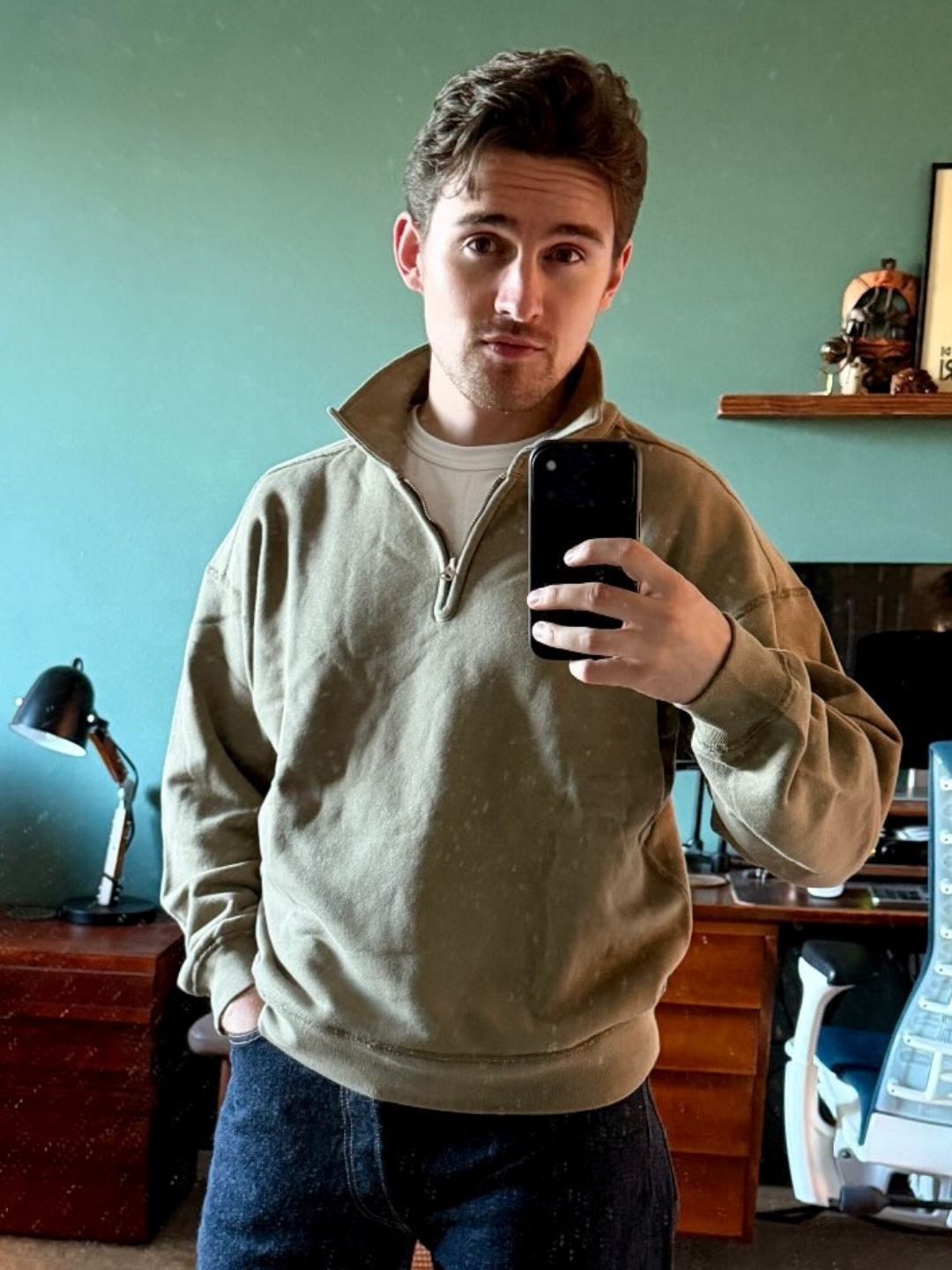
The story, recently featured in People, follows a father and his son — Broadway performer and fitness coach Nick Davis — as they take on the iconic race together.

On the surface, it’s about endurance.

About commitment.

About a shared goal.

But underneath, it reflects something deeper.

Support.

Presence.

And the quiet power of showing up for each other.

For LGBTQ+ audiences in particular, moments like this often resonate in a very specific way.

Because not everyone grows up with that kind of visible, unconditional support.

For many, understanding their identity was not a single moment, but a gradual realization.

A series of small signs.

A feeling before the words existed to describe it.

And often, a sense of uncertainty about how that truth would be received.

That’s why stories like this can feel unexpectedly emotional.

They don’t just show what is happening now.

They also highlight what could have been — or what might still be possible.

At the same time, a question has been circulating widely online: what would you say to your younger self?

It’s a simple idea, but one that invites reflection.

Especially for those who didn’t grow up seeing themselves reflected in the world around them.

Placed alongside this father and son story, the question takes on a new dimension.

Because it becomes less abstract.

Less hypothetical.

And more grounded in something real.

What would it have meant to see a moment like this growing up?

What would it have changed?

And what would you say now, knowing what you know?

There are no single answers to those questions.

But certain themes tend to emerge.

Reassurance.

Patience.

And the understanding that things can evolve in ways you might not expect.

In that sense, the marathon itself becomes more than a race.

It becomes a symbol.

Of distance covered.

Of time passed.

And of the possibility of arriving somewhere different than where you began.

For this father and son, it’s a shared moment.

For others watching, it may be something else entirely.

A reflection.

A reminder.

Or simply a quiet affirmation that change — even generational change — is real.

📸 IG: @nickdavisfitness

A Stand That Cost A Librarian Everything — And Sparked Something Bigger

0

When library director Luanne James was told to remove LGBTQ+ books from children’s sections, she made a decision that would quickly change her life.

She refused.

The directive came from a Tennessee library board that had voted to relocate more than 100 books — many featuring LGBTQ+ themes — out of spaces accessible to younger readers.

Supporters of the move argued it was about protecting children and ensuring age-appropriate content.

But James saw it differently.

She described the decision as a form of viewpoint discrimination and a violation of the First Amendment, arguing that libraries have a responsibility to provide access to diverse perspectives rather than restrict them, LGBTQ Nation writes.

For her, complying would have meant compromising both her professional ethics and her belief in intellectual freedom.

So she said no.

Shortly after, the board voted to terminate her position in an 8–3 decision, ending her tenure after just months on the job.

It could have ended there.

Another story about censorship, another headline that fades.

But instead, something unexpected happened.

People began to respond.

Supporters launched a crowdfunding campaign to help James and her family, and within days it had raised close to $100,000.

The speed and scale of the response made one thing clear.

This wasn’t just about one librarian or one library system.

It was about what she represented.

Across the United States, debates over book access — especially those involving LGBTQ+ stories — have intensified, with hundreds of titles challenged or removed in recent years.

Libraries have increasingly found themselves at the center of these cultural battles, caught between political pressure, community expectations, and long-standing principles of open access.

For LGBTQ+ readers, especially younger ones, access to these books can carry real weight.

They are often among the first places where identity is reflected, understood, and validated.

Removing them sends a message.

Keeping them does too.

James’s decision — and the reaction to it — highlights how deeply these questions resonate beyond policy or procedure.

It’s about visibility.

It’s about belonging.

And it’s about who gets to decide what stories are allowed to exist in shared public spaces.

In the end, she lost her job.

But she didn’t stand alone.

And in moments like this, that may be what matters most.

Matthew Wolfenden steps into his first gay role in new short film Kate Expectations

0

For many viewers in the UK, Matthew Wolfenden is instantly recognisable as a long-time face from Emmerdale, where he spent years as part of one of Britain’s most established soap casts.

Now, he is stepping into something very different.

Wolfenden is taking on his first gay role in the upcoming short film Kate Expectations, marking a notable shift in his on-screen work.

The 14-minute comedy short is set against the backdrop of Ladies’ Day at Aintree and follows a story that blends humour, grief, and unexpected connection.

At the centre of the film is Jack, played by writer Carl Loughlin, who arrives at the races with his mother to scatter his late father’s ashes.

When the urn is accidentally lost, the story unfolds into a series of encounters that mix emotional reflection with moments of chaos and comedy.

It is within that setting that Wolfenden’s character, Jonny, enters the picture.

Playing a bartender, he develops a connection with Jack that quickly becomes one of the film’s emotional anchors.

Early reactions to the film have focused on the chemistry between the two characters, describing it as natural, warm, and engaging from their very first interaction.

That detail matters.

Because what stands out about this role is not just that it is Wolfenden’s first LGBTQ+ character.

It is how the relationship is presented.

Rather than being framed as a dramatic or defining statement, it exists as part of the story’s emotional flow.

A connection that feels organic.

A moment that grows naturally.

That kind of portrayal reflects a broader shift in how queer characters are written and received.

Instead of being positioned as something exceptional, they are increasingly allowed to exist within the narrative without explanation or emphasis.

For Wolfenden, this role represents a clear step into that space.

It also places him within a cast that includes familiar UK names such as Tina Malone and Clare Balding, bringing together a mix of mainstream recognition and more niche storytelling.

The film itself is set to screen at festivals throughout 2026, including a showing in Chester as part of a filmmakers’ event.

And while it is a short film, its themes are not small.

It explores grief, identity, and the unexpected ways people find connection at moments when they least expect it.

That combination of humour and emotional depth appears to be what gives the story its impact.

For audiences, the result is something that feels both familiar and quietly progressive.

A known actor stepping into new territory.

A queer storyline presented without hesitation.

And a reminder that representation does not always need to announce itself loudly to matter.

Sometimes, it works best when it simply feels real.

Ty Herndon opens up about building a future he once thought was impossible

For many years, country star Ty Herndon could not picture the kind of life he is living today.

Now, he is not only embracing it, but actively planning what comes next.

In a new interview with People, Herndon spoke candidly about his marriage to Alex Schwartz and the possibility of starting a family together.

The couple, who tied the knot in 2023, are already discussing having children, potentially as soon as next year.

That idea carries a deeper weight for Herndon.

Because for much of his life, it simply did not feel like an option.

Herndon spent decades navigating the pressures of being a gay man in country music, a space that historically has not made it easy to live openly.

Alongside that, he has been open about struggles with addiction, mental health, and identity, all of which shaped his journey in profound ways.

Now, looking at where he stands today, the contrast is striking.

He describes a life built around stability and connection.

A husband.

A home.

A shared daily life that feels grounded in something real.

And possibly, in the near future, a child.

It is not just the idea of parenthood that stands out.

It is what that idea represents.

“We’re talking about things… I never thought I would talk about,” Herndon said, reflecting on how much his perspective has changed.

There is a quiet honesty in that statement.

Because for many LGBTQ people, especially those who grew up in less accepting environments, the concept of a traditional future can feel distant or uncertain.

Marriage, family, and long-term stability were not always presented as realistic possibilities.

Herndon’s story reflects how much that has shifted.

Not just legally, but culturally.

And perhaps most importantly, personally.

What makes his perspective especially compelling is how he frames it.

He does not present his life as extraordinary.

He presents it as something that feels normal.

That distinction matters.

Because it highlights the true impact of progress.

It is not only about visibility or representation in a public sense.

It is about the ability to imagine a future that feels stable, fulfilling, and entirely your own.

For Herndon, that future now includes the possibility of fatherhood.

And even if those plans are still taking shape, the fact that they exist at all says something meaningful.

It speaks to how far things have come.

And how much further they continue to go.

What Mattered Most: A Memoir can be ordered now (we may receive a small commission if you order through the link).

Rob Jetten helps mark 25 years of same-sex marriage in the city where history was made

Amsterdam is celebrating one of the most important milestones in modern LGBTQ history, and this year’s anniversary came with a powerful layer of symbolism.

Twenty-five years after the Netherlands became the first country in the world to legalise same-sex marriage, Dutch prime minister Rob Jetten joined the commemorations in the city where those first landmark weddings took place.

The moment is historic on its own.

On 1 April 2001, the Netherlands changed the legal landscape for queer couples everywhere by becoming the first country to open marriage to same-sex partners.

Since then, more than 36,000 same-sex couples have married in the country, turning what once felt radical into something woven into everyday life.

But this anniversary is not only about numbers or legal firsts.

It is also about what those early moments of visibility made possible for the generation that came after.

Jetten has spoken movingly about that connection, recalling that he was just 14 years old when he watched those first Amsterdam weddings on television.

He said the images were both inspiring and emancipating, and it is easy to understand why.

For queer teenagers, especially in the early 2000s, seeing couples like themselves publicly celebrated by the state did more than make headlines.

It quietly expanded the boundaries of what a future could look like.

That is part of what makes Jetten’s presence at the anniversary so resonant.

He is not simply a politician attending a civic celebration.

He is the Netherlands’ first openly gay prime minister, and someone whose own life was shaped by the visibility that earlier generation fought for.

Now he is standing on the other side of that history, helping honour it as a national leader.

There is something beautifully full-circle about that.

The ceremony itself took place at Amsterdam City Hall in the early hours of the morning, echoing the famous midnight weddings that helped define the start of marriage equality in 2001.

This time, three same-sex couples were married as part of the anniversary event, with Amsterdam mayor Femke Halsema officiating.

The city was not just revisiting an old victory.

It was showing that the meaning of that moment still lives in the present.

Jetten’s personal story adds another warm dimension to it all.

He is soon to marry his partner, Argentine field hockey player Nicolás Keenan, which gives his reflections on marriage equality an even more intimate edge.

This is not abstract politics for him.

It is part of the life he is building.

That is often the quiet power of LGBTQ progress.

Big legal changes eventually become ordinary human details.

A wedding to plan.

A partner to come home to.

A future you can picture without having to translate it into someone else’s terms.

At the same time, the anniversary was not framed as pure triumphalism.

Mayor Halsema also used the occasion to note that progress cannot be taken for granted, especially after periods when LGBTQ rights have felt politically vulnerable.

That gave the celebration a welcome note of realism.

Because anniversaries like this are not only about remembering what was won.

They are also about recognising that visibility, dignity, and equality still need defending.

Even so, there is no denying the emotional charge of this one.

For many queer people, Amsterdam’s first weddings were not just symbolic.

They were proof that love between two men or two women could be recognised publicly, legally, and joyfully.

And now, a generation later, one of the young people who saw that possibility on a TV screen is leading the country that made it real.

That feels like more than good optics.

It feels like the long echo of change.

📸 IG: @ jettenrob