
Tyler Duckworth Was More Than The Gay Guy On The Challenge. He Was A Champion.

Tyler Duckworth understood that viewers noticed he was gay.

He also wanted them to notice something else.

He was really good at The Challenge.

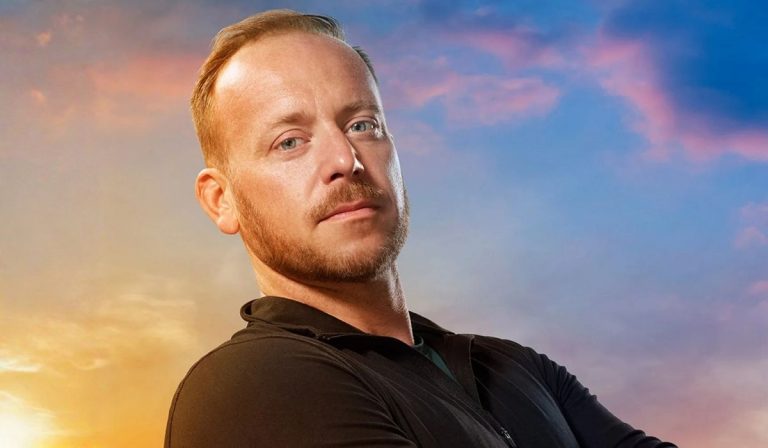
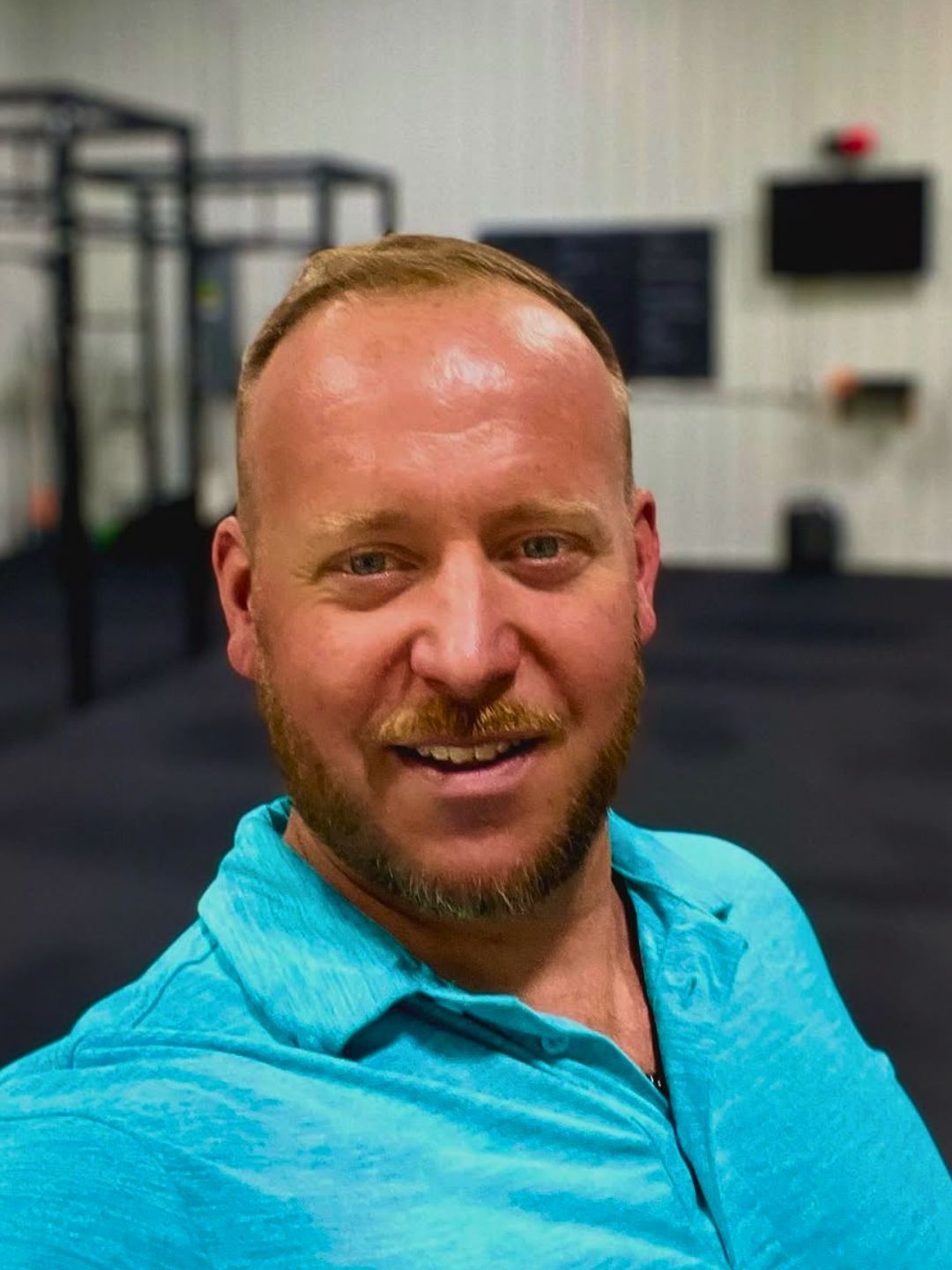
Tyler, the Real World: Key West alumnus who became a two-time champion of MTV’s The Challenge, died on August 11 at the age of 44.

His mother, Joni Duckworth, publicly announced his death two days later.

She said the cause had not yet been determined.

That is where speculation about the circumstances of his death should end.
The more meaningful story is the life Tyler had already given viewers plenty of reasons to remember.

When MTV Viewers First Met Tyler

Tyler entered the MTV universe in 2006 as one of the cast members of The Real World: Key West.

Reality television was already changing by then, but seeing openly gay men simply existing inside mainstream unscripted shows still carried a different weight than it does today.

Tyler was not shy about who he was.

His sexuality was part of the person viewers met, and the show included conversations about gay life, stereotypes and the attitudes he encountered from people around him.

But Tyler was never content to remain “the gay guy” in the cast.

He could be funny, abrasive, emotional, competitive and occasionally difficult.

In other words, he was allowed to be a reality television personality rather than a carefully polished representation project.

That mattered.

Then He Became A Serious Competitor

After The Real World, Tyler moved into The Challenge, MTV’s physically demanding competition franchise.

He appeared across six seasons of the main franchise and eventually proved that he belonged among its champions.

His breakthrough came with Cutthroat in 2010.

Tyler survived one of the franchise’s notoriously brutal competitive environments and finished the season as part of the winning team.

Then he did it again.

On Rivals in 2011, Tyler was partnered with Johnny “Bananas” Devenanzio.

The pairing was built around past conflict, as the show deliberately teamed contestants with people they had previously clashed with.

Tyler and Johnny nevertheless made the partnership work.

They won the season.

That gave Tyler back-to-back Challenge championships.

For a gay man competing in one of reality television’s most physically aggressive franchises, that distinction meant something to him.

“Not Only Am I Gay, But I Can Win”

Years later, Tyler spoke openly about the pressure he had felt representing gay viewers on the show.

When he returned to the franchise for The Challenge: All Stars 2 in 2021, he reflected on what it meant to compete as one of relatively few openly gay men in that environment.

“I take it very seriously that I’m going to represent the gay community,” Tyler said in an interview with Entertainment Weekly.

Then he added the sentence that may now best summarize his television legacy.

“Not only am I gay, but I can win these things and I’ve proven that I can.”

He had.

Twice.

Tyler also tried to explain how isolating that responsibility could sometimes feel.

He once asked straight castmate Cohutta Grindstaff to imagine entering a season where every other contestant was gay and he was the only heterosexual man.

That reversal captured something many LGBTQ+ viewers recognize immediately.

Visibility can feel empowering.

It can also feel like carrying an entire community into a room with you.

If you fail, you worry that people will see more than your individual failure.

If you succeed, you understand that people who rarely see themselves represented may be celebrating with you.

Tyler knew that pressure existed.

But he also refused to let representation become the only interesting thing about him.

Then He Walked Away

After Rivals, Tyler disappeared from The Challenge for roughly a decade.

Reality television has a habit of making those absences look like blank spaces.

They were not.

Tyler built a life away from MTV.

He worked in education and became a teacher at the middle- and high-school levels.

That detail makes his story feel larger than the competition statistics.

The man viewers knew for eliminations, alliances and final challenges went home and spent his working life in classrooms.

Then, in 2021, MTV called again.

The Mighty Duckworth Returns

The Challenge: All Stars was created partly for viewers who remembered the franchise’s earlier generations.

It brought familiar competitors back after years away and asked a very simple question.

Do they still have it?

Tyler returned for All Stars 2 in 2021.

He later competed on All Stars 3 in 2022, which became his final appearance in the franchise.

His return mattered because the audience remembered him.

He was no longer simply the openly gay contestant from The Real World.

He was Tyler Duckworth, the man who had already won two championships.

He arrived with history.

And he clearly appreciated discovering that viewers still cared.

Eleven Days Before His Death

On July 31, Tyler attended Challenge Mania in Minneapolis, an event that brings former competitors together with fans of the franchise.

It was his hometown.

Afterward, he posted about how meaningful the experience had been.

He described hearing fans share stories of courage, inspiration and joy connected to the show.

He said their continued support humbled him.

That post now carries a weight nobody could have understood when he wrote it.

Eleven days later, Tyler was gone.

There is something particularly painful about that timing.

Not because it offers any clue about why he died.

It does not.

But because it means Tyler spent one of his final weeks surrounded by people reminding him that his work had mattered to them.

He got to hear that he was remembered.

Why Tyler Meant Something To Gay Viewers

It would be easy now to retroactively promote Tyler into some grand LGBTQ+ television pioneer.

That would exaggerate his story.

There were openly gay reality contestants before him, and many LGBTQ+ performers had already pushed television forward in more obvious ways.

Tyler’s significance was quieter.

He belonged to a transitional era.

Gay men were becoming increasingly visible on mainstream reality television, but they were still often presented primarily through sexuality.

Tyler complicated that by succeeding in a franchise where performance mattered.

He did not merely arrive.

He competed.

He survived eliminations.

He made alliances.

He annoyed people.

He fought with rivals.

And he won.

For gay viewers watching MTV in the 2000s and early 2010s, there was something satisfying about seeing an openly gay man exist in that space without needing to be fragile, inspirational or perfectly behaved.

Tyler could simply be Tyler.

Representation Gets More Interesting When It Stops Being Perfect

LGBTQ+ representation is sometimes discussed as though every visible queer person must become a role model.

Reality television has never worked that way.

Its stars are supposed to be messy.

They make bad decisions.

They fight.

They say the wrong thing.

They lose.

Sometimes they become villains.

Sometimes they become champions.

Tyler’s presence helped demonstrate that gay men could occupy that same messy territory.

He did not need to represent gay men by being endlessly admirable.

He represented them partly by being allowed to be fully human.

And when the competition started, he could back that confidence up.

More Than MTV

The fact that Tyler became a teacher also deserves to remain part of how he is remembered.

Reality television freezes people in time.

Viewers may remember someone as the 20-something personality they watched drinking, arguing or competing on television years earlier.

The person keeps living after the episode ends.

Tyler grew older.

He left television.

He worked with young people.

He returned when an opportunity felt right.

He reconnected with fans.

That fuller life matters much more than reducing him to a contestant biography.

A Champion Is Gone

Tyler Duckworth was only 44.

That fact is sad enough without embellishment.

His family does not yet have a confirmed cause of death, and there is no reason for anyone else to fill that uncertainty with theories.

What we do know is what Tyler left behind.

A television career that began during a very different era of gay visibility.

Two Challenge championships.

A return that proved audiences had not forgotten him.

A life in education away from the cameras.

And a final reunion with fans who had the chance to tell him what watching him had meant.

Tyler once said he took representing the gay community seriously.

But he immediately followed that responsibility with confidence.

He could win.

He had proved it.

That feels like exactly the way to remember him.

Not simply because he was the gay guy on The Challenge.

Because he was Tyler Duckworth.

And Tyler Duckworth was a champion.

Rest well, Mighty Duckworth.

🎬 Prefer video? Subscribe to B-Gay on YouTube: https://youtube.com/@BGaycom
Young Royals Star Edvin Ryding Joins Heated Rivalry Season 2

0

One of queer television’s most recognizable young stars is joining one of its biggest new hits.

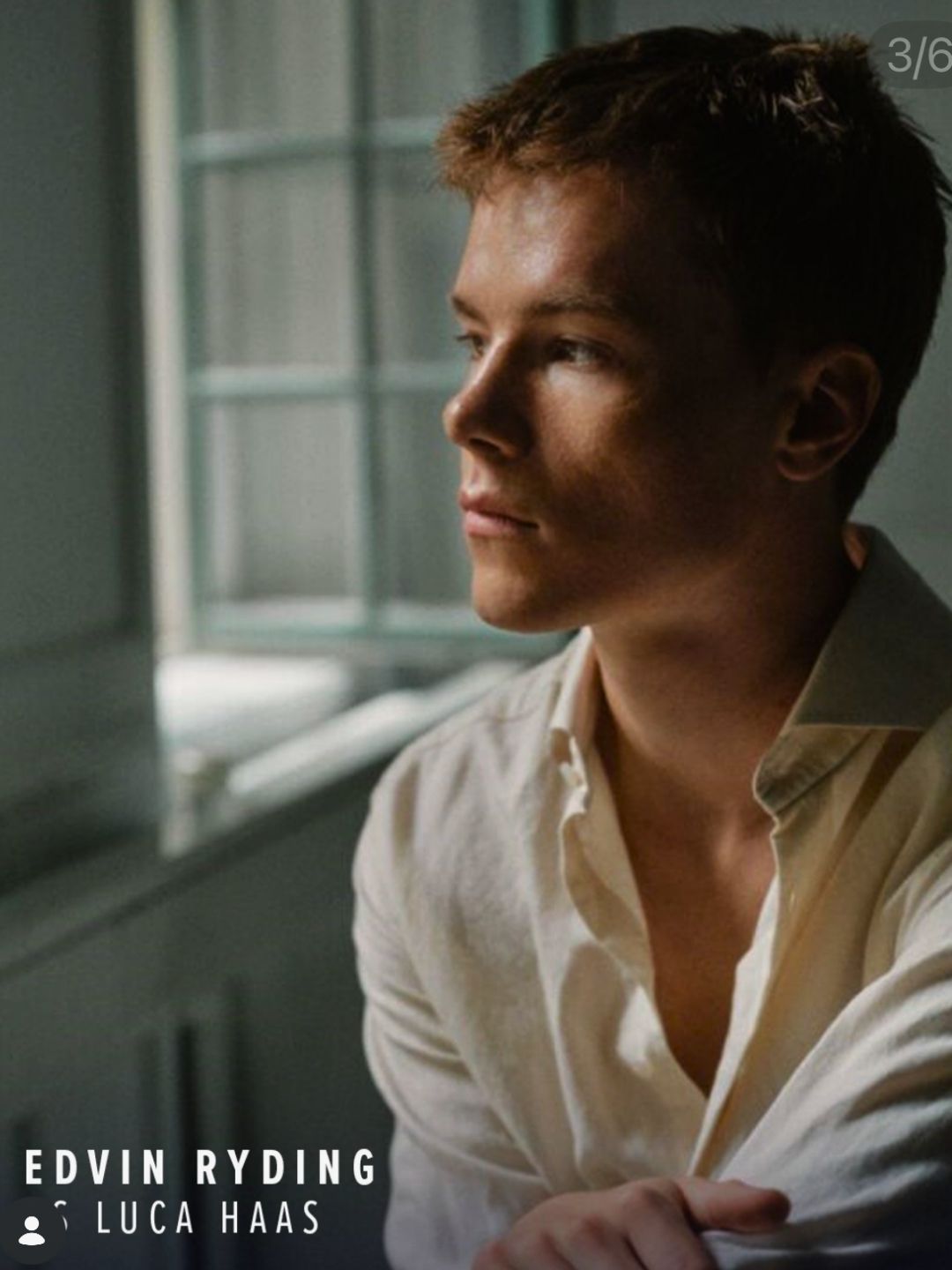
Edvin Ryding has officially joined the second season of Heated Rivalry.

The Swedish actor, best known internationally for playing Prince Wilhelm in Netflix’s Young Royals, will portray Luca Haas.

Luca is a hockey player from Rachel Reid’s Game Changers novels and part of the wider group of characters surrounding the Ottawa Centaurs.

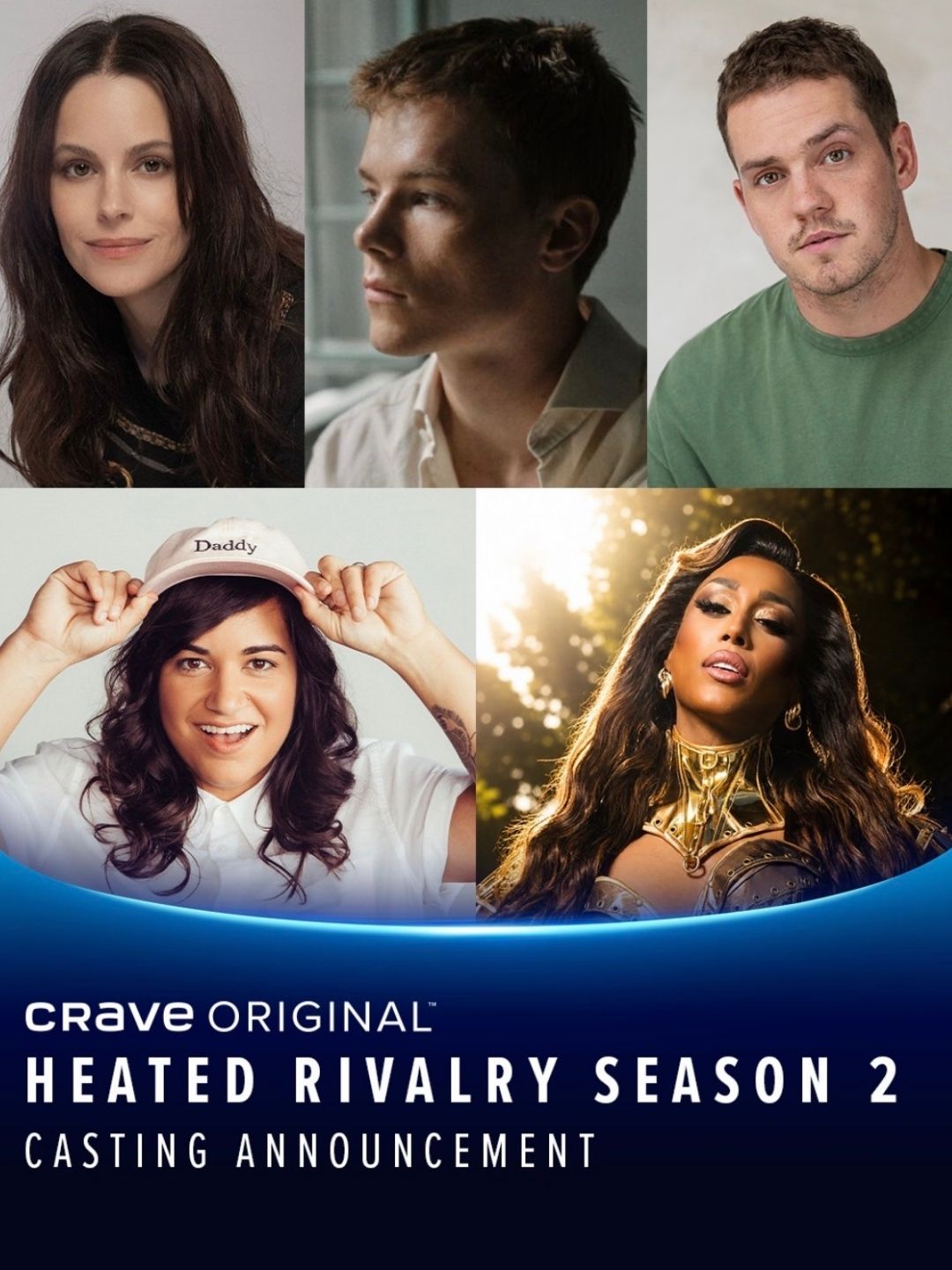
The casting was announced alongside several other additions to the rapidly expanding Season 2 ensemble.

Canadian actor Robert Naylor will play Wyatt Hayes.

Schitt’s Creek star Emily Hampshire joins as Vanessa.

Comedian and writer Sabrina Jalees will portray Farah Jalali.

Canadian drag star Priyanka will play Tarek.

For LGBTQ+ television fans, however, Ryding’s casting carries particularly strong resonance.

Ryding spent three seasons at the centre of Young Royals, playing Swedish Prince Wilhelm as he fell in love with Simon Eriksson.

The series became a global phenomenon partly because of the tenderness and emotional realism of that relationship.

Wilhelm’s story dealt with first love, secrecy, public scrutiny, family expectations and the pressure to choose between institutional duty and personal happiness.

Ryding’s performance helped make Wilhelm one of the defining queer television characters of his generation.

Now the actor is entering another fictional universe where professional expectations and queer identity regularly collide.

Heated Rivalry follows rival hockey stars Shane Hollander and Ilya Rozanov, played by Hudson Williams and Connor Storrie.

The first season followed the men as a secret physical relationship gradually became something much deeper.

Season 2 will continue their story through material primarily drawn from Reid’s novel The Long Game.

The upcoming episodes will also incorporate characters and storylines from Role Model, another novel in Reid’s interconnected Game Changers series.

Justice Smith and Charlie Gillespie were previously announced as Harris Drover and Troy Barrett, the central romantic pairing from that book.

The casting of Luca Haas and Wyatt Hayes confirms that the television adaptation is expanding well beyond Shane and Ilya’s immediate circle.

Luca is a young player with an important connection to the Ottawa Centaurs storyline.

In the novels, he becomes part of the team environment that also includes Troy, Harris and Ilya.

His presence adds another younger player to the series’ exploration of hockey culture, identity and mentorship.

Wyatt Hayes is also associated with the Centaurs and plays an established role within that wider hockey world.

Robert Naylor, who will portray Wyatt, is a Canadian actor whose credits include Mile End Kicks, 10½ and 19-2.

The rest of the newly announced cast also brings considerable LGBTQ+ credentials.

Emily Hampshire became beloved as Stevie Budd on Schitt’s Creek and has publicly identified as pansexual.

She has previously explained that the show’s famous wine metaphor about sexuality helped her understand the term.

Sabrina Jalees is an openly gay Canadian comedian, actor and television writer.

Priyanka became the first winner of Canada’s Drag Race and has since built an international career in music, television and drag performance.

The casting therefore gives Season 2 an ensemble that draws talent from several corners of queer entertainment culture.

It also creates an obvious crossover moment for fans of Young Royals.

The Swedish series concluded in 2024 after giving Wilhelm and Simon’s relationship a definitive ending.

Ryding has since moved into film and other projects, but for many LGBTQ+ viewers his face remains inseparable from one of Netflix’s most beloved queer romances.

Seeing him step into Heated Rivalry inevitably brings some of that history with him.

Production on Season 2 is already underway.

Hudson Williams and Connor Storrie return as Shane and Ilya, while François Arnaud has also confirmed that Scott and Kip will continue to appear.

The growing cast suggests that the second season will broaden the world considerably rather than simply repeat the structure of the first.

Heated Rivalry Season 2 is currently expected to premiere in spring 2027 on Crave and HBO Max.

Until then, fans now have one particularly irresistible crossover to imagine.

Prince Wilhelm has left the palace.

Next stop: the hockey rink.

📷 @edvinrydings / Crave / @netflix

🎬 Prefer video? Subscribe to B-Gay on YouTube: https://youtube.com/@BGaycom
After Years Of Waiting, Michael And Matt Are Finally Dads

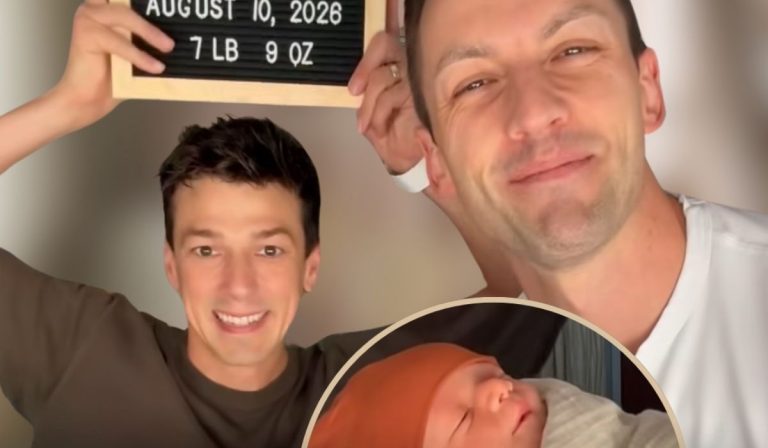
After years of planning, uncertainty and hope, Michael Lindsay and Matthew Schueller have finally become fathers.

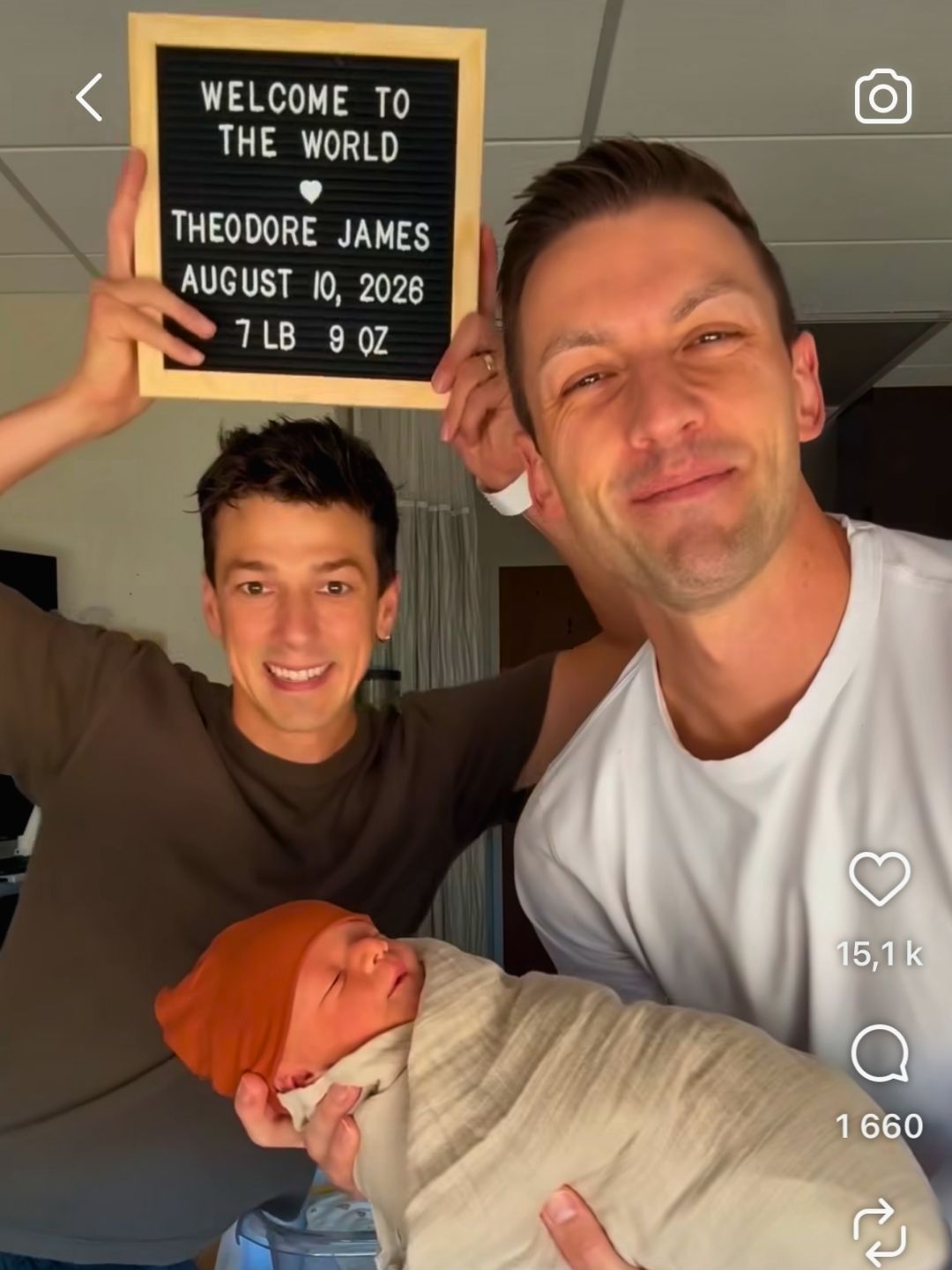
The Portland husbands announced the arrival of their son, Theodore James, who was born on August 10, 2026.

Theodore weighed 7 pounds, 9 ounces.

“Welcome to the world, Theodore James,” Michael and Matt wrote while introducing their baby boy.

“We’ve been waiting to meet you for a very long time! You are loved more than you could know.”

The words carry particular meaning because followers of the couple have watched much of that wait unfold publicly.

Michael and Matt began seriously pursuing surrogacy at the beginning of 2021.

They started researching egg donation, IVF clinics, surrogacy agencies and the legal and financial realities involved in building a family as two gay men.

They quickly discovered that wanting a child and knowing how to make that happen were two very different things.

Matthew later wrote that the process initially felt like a mysterious black curtain.

The couple struggled to find clear information about the different paths available to queer prospective parents.

They interviewed fertility clinics and agencies and eventually found an egg donor.

Thirty eggs were retrieved during their IVF process.

Only five embryos ultimately reached viability.

Four were genetically connected to Matthew and one to Michael.

The result left the couple both grateful and nervous.

They had originally imagined having twins, with each man being the biological father of one child.

With only one viable embryo from Michael, they knew there might not be many opportunities to achieve that exact dream.

The financial stakes made every decision even more complicated.

Michael and Matt have spoken publicly about how fertility benefits frequently treat same-sex couples differently from heterosexual couples.

Many insurance policies provide fertility coverage after a heterosexual couple has tried unsuccessfully to conceive for a specified period.

A gay male couple can never meet that requirement in the same way.

As a result, expensive fertility treatments, egg donation and surrogacy can remain largely uncovered.

Matthew estimated in 2023 that an uncomplicated surrogacy journey could cost between $175,000 and $220,000.

Those barriers inspired Michael and Matt to begin sharing far more than their own personal story.

They launched a podcast called Who’s Your Daddy? to explore the different ways LGBTQ+ people can become parents.

The show covered surrogacy, IVF, private adoption, foster-to-adopt and other paths to family building.

They interviewed experts as well as other queer parents about the practical, emotional and legal challenges they encountered.

The goal was partly educational and partly personal.

Michael and Matt repeatedly admitted that they were learning alongside their listeners.

The irony was that while helping other queer couples understand parenthood, their own journey remained unresolved.

For years, followers watched them research, wait and hope.

That made their pregnancy announcement earlier this year especially emotional.

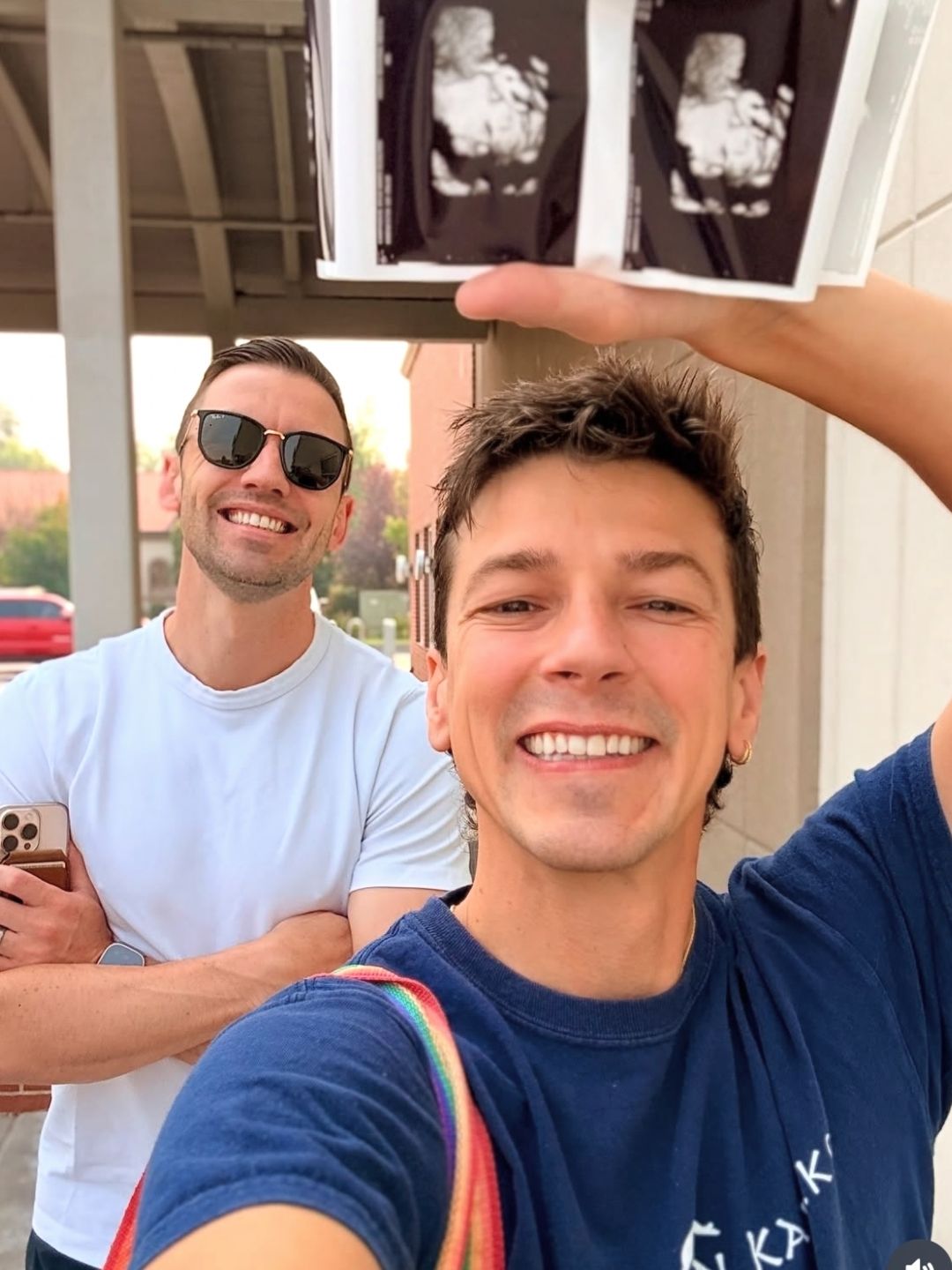
By July, their gestational carrier had reached 37 weeks.

The couple posted ultrasound photographs while admitting there was almost too much emotion to put into words.

Their original due date was August 26.

Theodore apparently had other plans.

He arrived on August 10, more than two weeks early.

The photographs and video shared after his birth show two exhausted-looking but delighted new fathers holding their newborn son.

The moment is the latest chapter in a relationship that itself began through an unlikely series of events.

Long before they were husbands, Matthew posted a YouTube video publicly coming out as gay.

The video went viral.

More than a year later and approximately 1,300 miles away, Michael saw it while struggling with his own sexuality.

Matthew’s openness inspired Michael to come out and record a video response of his own.

The connection eventually moved beyond YouTube.

Within months, they were living together.

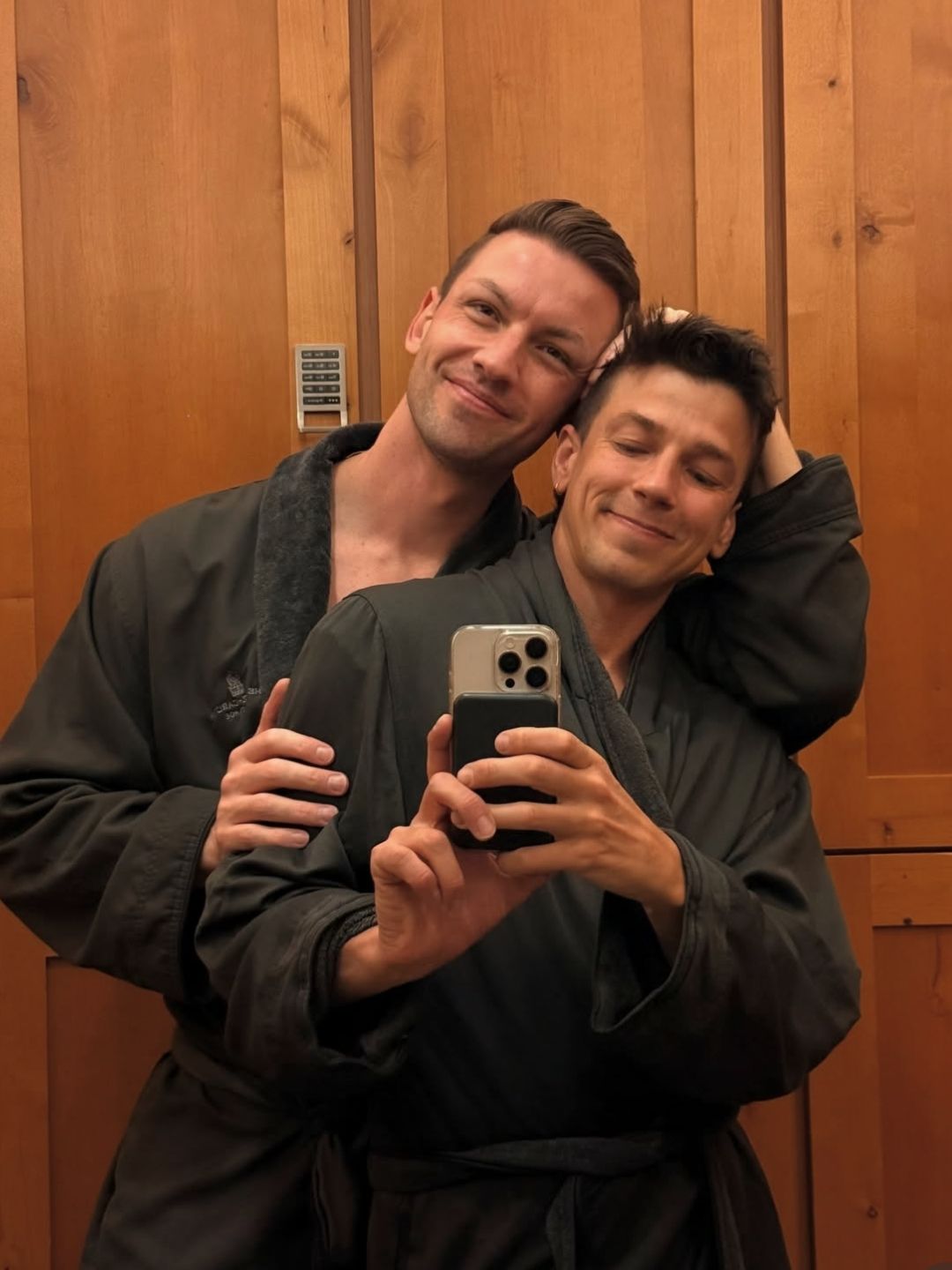
Michael and Matt married in 2018.

They subsequently built a large online following by sharing travel, relationships, mental health, body positivity and everyday married life.

Matthew trained as a nurse while Michael worked as a dentist.

For years, however, one ambition remained constant.

They wanted to become parents.

Matthew once wrote that growing up gay in a conservative part of Oregon, he had struggled even to imagine that marriage might be possible for him.

Starting a family felt even more unimaginable.

That is part of what makes Theodore’s arrival bigger than an ordinary influencer baby announcement.

It represents a future that neither man necessarily grew up believing was available to him.

That experience is familiar to many LGBTQ+ people.

For generations, coming out often meant accepting the possibility that traditional milestones such as marriage and parenthood might never happen.

Marriage equality changed part of that equation.

Advances in fertility treatment, surrogacy and adoption have changed another part.

But those paths remain complicated, expensive and politically contested.

Michael and Matt chose to document that reality rather than presenting their journey as effortless.

They showed the research.

They talked about the money.

They discussed failed expectations and difficult decisions.

And they continued hoping.

Now, after more than five years since they first began exploring surrogacy, there is finally a baby at the end of that story.

His name is Theodore James.

Two husbands are now two dads.

And judging from their first words to him, Theodore has arrived in a family that has been waiting a very long time to love him.

📷 @michaelandmatt

🎬 Prefer video? Subscribe to B-Gay on YouTube: https://youtube.com/@BGaycom

Would You Let a Gay Bar Photograph You and Store Your ID?

0

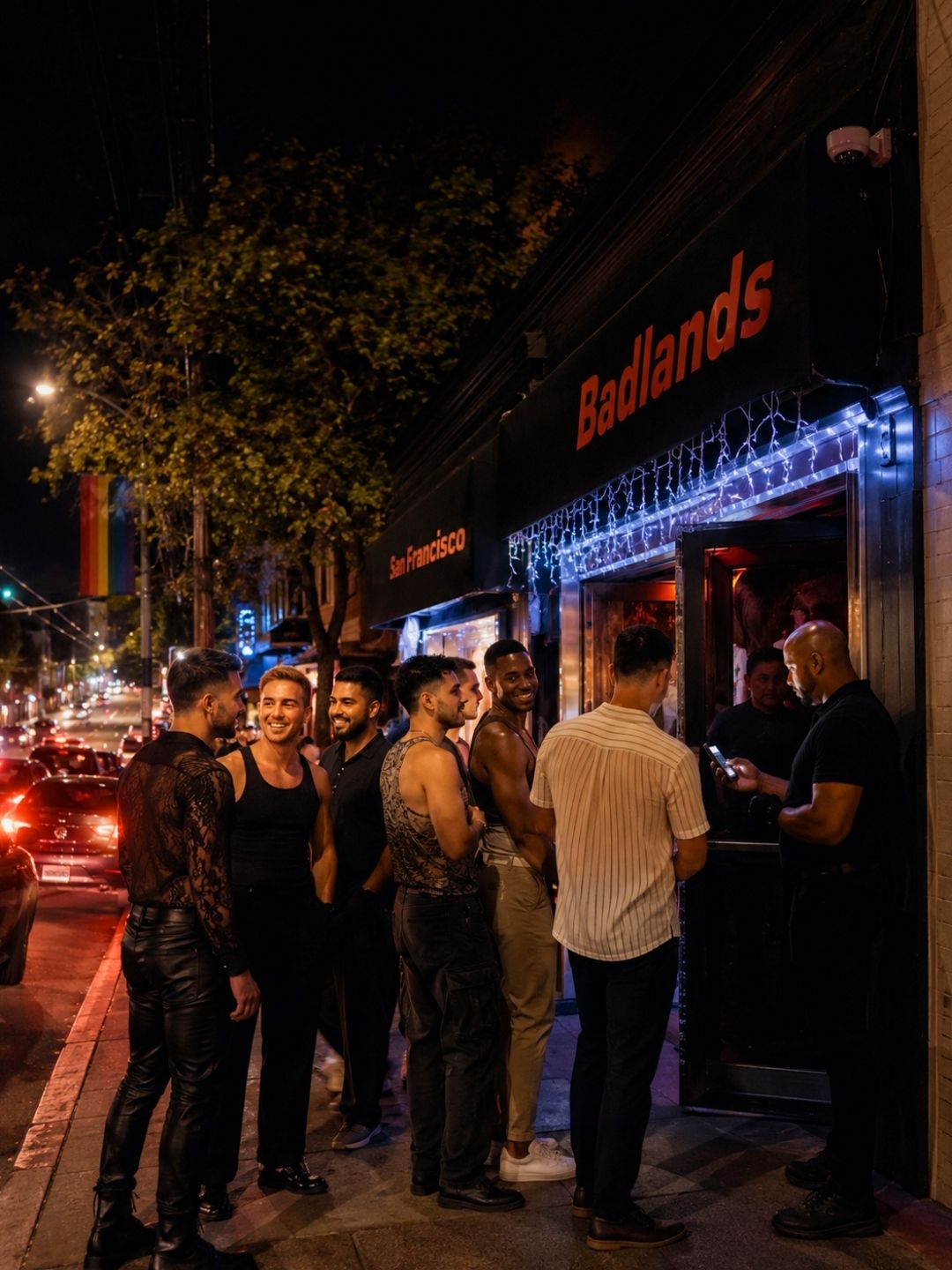
Imagine walking into a gay bar, handing over your driver’s license, having it scanned and then looking into a camera for a photograph before you’re allowed inside.

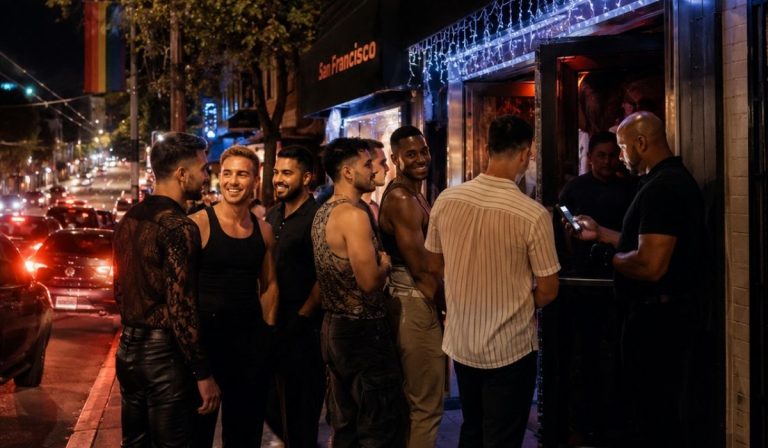
For customers at several bars in San Francisco’s Castro district, that was not hypothetical.

Badlands and Toad Hall had been using PatronScan Guard+, an ID-verification system designed for bars, nightclubs and other venues.

The system scans government-issued identification and takes a current photograph of the person presenting it.

PatronScan says the technology helps businesses verify age, identify fake IDs and prevent people responsible for serious incidents from simply moving from one participating venue to another.

After privacy advocates began questioning its use in the Castro, however, Badlands and Toad Hall announced that they were pausing the system while reviewing their security practices.

They have returned to manual ID checks during that review.

Another Castro gay bar, The Mix, has reportedly continued using PatronScan.

So the question is not whether gay bars should care about security.

Of course they should.

The harder question is how much information a gay bar should collect about the people walking through its door.

What PatronScan Actually Does

The distinction between a photograph and facial recognition is important here.

PatronScan says its North American system does not use facial-recognition technology and does not collect biometric information.

The photograph is taken alongside the ID scan so staff can compare the person entering with the identification being presented.

According to the company, information collected at bars and clubs can include a customer’s name, date of birth, ZIP code, gender if it appears on the ID, ID expiration date and the photograph taken at entry.

For ordinary unflagged customers in California, PatronScan says that information is retained for 21 days before being deleted.

The company also operates what it calls a Flag Network.

Participating venues can flag people following serious incidents, allowing another participating venue to receive an alert if that person’s ID is later scanned there.

PatronScan argues that this can help keep repeat offenders away from nightlife venues and make customers and employees safer.

That is not an unreasonable goal.

Why a Gay Bar May Be Different

The privacy argument becomes more complicated when the business collecting the information is an LGBTQ+ venue.

Gay bars have never been merely places to buy drinks.

For generations, they have also been places where people explored their sexuality, found community and spent time among other LGBTQ+ people before necessarily being comfortable living openly elsewhere.

A person entering a gay bar might be completely out.

Another might not have told their family.

Someone else might simply believe that where they spend an evening is nobody else’s business.

That does not prove that PatronScan information is being misused.

There is no evidence that walking into Badlands or Toad Hall created some government database of gay people, and claims like that would go far beyond what the reporting supports.

But privacy advocates argue that the sensitivity lies in the existence of the record itself.

Entering the venue meant giving a private company identifying information and a current photograph, and customers who wanted to enter reportedly had no practical way to opt out of that process.

Safety Is Not a Fake Concern Either

It would be easy to tell this story with surveillance technology as the villain.

That would ignore why bars buy systems like PatronScan in the first place.

Nightlife venues deal with fake IDs, theft, harassment, fights and occasionally serious violence.

If someone assaults another customer and is removed from one venue, a system capable of warning another venue about that person can sound reassuring.

Badlands and Toad Hall have not suggested that customer safety suddenly matters less because of the criticism.

Their decision to pause PatronScan reflects an attempt to reconsider how that safety is achieved.

Brian Aranda, director of operations for the two bars, has acknowledged that LGBTQ+ customers have legitimate reasons to be particularly sensitive about privacy.

At the same time, he has defended the security value the system provided.

That tension may be the most important part of this story.

Both concerns can be real at once.

Gay Bars Have a Long Memory Around Privacy

There is also a historical reason the question feels different in queer nightlife.

For much of modern LGBTQ+ history, simply being identified as someone who visited a gay establishment could have consequences.

Police raids, employment discrimination, outing and social stigma made anonymity valuable.

The Castro today is not the Castro of the 1970s, and an ID scanner in 2026 should not automatically be equated with those historical threats.

But that history helps explain why asking LGBTQ+ customers to create a digital record at the door can produce a reaction that goes beyond ordinary consumer privacy.

For some people, the gay bar was precisely the place where they did not have to explain themselves to the outside world.

Not Just a Gay-Bar Technology

Another important point is that PatronScan was not created specifically for LGBTQ+ venues.

The company markets its products across nightlife, entertainment and hospitality businesses, including mainstream bars and clubs.

The Castro controversy therefore is not evidence that gay bars have uniquely embraced intrusive technology.

Instead, it raises a more interesting question about whether technology commonly accepted elsewhere deserves additional scrutiny when used in spaces that can reveal something deeply personal about the customer.

A scanned ID at an ordinary nightclub says you went to a nightclub.

A record associated with an LGBTQ+ venue may feel more sensitive to some customers, even when the technology itself operates in exactly the same way.

Where Would You Draw the Line?

Badlands and Toad Hall have paused PatronScan rather than permanently abandoning it, so the story is not over.

The Mix has reportedly chosen a different path and continues using the system.

That leaves San Francisco’s gay community confronting a question that does not have an entirely comfortable answer.

A person who has experienced violence or harassment in nightlife might gladly accept an ID system if it helps prevent repeat offenders from getting inside.

A closeted customer, a privacy-conscious visitor or someone who simply dislikes unnecessary databases might decide the same system asks for too much.

Neither reaction is inherently irrational.

The challenge for gay venues is finding security measures that protect the people inside without making everyone entering feel unnecessarily exposed.

So imagine yourself standing at that door again.

Your ID is in your hand.

The camera is waiting.

Would feeling safer inside be worth giving up some privacy before you entered?

📷 AI

🎬 Prefer video? Subscribe to B-Gay on YouTube: https://youtube.com/@BGaycom
Gay Gymnast Cooper Kim Wins U.S. Title And Takes Another Step Toward His Olympic Dream

0

Cooper Kim’s remarkable 2026 has reached another level.

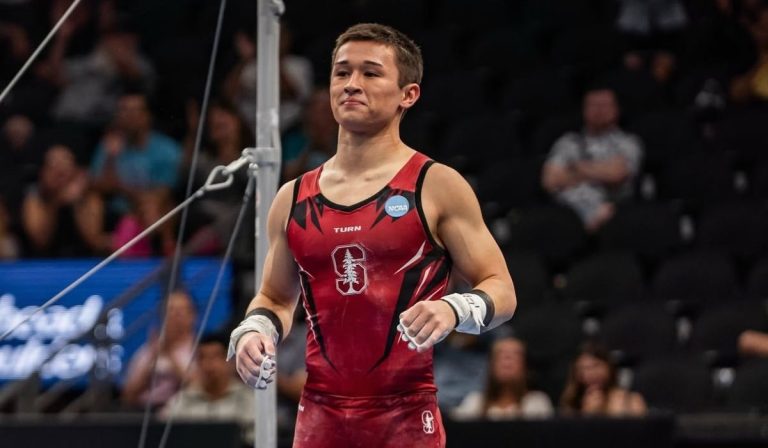
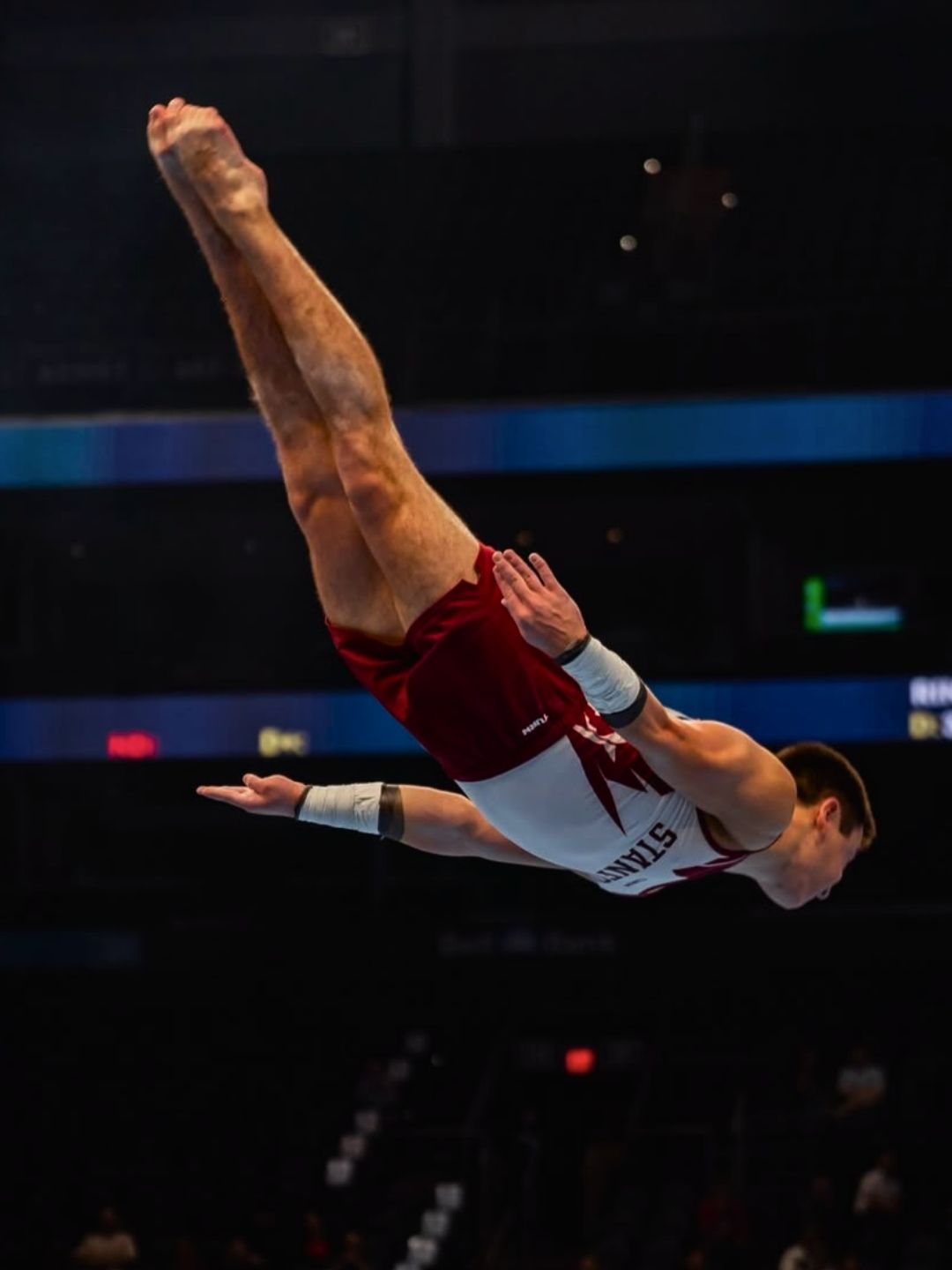
The openly gay Stanford gymnast won the national championship on high bar at the Xfinity U.S. Gymnastics Championships in Phoenix while earning his first place on the U.S. Senior National Team.

For the 20-year-old, the achievement comes only months after he publicly embraced his identity as a gay athlete.

Kim produced the strongest high-bar performance of the weekend, becoming the only competitor to score above 15 points on both days of competition.

His combined score of 30.936 secured the national title.

He also finished sixth in the all-around standings and fourth on floor exercise.

Those results earned Kim a place on the 2026–27 U.S. Senior National Team.

He was also selected as a replacement athlete for the U.S. team heading to the 2026 World Championships.

Before that, Kim will represent the United States at the Paris World Challenge Cup in September.

The results represent another major step toward the goal that has been quietly sitting in the background throughout his rise: competing at the 2028 Olympic Games in Los Angeles.

Kim’s breakthrough did not begin in Phoenix.

Earlier this year, he helped Stanford capture the NCAA men’s gymnastics team championship.

He also won the individual NCAA title on floor exercise and earned All-America honors across multiple events.

His floor routine stood out not simply because of its difficulty but because of the personality and artistry Kim brought to it.

That freedom of expression has become an important part of his story.

Before Stanford’s 2026 season began, Kim told his coaches that he wanted to stop holding parts of himself back.

That included being more open about being gay.

Rather than discovering that openness was a distraction from elite sport, Kim found the opposite.

He later told Outsports that his coaches and teammates responded with support and allowed him to be himself in the gym.

Kim said that acceptance helped him both personally and athletically.

He described feeling freer and finally being able to perform gymnastics in a way that felt genuinely his.

The NCAA later profiled Kim during Pride Month, where he spoke more extensively about the journey toward accepting himself.

He said therapy and work with a sports psychologist helped him recognize how much energy he had spent worrying about other people’s opinions.

Eventually, he began to understand that accepting his sexuality was part of accepting everything else that made him who he was.

That process coincided with the best gymnastics of his career.

Kim has been particularly outspoken about artistry in men’s gymnastics.

He rejects the idea that expressiveness in the sport should automatically be associated with sexuality.

Instead, he argues that gymnastics becomes more exciting when athletes stop worrying about how they are perceived and allow their own personality into their routines.

His performances this year have offered a compelling demonstration of that philosophy.

At the NCAA Championships, it helped produce a national title on floor.

At the U.S. Championships, his technical confidence and fluidity on high bar produced another gold medal.

After the competition in Phoenix, Kim reflected on both parts of his journey.

He said he was grateful to make the U.S. Senior National Team, earn a World Championships alternate position and receive an international assignment.

But he also said he was proud of himself for continuing to accept who he is and believing that he is capable of extraordinary things.

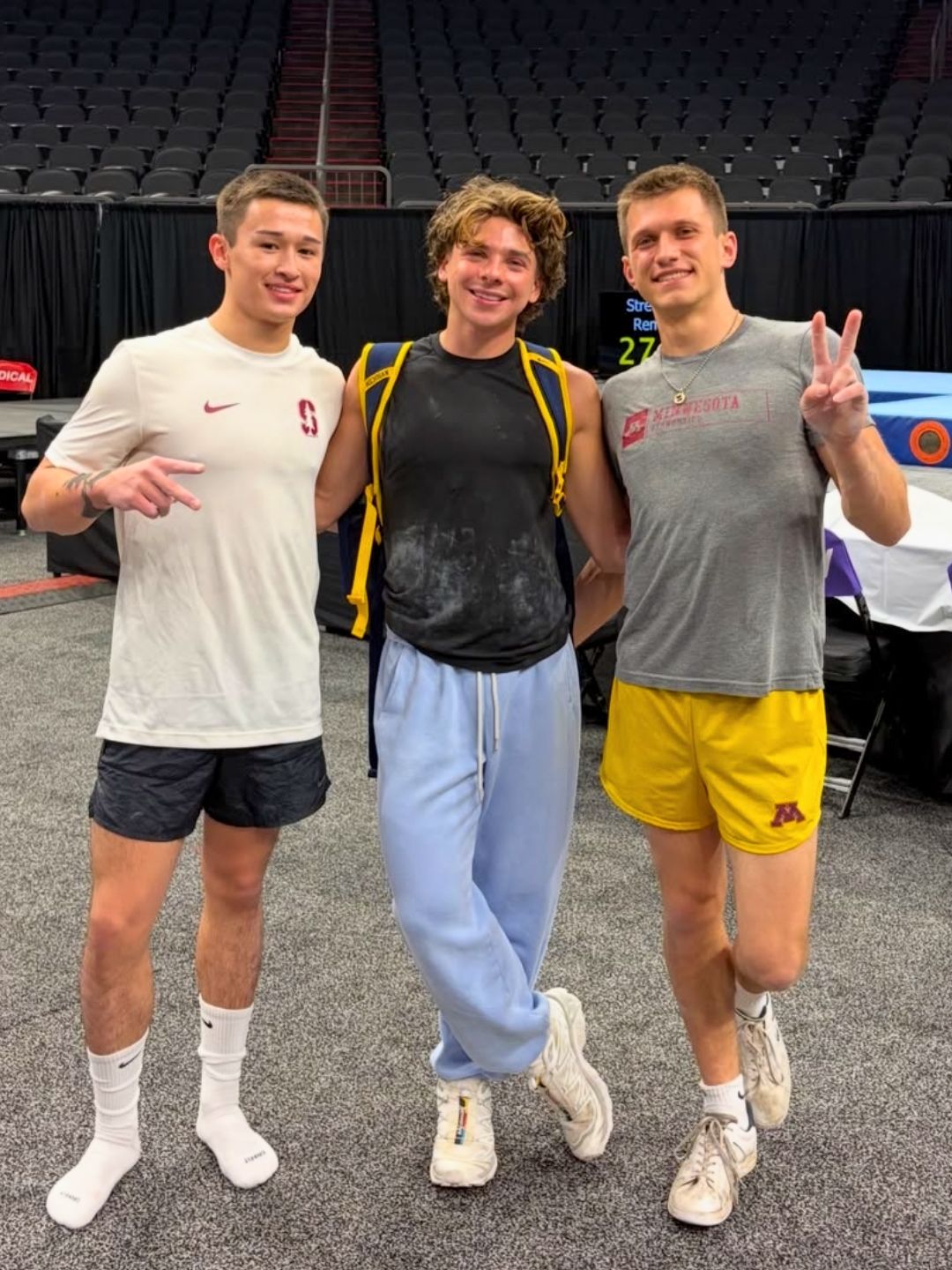
Kim was not the only openly gay male gymnast competing in Phoenix.

Ben Letvin of Minnesota and Charlie Larson of Michigan were also at the championships.

Letvin finished 18th in a field of 42 competitors and said afterward that he had achieved the goals he set for the meet.

Larson competed on the opening day but was unable to continue on Day 2 because of an injury.

The championships marked the first time Kim, Letvin and Larson had all been together at the same competition as openly gay athletes.

That visibility is notable in a sport where relatively few elite male competitors have historically been publicly out.

Kim’s success offers a particularly powerful counterpoint to the old assumption that athletes must separate their identity from performance in order to succeed.

His experience at Stanford suggests that sometimes the opposite is true.

Removing the effort required to hide can leave more room to perform.

Kim is still early in his senior international career and a place on the 2028 Olympic team is far from guaranteed.

American men’s gymnastics currently has considerable depth, and Olympic selection will ultimately depend on performances much closer to the Los Angeles Games.

But he has now done something that matters enormously on that road.

He is a U.S. national champion.

He is a member of the national team.

And he is beginning to receive opportunities to represent his country internationally.

Only months after publicly embracing life as a gay athlete, Cooper Kim is no longer simply talking about what might happen if he stops holding himself back.

He is showing us.

📷 @coop\.kim

🎬 Prefer video? Subscribe to B-Gay on YouTube: https://youtube.com/@BGaycom