
Eat and Play in Sydney

0

Summer is a terrific time to visit this visually stunning city

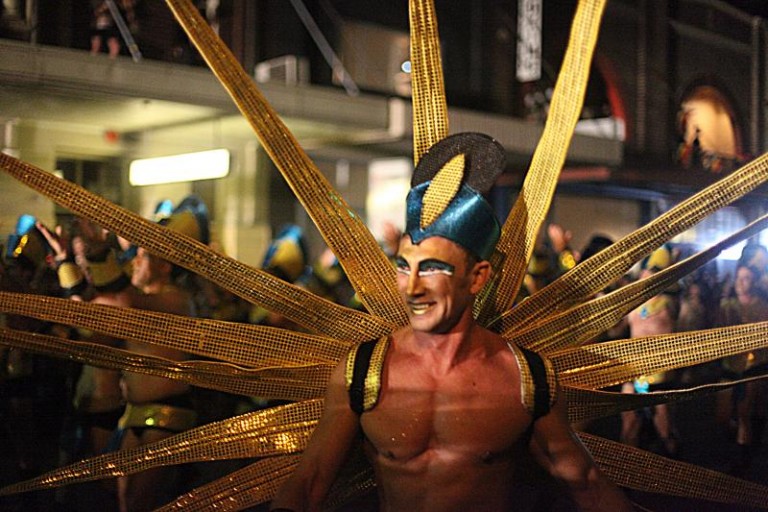
In North America, February marks the very heart of winter, and for much of the continent, this means chilly weather and dark, gloomy days. This is not the case on the other side of the world, in Sydney, Australia, the hippest and hottest gay destination in the southern hemisphere. Here, February marks the height of summer. Even better, it’s the time for Sydney Gay and Lesbian Mardi Gras. This hugely popular series of cultural events, parties, and parades celebrating gay life in Australia rivals any queer festival in the world. Regardless of your interest in Mardi Gras, summer is a terrific time to visit this visually stunning city.

Cultural draws are many in Sydney, beginning with one of the world’s foremost architectural icons, the Sydney Opera House, which apart from possessing a magnificent exterior overlooking Sydney Harbour presents fine operas and other musical and theatrical performances throughout the year. It’s right beside Circular Quay, from which you can catch water taxis and harbor cruises to some of Sydney’s famous beach communities, such as Manly, Watsons Bay, and the Harbour Islands, and also to the fabulous Taronga Zoo (an excellent place to come face to face with the many unusual animals unique to this continent). The harbor is surrounded by The Rocks neighborhood, which fringes Sydney’s modern central business district, a warren of glitzy high-rise office towers.

There are several other top sightseeing draws in this fabled city. The already outstanding Art Gallery of New South Wales recently opened a phenomenal wing of Asian works that’s among the most prestigious in the world. Just south of the opera house, you can lose yourself for hours strolling the lush grounds of the Royal Botanic Gardens. Grab a ride on Sydney’s sleek monorail to poke around the Darling Harbour neighborhood, home to the shark-infested Sydney Aquarium and impressive Powerhouse Museum, a trove of fascinating science, natural history, and anthropology exhibits. And if it’s a sky-high photo op you’re angling for, take an elevator to the top of 1,060-foot Sydney Tower, where the southern hemisphere’s highest observatory platform offers 360-degree views.

If you’re keen on getting in touch with Sydney’s famed natural scenery, consider a stroll along the Bondi Coastal Walk, a simple and easy path along the ocean that takes less than an hour to complete. Or for more of an adventure, book a tour with BridgeClimb Sydney to hike across the very top of the Sydney Harbour Bridge, one of the most beautiful such structures in the world.

Sydney’s renowned gay scene is concentrated chiefly along Oxford Street, in the city’s Darlinghurst and Surry sections. It’s pretty busy from about the edge of Hyde Park for several blocks east, and as you continue along Oxford into the Paddington section, you’ll find fewer gay hangouts but still plenty of fun businesses. Along Oxford Street’s gay stretch, there are a handful of queer bars and clubs, several trendy restaurants, numerous fashion boutiques, and quite a few shops selling porn and sex toys.

Tops among the watering holes, the Colombian Hotel (note that bars and pubs in Australia often take the name “hotel” even when they don’t offer overnight accommodations) is a trendy, mixed-gender spot with two floors of fun. The upper lounge is the snazziest space, where you can order fancy cocktails and watch fun videos alongside a smartly dressed bunch of bon vivants. Downstairs, it’s more laid-back and a better space to mingle with strangers and sip beer.

Nearby, the Exchange Hotel has long been a favorite for dancing and cruising. This four-level club has several dance areas and lounges, and it cranks into the wee hours on weekends. It’s great fun to watch the crowds gather in the neighborhood’s gay epicenter, Taylor Square, from the balcony at the Kinselas Hotel, which is especially popular on Sunday nights. Manacle, right off Taylor Square, is one of the top leather bars in Australia, and across the street, the Oxford Hotel has been popular with gay guys for years. It’s open 24 hours and draws an eclectic bunch of all ages and styles.

The bilevel Midnight Shift is another highly recommended spot, with a disco upstairs and a more laid-back bar with pool tables and seating on the ground level. Younger guys tend to favor the loud and festive Stonewall Hotel, which offers dancing downstairs and a lounge on the second floor. Finally, hard-core lesbian and gay disco bunnies cut loose at ARQ, which is open only Thursday through Sunday nights and packs in hundreds of buff dance-aholics.

Sydney’s less-famous pocket of gayness is along King Street in the Newtown area, where bars tend to draw a more local, neighborhoody bunch. Some reliable nightlife options along King Street include the Bank Hotel, which appeals to a mostly female and fairly butch bunch; and the Newtown Hotel, which pulls in a varied posse of guys for drag shows, videos, and cruising. Serious fans of drag shouldn’t miss the Imperial Hotel, which has both drag-king competitions and very popular shows inspired by the cult classic movie The Adventures of Priscilla, Queen of the Desert.

Sydney has emerged in recent years as one of the world capitals of inventive dining – there are great restaurants all over town. For a truly special occasion, few restaurants in Australia deliver more “wow” factor than Rockpool, a temple of creative modern Australian (aka “Mod Oz”) cuisine, where you might sample such innovate fare as stir-fried squid and King prawns with squid-ink noodles, smoked bacon, tomatoes, chilies, and coriander. Another must for gourmands is Altitude, which sits atop the ritzy Shangri-La Hotel (on the 36th floor), affording unrivaled views of Sydney Harbour and serving stellar Mod Oz fare.

For more casual dining and drinking, stop by one of the city’s quintessentially old-school pubs, such as the warm and festive Lord Nelson Hotel, which serves a nice array of ales and lagers as well as superb Aussie wines and tasty pub food. And for incredibly delicious Thai food, look to Sailors Thai, an elegant restaurant on one of the Rocks’ busiest streets.

If Asian cuisine is your weakness, you’ve come to the right city. For the ultimate experience, venture a bit farther east into the Surry Hills neighborhood to Billy Kwong, an intimate restaurant where international celeb chef Kylie Kwong dreams up magically modern takes on traditional Cantonese food.

In the heart of the main gay district, for inexpensive, home-style food, drop by laid-back Betty’s Soup Kitchen, which is known for its huge, meal-size bowls of soup, from lentil to gazpacho, plus simple pastas and homemade desserts. The Grumpy Baker is a cute coffeehouse with delicious baked goods and a typically delicious-looking clientele, too. On Taylor Square, Lure Fish Cafe and Oyster Bar serves up some of the best chow in the area. It’s a hip space with clean lines and minimalist decor.

Wok on Inn and Don Don are side-by-side cheap and handy Asian restaurants, the first specializing in noodle bowls and the second in sushi. Nearby in trendy Paddington, Toko Sushi on Oxford turns out some of the most inventive sushi in town, in an uber-trendy dining room.

In the up-and-coming Inner West part of Sydney, the Newtown and Glebe neighborhoods have become popular for funky shopping and ethnic dining. Great dining spots in these districts include Kilimanjaro for inexpensive, delicious African fare; Sumalee for tasty Thai treats; and Iku Kitchen for vegetarian victuals.

Sydney has a number of inviting accommodations, most of them downtown, which is either a pleasant 20-minute walk or a relatively quick cab ride from Oxford Street. Directly facing Sydney Harbour, you’ll find the stunning Park Hyatt, a four-story hotel with unbelievably cushy rooms, round-the-clock butler service, and a loyal celeb following. If you get a chance, eat lunch in the hotel’s open-air dining room overlooking the harbor and opera house.

Up the street, The Establishment, run by Aussie design guru Justin Hemmes, turns heads with its 33 super-stylish rooms and chic public spaces, such as Tank nightclub, Est restaurant, and Sushi e cafe.

There aren’t too many accommodations right along Oxford Street, but right on Hyde Park, there’s the Sheraton on the Park, a thoroughly upscale lodging with about 550 sleek rooms and a great health club, pool, and spa. Another smart Darlinghurst option is the Medusa, which has just 18 rooms, all decked with dazzling colors and mod furnishings.

About five miles from downtown Sydney but right by the ocean, consider staying at Dive Hotel, which is in Coogee Beach and just steps from the sand. This intimate 14-room hotel is done in cool blacks and whites with striking modern furniture. In fact, even if you don’t overnight out in this direction, at least plan a brief excursion. Sydney’s fashionable seaside neighborhoods have loads of character plus intriguing shops and restaurants.

You might plan to watch the sun set from Bondi Beach’s hottest restaurant, Icebergs, a futuristic, glass-walled cantina overlooking the ocean and serving such memorable Mod Oz fare as char-grilled quail with grape salad, and smoked eel with creme fraiche, arugala, and horseradish. The dessert of vanilla panna cotta with chocolate sauce and chestnut honey is a marvelous way to finish off a perfect Sydney evening.

Related: Wine-Tasting and Wildlife-Watching in South Australia
Get Captivated by Rio De Janeiro

0

Rio is a fascinating, exciting place to visit year-round

Thousands of gays and lesbians live in Rio de Janeiro, a city of more than 10 million residents, and one of the most celebrated gay vacation destinations in the world. Huge numbers turn out for Gay Pride in early July, and the city’s festive Carnival celebration also sees plenty of “family” pour into the city. But Rio is a fascinating, exciting place to visit year-round, possessing a splendid natural setting, a tropical climate (with highs in the mid-80s in summer and mid-70s in winter), and an extremely welcoming personality.

Rio hugs the Atlantic Ocean, its neighborhoods strung between white-sand coves and rocky mountain peaks, the two most visited being Corcovado, topped with its Art Deco-style statue of Christ, and Sugarloaf. You’re rarely far from a sugary beach abuzz with vendors hawking fresh coconut juice and tropical cocktails. The city’s most established neighborhoods are characterized by attractive, colonial-style architecture, but much of Rio is dominated by modern skyscrapers. One negative aspect of Rio is its reputation for crime, but the city has greatly stepped up efforts to make the touristy areas safe. Crime is still an issue here, but it’s not generally any worse than in most other major international metropolises.

Americans have been visiting Rio in great numbers in recent years, in part because it’s one of the few major cities in the world where the U.S. dollar enjoys a highly favorable exchange rate. Hotels, restaurants, bars, taxis, and shops in Rio are a comparative bargain for Americans, who can often save enough to offset the steep price of airfare to Brazil. An appealing trait of Cariocas (as residents of Rio de Janeiro are known) is that they tend to be extremely friendly, keen on having fun (whether it be dancing, eating, or beachcombing), and devoted to style. A potential challenge, however, is the language – relatively few Cariocas speak fluent English. You’re more likely to encounter English-speaking locals in the more touristy areas, but it’s definitely a good idea to pick up a Brazilian Portuguese phrase book and learn a few basics.

Although Rio is something of a gay mecca, the scene itself is a bit diffuse. The Ipanema and Copacabana neighborhoods have the majority of the city’s gay-popular businesses, and there’s one particular two-block area in Ipanema where you can detect a visible queer presence, but overall, this is not a city of gay ghettos and streets lined with rainbow flags. There are only a handful of gay bars and clubs, and the community here blends more or less imperceptibly with the rest of Rio. This is a city that’s highly tolerant of homosexuality, especially compared with other major Latin cities, but gays here still tend to conduct themselves with an air of discretion.

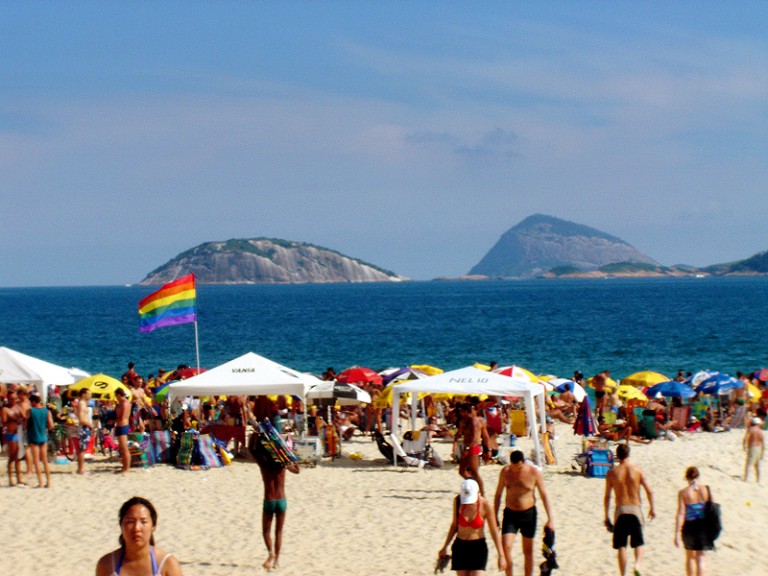
Ipanema – with its narrow, tree-lined streets and attractive colonial-style buildings – is the best neighborhood to base your explorations, as it has a number of appealing, gay-friendly hotels in every price range, and it’s mellower and safer than nearby Copacabana, which you can still easily walk or cab to. Another plus about Ipanema is that it borders the trendy Leblon district, which is rife with fine boutiques and diverting cafes. And Ipanema also has the city’s best gay beach (between Rua Farme de Amoedo and Rua Teixeira de Melo).

Copacabana is the city’s main tourist district, a bustling, slightly brash, neighborhood whose beachfront is lined with massive hotels and condos. It’s still an appealing neighborhood, but the scale here is less intimate than Ipanema, and crime can be more of a factor, especially at night along the beach. During the day, however, Copacabana’s long, crescent-shaped beach is undeniably lovely – great for sunning, reading, and people-watching.

When it comes to food, Rio – and especially Ipanema – has plenty of offer, and you’ll find that Cariocas approach meals with great gusto; they also tend to eat late by American standards, usually heading out to dinner between 8 and 10 p.m. The city has many great Italian restaurants, with Mio a particularly romantic favorite for same-sex dates. If it’s a truly special occasion, head to one of the city’s most hallowed eateries (it’s said to be a favorite of Madonna), Satyricon, a swank seafood restaurant famous for its lobster and shellfish.

Cozy and inviting Colher de Pau is a short walk from the beach; indeed, many beach bums who want a break from the sand head here to dine on pastas, sandwiches (try the one with smoked salmon, brie, and capers), pies, and pastries. It’s a nice option for breakfast, too. Galitos Grill is a casual, tres gay choice for chicken dishes. And affordable Carretao is a traditional Brazilian rodizio (a steakhouse serving all-you-can-eat beef, sausage, fish, and chicken, plus a wide variety of sides). A coffeehouse ambience prevails at Cafeina, which offers an extensive array of sandwiches, and is a good place to fill out those postcards or peck away on your laptop.

Copacabana is where you want to go if you’re up for a late night of dancing and partying – just keep in mind that tourists are sometimes preyed upon in the clubs by hustlers and scam artists (never accept a drink from a stranger). The most famous gay hangout in the city is the Copa, which has long been the domain of hunky muscle men and toned pretty boys. Cine Ideal is a popular weekly party held on Saturday nights – it rumbles well into the wee hours. Le Girl (held on Monday) and Le Boy (held on Sunday) are well-attended weekly parties geared toward lesbians and gay men on their respective nights. One other happening Copacabana disco to keep in mind is Fosfobox, which is busy Thursday through Saturday.

Ipanema has the friendliest, safest, and mellowest gay nightlife options. Here you’ll find Galeria Cafe, a stylish, intimate club and art gallery that draws a mix of men and women of all ages, most of them tending toward the stylish, professional side. The neighborhood’s other major gay club is Dama de Ferro, which buzzes with dancing and drinking Thursday through Saturday nights.

As is the case in many gay international destinations, bathhouse culture is alive and well in Rio, and it does not have the somewhat shady air about it that’s occasionally the case in U.S. cities. One of the most popular saunas, right in Ipanema, is Studio 64, which has clean and comfortable facilities, including a video lounge, steam room, sauna, and private cabanas. Other well-regarded saunas include Club 117, known for its stable of strippers, and Point 202, which is near the Fosfobox nightclub.

For the latest details on the local gay scene, pick up a copy of the local monthly gay magazine, Odyssey Brasil. It’s found at many gay businesses, including the office of Rio G Travel, which also produces its own extremely useful gay guide to the city (it’s trilingual, written in Portuguese, English, and Spanish).

Hotels

Charming and modern, Casa Cool Beans is a small, relaxed gay owned Bed & Breakfast Inn located in Rio de Janeiro’s Santa Teresa artist district. It offers a serene setting with multiple gardens, open-air areas, pool and sun deck all offer exposure to the wonderful breezes & views of Santa Teresa.

Golden Tulip Ipanema Plaza offers boutique accommodations with bright and spacious rooms featuring modern décor in the heart of Rio’s most trendy district. Just 100 m from Ipanema beach and 1.3 km from Copacabana beach, this hotel offers a rooftop pool and a panoramic view of Rio de Janeiro.

Mar Ipanema Hotel is in an ideal location, just 100 m from the world-famous Ipanema Beach. In walking distance to many restaurants and shops, including Fórum Ipanema Shopping Mall. Comfortable rooms, with modern design interior, and a friendly and helpful staff.

Related: Exploring Buenos Aires

Martha’s Vineyard

Martha’s Vineyard has seen a gradual growth in gay and lesbian visitation

Since Provincetown bursts at the seams all summer long with excitement and socializing, quite a few lesbians and gay men across New England have begun heading to a quieter but no less charming and remote seaside getaway, Martha’s Vineyard. Over the past several years the island has seen a gradual but discernible growth in gay and lesbian visitation. One key to enjoying this sparkling emerald island off the southern coast of Cape Cod (it’s accessible by only ferry or plane) is to arrive with a lover rather than hoping to find one upon arrival.

Of course, Martha’s Vineyard – along with its neighbor to the east, Nantucket – has long been a highly desirable destination. Families have been building the now-ubiquitous weathered-shingle cape-style houses here for more than three centuries, dating to the island’s origins as a sleepy fishing settlement. Yachting and hobnobbing among the rich and famous became official pastimes during the early part of this century. Glitterati such as Carly Simon, James Taylor, Spike Lee, Sharon Stone, Meg Ryan, Denzel Washington, Ted Danson, and Mary Steenbergen regularly spend time here. Members of the Kennedy clan have been sailing over for years, and political pundits will always associate Martha’s Vineyard with the Chappaquiddick scandal that ultimately cost Ted Kennedy the U.S. presidency.

Come for a visit, however, and you’ll hear little talk of celebrity-spotting and rumor-mongering. Famous or unknown, gay or straight, folks come to Martha’s Vineyard to get away from the vagaries and pressures of life on the mainland. Here you’ll discover historic inns, some of the finest restaurants in coastal New England, and a handful of enchanting villages, each with its own pace and personality.

The town of Vineyard Haven is an ideal base. This walkable village has a few gay-friendly inns, some hip restaurants and boutiques, and an enviable sheltered location overlooking Vineyard Haven Harbor. The other communities on the island are within a half-hour drive (or an afternoon’s bike ride – Martha’s Vineyard is ideal for cyclists, and there are rental shops near each of the ferry terminals). If you wish to stay right in Vineyard Haven, book a room at the breezy Crocker House Inn, a 1920s beach house owned by young and friendly innkeepers Jeff and Jynell Kristal. Rooms are casually smart, with white-wicker furnishings, and some have fireplaces and whirlpool tubs.

Within a 10-minute stroll of these inns are several fine shops, a quirky old movie theater, and a few nice eateries. A favorite is Cafe Moxie, which presents an intriguing range of relatively affordable mod-American dishes. If you’re in the mood for a lobster roll, drop by the Net Result, a simple fish market a 10-minute walk from the ferry terminal serving some of the freshest seafood around.

Oak Bluffs and Edgartown are the two other major settlements on the island. Oak Bluffs has been more heavily developed than other towns on the island, with a bounty of lively bars and rollicking amusements popular with college students and teenagers.

It’s a fun town for window-shopping, picking up an ice cream cone at a local parlor, and eating – there are plenty of terrific restaurants in Oak Bluffs. At the upper end, the Sweet Life Cafe serves outstanding regional American fare and occupies a handsome Victorian house along the town’s main drag, Circuit Avenue – try the squid-ink fettuccine with shrimp, scallops, calamari, and a tomato-basil-garlic broth. More casual and less pricey options, both of which are also fun places to sip cocktails and socialize, include Sharky’s Cantina, which serves up terrific Tex-Mex in a festive ambience, and the Lookout Tavern, a rustic seafood shack overlooking the sea and serving not only great platters of fried and broiled fish and shellfish but also first-rate sushi.

Edgartown is the island’s somewhat more conservative community, at least in appearance if not necessarily in politics (this is still a highly liberal part of the world, especially on social issues). This posh historic village defined by gorgeous white-clapboard Colonial homes and neatly manicured gardens has several convivial eateries, and numerous high-end clothiers and boutiques downtown. Tops for dining are Detente, a hip little wine bar serving superbly crafted, innovative fare like lemon-honey-basted halibut with truffled leek puree, baby artichokes, and oven-dried tomatoes. A more casual but still reliable bet is the Wharf Pub, which serves consistently good burgers, salads, and pub fare.

Right in Edgartown, you’ll find some lovely, gay-friendly accommodations, including the Hob Knob, a handsome and well-run 18-room Gothic Revival property with unfussy but attractive furnishings reminiscent of an English country house.

Just south of Edgartown, with a fantastic location on Katama Beach, the Winnetu Oceanside Resort makes for a delightful retreat, especially if you’ve got kids in tow – in fact, this is one of the best gay-friendly, family-oriented properties on the East Coast. The property consists of a luxury inn with one- to four-bedroom suites as well as a cluster of three- to five-bedroom town homes. The resort offers dozens of diversions to keep you busy, from bike tours to whale-watching trips, and there’s a world-class tennis facility on-site. Also, Winnetu’s restaurant, Lure, serves some of the most inventive seafood fare on the island, such as butter-poached lobster with soft cornbread, roasted corn, and fava beans. This upscale resort draws mostly families with kids in summer, but it’s more of a couples destination during the mellower spring and fall shoulder seasons.

Related: Northeast Getaways: From Luxury to Affordable

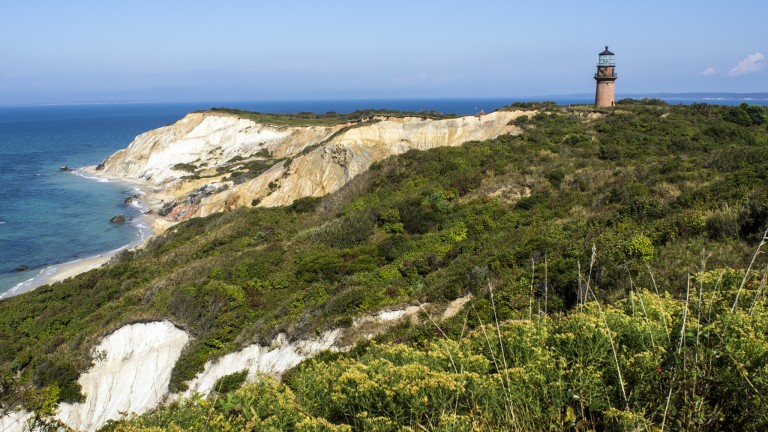
Outdoors enthusiasts should stick to the western side of Martha’s Vineyard (referred to locally as Up-Island). Here you can sample fresh lobster dockside in the picturesque fishing village of Menemsha (a great place to stop for a casual seafood lunch – just try one of the restaurants on the pier), or admire ocean views from the lighthouse and multihued clay cliffs at Aquinnah (formerly known as Gay Head). Below the Gay Head cliffs you will find, appropriately, a popular nude beach with a moderate following among gays and lesbians – when you hit the beach, turn right, and walk all the way to the end (about 30 minutes). A tip: If you’d like to check the scene out in advance, drop some change into one of the coin-operated magnifying lenses near the base of the lighthouse – it’s the closest you’ll come to a peep show on Martha’s Vineyard.

In the Up-Island community of West Tisbury, set back on a wooded property slightly off the beaten path, you’ll find the island’s most opulent gay-owned property, Lambert’s Cove Inn. Innkeepers Scott Jones and I. Kell Hicklin have restored what had been a somewhat dowdy country hotel into a sophisticated boutique inn with smartly furnished rooms set among three buildings. Amenities include high-speed Internet, and plush Egyptian cotton linens, and some rooms have private screened-in porches. A sunken pool in back is the perfect place to while away a hot afternoon. And in the evening, the inn’s elegant dining room serves outstanding contemporary American fare, such as braised veal cheeks with sweet corn, English pea risotto, and a Madeira wine reduction. It’s the definitive venue for a relaxing Martha’s Vineyard hideaway.

Eat, Stay, and Play in San Diego

A city it’s awfully hard to leave after just a couple of days

With a storybook setting on the Pacific Ocean and a tremendous bounty of cultural offerings, San Diego’s only real drawback as a weekend destination is that it’s awfully hard to leave after just a couple of days. Indeed, the city’s main gay and lesbian neighborhood, Hillcrest, offers more in the way of nightlife, dining, and shopping than many U.S. cities. Throw in the miles of pristine beaches, and you can understand the immense appeal.

As popular as it is, San Diego – the nation’s seventh-largest city – exists somewhat out of the public eye, at least compared to L.A. and San Francisco. It’s a low-keyed place with a somewhat conservative sensibility. Of course, the gay nightclubs here know how to put on a big party, and Hillcrest was home to the original showroom of the over-the-top clothier International Male. But you’re more likely to enjoy a visit here if you take your time, admire the scenery, and smell the salt air than if you try to cram a week’s worth of activities into a short visit.

Here’s a step-by-step recipe for making the most of a weekend tour of duty in San Diego, complete with suggestions on where to eat, stay, and play.

Consider booking a room in the heart of Hillcrest at the Inn At The Park, which offers spectacular views of Balboa Park and is close to the San Diego Zoo, Sea World, Little Italy and more.

Hillcrest has many outstanding gay-popular restaurants. A great choice for your first night, Montana’s American Grill occupies a classic art deco building. It’s one of the city’s top purveyors of regional Western and Southwestern cuisine. Smoked fish, grilled-over-hardwood meats, and pastas are menu staples, along with regularly changing micro brewed beers. The New Mexico-chile fettuccine with blackened chicken, grilled prawns, and a serrano cream sauce packs plenty of punch. From here you can move on to one of the neighborhood’s several cool gay hangouts. Though it’s the see-and-be-seen video cruise bar in town, Flicks is down-to-earth, with flattering lighting and music played at a level that allows conversation. Friday nights are a major to-do here. San Diego’s oldest gay bar, the Brass Rail, is another good option – it’s a no-attitude dance club with a friendly staff. A bit farther a field, Club Bom Bay is a laid-back lesbian club with a fairly small dance floor. Fridays tend to be the busiest night here, too.

For nearly two decades, an eccentric mix of Deadheads, chic lesbians, club kids, and old ladies has congregated at the Big Kitchen for the best breakfasts in San Diego. It’s the perfect place to start off your Saturday morning, and it’s right by the city’s green lung, Balboa Park. You could spend a month exploring this lush urban oasis and never quite see it all. In one day, it’s best to prioritize – you can get a good sense of the variety of the park’s museums at the Balboa Park Visitors Center. If you prefer the outdoors, spend your time at the world-class San Diego Zoo, which can be explored on foot (somewhat rigorous), by double-decker bus, or via an aerial tram. Among the indoor attractions, the San Diego Museum of Art contains a great wealth of paintings from all over the world – you’ll see works by artists ranging from 20th-century Americans (Thomas Eakins, Mary Cassatt) to European masters (Canaletto, Rubens).

For dinner, head to San Diego’s downtown, the renaissance of which was spurred on by the restoration of the Gaslamp Quarter, a 16-block historic district that runs along 4th and 5th avenues from Broadway to Market Street. The city’s commercial hub during the late 1800s, the quarter turned into a grim red-light district in the early 20th century and foundered for many years. Then in 1985 Ingrid Croce, the widow of folk balladeer Jim Croce, opened Croce’s Restaurant and Jazz Bar. This move helped kick off the neighborhood’s astounding comeback.

Today the quarter is one of the nation’s most successful and appealing urban success stories. The original buildings have been remodeled and reopened as art galleries, coffeehouses, jewelry shops, restaurants, and antiques shops. Several places here have a gay following, although at night it’s mostly a sea of straight collegiate types standing outside the red velvet ropes of numerous Euro-trashy nightclubs. Croce’s remains a great choice for dinner or listening to live jazz. The kitchen turns out sophisticated Cal-Mediterranean fare like grilled Pacific swordfish with spaghetti squash, smoked applewood bacon, green onions, and parsley oil.

The Renaissance San Diego Downtown Hotel is located 11 minutes’ walk from Little Italy, and features a vibrant lounge, restaurant and contemporary art gallery. It also has an outdoor heated pool and a 24-hour open-air fitness centre that offers treadmills and elliptical machines, along with complimentary spring water and lemon-scented towelettes.

From the Gaslamp Quarter, make the short drive or taxi ride back to Hillcrest for some serious nightclubbing. The city’s top lesbian hangout is the Flame, which has a large dance floor and several bars. Saturday it’s absolutely packed. Guys – and also some women – usually head to Rich’s, which has a small video bar for getting cozy and a large dance floor for grooving. The normally mainstream disco Club Montage pulses pink on Saturday, drawing a mix of club kids, male and female. It’s like a weekly circuit party, and the layout is impressive – three levels, four bars, and a rooftop patio.

Depending on just how late you partied the previous evening, you might start things off Sunday morning at Cafe on Park, an offbeat neighborhood greasy spoon that serves hearty breakfasts and healthful salads, along with some truly outrageous works of mad culinary inspiration (pancakes filled with Cap’n Crunch Berries cereal and blackberries, anyone?). You can usually count on a big crowd of alternative artsy types and scenesters.

Next, make the 25-minute excursion up the coast to La Jolla, the region’s most prestigious resort and beach town. You can stroll along the lovely beach, of course, but the real draw here are the fancy shops along Prospect Street. Take time out for lunch at George’s at the Cove. For many locals George’s is the restaurant to bring friends from out of town for steak and seafood. Typical lunch fare includes ahi tuna tartare with fennel, cucumber, lemon oil, and toasted pine nuts; and grilled New York Steak with potatoes, green beans, radishes, fresh tomatoes, and diced avocado with a sherry-mustard vinaigrette. The dining room is in the formal tradition of grand seaside restaurants, but you can also nosh in the less-expensive cafe or on the rooftop terrace, which has to-die-for views of La Jolla’s oceanfront.

North of town is Torrey Pines City Park Beach, known locally as Black’s Beach. This spectacular stretch of sand beneath a steep cliff is the most openly gay of San Diego’s beaches. Nudity is officially not permitted but widely practiced. Once you’ve parked, hike down any of the rugged trails to the beach below.

On your way back from La Jolla, if you’re still up for more exploring, plan a short detour to Old Town San Diego, which preserves the city’s rich 18th-century Spanish roots. Here at Presidio Park, Father Junipero Serra founded the first of California’s missions. Along the main thoroughfare, San Diego Avenue, you’ll find dozens of art galleries and open-air crafts shops. A five-minute drive back to Hillcrest, and you can finish off the day with dinner at Mixx. Fiestaware, warm lighting, and pretty patrons create a festive ambience at this upscale eatery that’s widely regaled for its international menu. Highlights include fried calamari with honey-jalapeno aioli, and a memorable entree of herb-grilled lamb sirloin with sauteed spinach and feta cheese, minted-tabouli salad, and sun-dried tomato beurre blanc.

More revelry awaits anyone still with a yen for bar-hopping. If you’re looking for a change of pace from the usual discos and video bars, San Diego’s country-western dance hall, Kickers, is one of the city’s friendliest options. Two-stepping and line-dancing (free lessons most weekday nights) take place in a large, handsomely furnished space adjacent to Hamburger Mary’s restaurant. Or play out your leather fantasies at Wolfs, where a rough-and-ready male crowd is packed into two dark and cavernous rooms. A motorcycle hangs from one ceiling, and the usual butch accoutrements adorn the walls. This is one great place to end your weekend with a bang.

Related: Flourishing and Artsy San Antonio

Exploring San Juan

Foreign and exotic while yet formally still in the US

San Juan, Puerto Rico may just be the solution to the next argument a gay couple could have over where to vacation. Let’s imagine the scenario – Jane may want to go some place foreign and exotic, but Joan would rather stay on U.S. soil. Jim has his heart set on a tropical-island getaway, while John is insistent on going somewhere with an urban edge. You both prefer a place with a gay social scene, but it doesn’t have to be circuit-party central. San Juan may be the only city in the world that satisfies all of the aforementioned criteria.

In this sultry, waterfront city of 1.5 million, it’s hard not to feel you’re in a foreign country – it’s many times farther from southeastern Florida than either Cuba or the Bahamas, and the music, language, cuisine, architecture, and social customs borrow from both indigenous tribes of the Caribbean and the island’s former overlord, Spain. Yet English is widely spoken, U.S. dollars are used, and placing phone calls or mailing letters costs the same as it does back on the mainland. The United States assumed control of the island following the Spanish-American War in 1898 – officially, Puerto Rico is a U.S. commonwealth, and a quite gay-friendly one at that.

San Juan has appealing accommodations all along its shoreline, but the Condado Beach district has the most visible gay scene. The La Concha Renaissance Resort is definitely geared towards the party crowd. Check out the bar scene and if you’re lucky, find the Latin man (or woman) of your dreams.

The Condado Plaza Hilton features a great location overlooking the Condado Lagoon and the Atlantic Ocean, and near Condado Plaza. Guests enjoy the three pools and the hotel bright and cheery decor.

For socializing, keep in mind Junior’s, a low-keyed neighborhood bar that usually has strippers.

Condado’s El Canario by the Lagoon makes for a more charming overnight. This intimate 25-room hotel has dapper, brightly appointed rooms and a lush courtyard where Continental breakfast is served. The beautifully situated 650-room Caribe Hilton has a full-service spa, excellent restaurants, and several oceanfront swimming pools. Try to dine at least once at the Escambron Beach Club, which might prepare the freshest Puerto Rican seafood around. Here you can savor delicious octopus-and-conch salad, plus tender steaks, fried plantains, and garlic chicken. It’s along the beach, almost behind the Hilton.

Just east of Condado lies the residential and exclusive Ocean Park neighborhood, home to several small hotels, some with quite reasonable rates. Particularly inviting is the Numero Uno, a mainstream but gay-welcoming inn with a pretty courtyard and both standard rooms and efficiencies with kitchenettes – the restaurant, Pamela’s, serves highly acclaimed West Indian cuisine. Foodies should check out Ocean Park’s aromatic Kasalta Bakery, which serves delicious and creative breakfast and lunch fare, freshly baked pastries, and hefty sandwiches.

In the other direction, Old San Juan occupies a hilly promontory jutting into the Atlantic. This fabled historic district dates to 1521 and is famous for its weathered, pastel-hued colonial buildings, intricate iron work, narrow cobbled streets, and two massive historic ramparts. Here the romantic Hotel El Convento occupies a beautifully restored former Carmelite convent built during the 18th century. The 58 lavish guest rooms have handcrafted antiques, Andalusian tiles, marble bathrooms, and modern amenities like full stereo/VCR entertainment centers.

Finally, there’s the modern, some would say antiseptic, high-rise resort district of Isla Verde, with the posh Ritz-Carlton Hotel, Spa, and Casino. This lavish resort has top-notch facilities, including a state-of-the-art health and beauty spa. Trendy types prefer the nearby Water & Beach Club Hotel, an ultrachic boutique property on the beach with spare, avant-garde furnishings in its 84 rooms. The stellar restaurant, Liquid, serves memorable Nuevo Latino delectables like cinnamon-basted breast of chicken with garlic-potato mash and a coconut-peanut sauce. There’s also a small pool and lounge up on the roof, and the staff is absolutely first-rate.

One key neighborhood that’s less interesting as a place to stay but definitely deserves a visit is Santurce, which recently saw the transformation of an old hospital into the outstanding Museo de Arte de Puerto Rico. Here you’ll find a rich permanent collection of local art and one of the best restaurants in Latin America, Pikayo, which serves artful renditions of nouvelle Caribbean fare in a softly lighted dining room overlooking the sculpture garden. Grilled shrimp with guanabana-fruit beurre blanc and chorizo is a show-stopping dinner entree.

Nearby Avenida Ponce de Leon cuts through Santurce’s rather drab business district but at night blossoms into a vibrant nightclub strip. The traditional favorite in these parts is Eros, a bilevel club with a small but potent dance floor. Newer is swanky Maroma, a super trendy lounge catering to a stylish stand-and-model crowd. This place has a large central bar and several cozy nooks with ambient red and amber lighting. Both clubs draw a mix of lesbians, gay men, and heteros. Neighbors include Cups, a locals-oriented gay disco with great Latin music and minimal attitude, and De Incognito, a relatively new spot that opened in November 2001 and has campy drag shows and go-go dancers.

Wherever you go to play or to stay, try to set aside at least an afternoon and plan a couple of your dinners for Old San Juan. As you stroll its old-world lanes, be sure to take a look at San Juan Cathedral, an imposing structure that dates to 1549 and contains a marble tomb encasing the body of the island’s first governor. Also be sure to walk out along the point to El Morro, a dramatic walled fortress from which Spanish soldiers defended the city from attacks by Sir Francis Drake. Within this massive compound you can explore a warren of hidden dungeons and tunnels (this may very well have been the inspiration for a few forbidding leather bars out there).

Old San Juan’s rather new culinary hot spot is Calle Fortaleza, which has several acclaimed options – Tantra, an decadent space decked with iron and clay pots and serving exceptional upscale Indian fare, and the Parrot Club, which is especially famous in the gay community for its weekend brunch. The kitchen turns out stellar Latin fare like tamarind-glazed baby back ribs. A little more expensive, Trois Cent Onze is an elegant, tropical space where you might sample mahimahi fillet with black truffle oil, pureed pumpkin, and nutmeg. A few blocks away, Amadeus has been a gay fave for decades, serving burgers and salads as well as more elaborate Continental-meets-Caribbean fare like plantain gnocchi with an Italian sausage sauce.

Save time, and room in your stomach, for a stop at Mallorca, a quaint pastry cafe, that serves an eponymous sweet pastry that’s absolutely addictive – these buttered and grilled delights are served with a sprinkling of powdered sugar. Charming Cafe Berlin draws its fair share of “family” for coffee, sweets, and light, healthful meals – it even gets a little cruisy in here on weekend afternoons.

If you have only the chance to spend one evening in Old San Juan, try to make it a Tuesday, and head for the Hotel El Convento, which is home to a pair of excellent restaurants. El Picoteo specializes in authentic Spanish tapas and has seating on a romantic tiled terrace overlooking the hotel courtyard. The second option, Cafe Bohemio, also serves great food but is perhaps best known in gay and lesbian circles for its Tuesday evening social mixer. Get your hair done, wear something sexy, and make a night of this festive event that draws just about everybody who’s anybody in Puerto Rico’s gay community. It’s a spectacle you won’t soon forget.

Related: Exploring Vieques